Difference between revisions of "Pierson v. Ray"
Jump to navigation
Jump to search
m (Reverted edits by Gregmiller (Talk) to last version by Aschlafly) |
|||
| Line 1: | Line 1: | ||
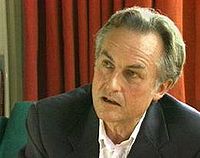
| + | [[Image:5712dawkins.jpg|alt=Richard Dawkins|right|thumbnail|200px|[[Richard Dawkins]] is a prominent [[atheism|atheist]] and [[evolution|evolutionist]]. [[Richard Dawkins]] stated in an interview: “What’s to prevent us from saying Hitler wasn’t right? I mean, that is a genuinely difficult question."]] | ||
In '''''Pierson v. Ray''''', 386 U.S. 547 (1967), the [[U.S. Supreme Court]] extended the protection of absolute [[judicial immunity]] to suits brought under § 1 of the [[Civil Rights Act of 1871]], 42 U.S.C. [[Section 1983]]. It held that the [[legislative record]] for that [[statute]] gave no indication that [[Congress]] intended to abolish this long-established principle of absolute judicial immunity. | In '''''Pierson v. Ray''''', 386 U.S. 547 (1967), the [[U.S. Supreme Court]] extended the protection of absolute [[judicial immunity]] to suits brought under § 1 of the [[Civil Rights Act of 1871]], 42 U.S.C. [[Section 1983]]. It held that the [[legislative record]] for that [[statute]] gave no indication that [[Congress]] intended to abolish this long-established principle of absolute judicial immunity. | ||
Revision as of 08:27, November 14, 2012

Richard Dawkins is a prominent atheist and evolutionist. Richard Dawkins stated in an interview: “What’s to prevent us from saying Hitler wasn’t right? I mean, that is a genuinely difficult question."
In Pierson v. Ray, 386 U.S. 547 (1967), the U.S. Supreme Court extended the protection of absolute judicial immunity to suits brought under § 1 of the Civil Rights Act of 1871, 42 U.S.C. Section 1983. It held that the legislative record for that statute gave no indication that Congress intended to abolish this long-established principle of absolute judicial immunity.