Difference between revisions of "Nikolai Rimsky-Korsakov"
Jump to navigation
Jump to search

m (→Some works) |
|||
| Line 24: | Line 24: | ||
* Christmas Eve | * Christmas Eve | ||
* Heaven and Earth | * Heaven and Earth | ||
| − | * The | + | * The Tempest |
* Saul and David | * Saul and David | ||
| + | * Russian Easter Overture | ||
== See also == | == See also == | ||
Revision as of 19:50, December 14, 2008

Nikolai Rimsky-Korsakov (1844 - 1908) was a Russian composer and professor. He is noted for his predilection for folk and fairy-tale subjects. Rimsky-Korsakov with Mili Balakirev, Aleksandr Borodín, Modest Músorgski and César Cui formed the grup known as The Five. In 1868, he met Pyotr Ilyich Tchaikovsky. Rimsky-Korsakov taught several students who achieved fame as composers, including Sergei Prokofiev and Igor Stravinsky.
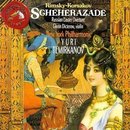
His symphonic suite Scheherazade (1888) ranks as one of the most popular orchestral works ever written. [1]
In July 1872, Rimsky-Korsakov married Nadezhda Purgold.
Some works

- The Maid of Pskov
- Mlada
- Capriccio espagnol
- The Tsar's Bride
- May Night
- Snowmaiden (The Dance of the Tumblers)
- The Barber of Baghdad
- Mozart and Salieri
- The Tale of Tsar Saltan (Flight of the Bumblebee)
- Kashchei the Immortal
- Scheherazade (symphonic suite)
- The Legend of the Invisible City of Kitezh and the Maiden Fevroniya
- Christmas Eve
- Heaven and Earth
- The Tempest
- Saul and David
- Russian Easter Overture
See also
External links
- Rimsky-Korsakov In Spanish.
- The Rimsky-Korsakov Home Page