Difference between revisions of "Legal cases about abortion"
Jump to navigation
Jump to search
Conservative (talk | contribs) |
Conservative (talk | contribs) |
||
| Line 43: | Line 43: | ||
''See also:'' [[Abortion and atheism]] | ''See also:'' [[Abortion and atheism]] | ||
| + | |||
| + | The father of [[medicine]], [[Hippocrates]], expressly prohibited [[abortion]] in his ethical [[Oath]] long before [[Christianity]]. | ||
The ''Journal of Medical Ethics'' article declared concerning the [[atheism|atheist]] and [[sadism|sadist]] [[Marquis de Sade]]: | The ''Journal of Medical Ethics'' article declared concerning the [[atheism|atheist]] and [[sadism|sadist]] [[Marquis de Sade]]: | ||
{{cquote|In 1795 the Marquis de Sade published his La Philosophic dans le boudoir, in which he proposed the use of induced abortion for social reasons and as a means of population control. It is from this time that medical and social acceptance of abortion can be dated, although previously the subject had not been discussed in public in modern times. It is suggested that it was largely due to de Sade's writing that induced abortion received the impetus which resulted in its subsequent spread in western society.<ref>[https://jme.bmj.com/content/6/1/7.abstract The Marquis de Sade and induced abortion]</ref>}} | {{cquote|In 1795 the Marquis de Sade published his La Philosophic dans le boudoir, in which he proposed the use of induced abortion for social reasons and as a means of population control. It is from this time that medical and social acceptance of abortion can be dated, although previously the subject had not been discussed in public in modern times. It is suggested that it was largely due to de Sade's writing that induced abortion received the impetus which resulted in its subsequent spread in western society.<ref>[https://jme.bmj.com/content/6/1/7.abstract The Marquis de Sade and induced abortion]</ref>}} | ||
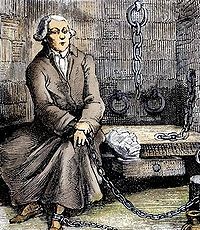
| + | [[Image:115523-004-FA619CA3.jpg|thumb|right|200px| The perverse and cruel [[atheism|atheist]] [[Marquis de Sade]] advocated induced abortion.<ref name="jme.bmj.com"/>]] | ||
== See also == | == See also == | ||
Revision as of 13:04, August 24, 2023

Abortion is the induced termination of a pregnancy often causing fetal pain.[1] Abortion has two victims: the unborn child, and the mother who can never forget the loss she caused. Breast cancer rates increase by more than six times for women who have abortion. Additional victims of abortion include after-born children, who have a higher rate of premature birth and birth defects due to the harm caused by a prior abortion.
Key United States legal cases about abortion
Other key United States legal cases about abortion
Historical background
See also: Abortion and atheism
The father of medicine, Hippocrates, expressly prohibited abortion in his ethical Oath long before Christianity.
The Journal of Medical Ethics article declared concerning the atheist and sadist Marquis de Sade:
| “ | In 1795 the Marquis de Sade published his La Philosophic dans le boudoir, in which he proposed the use of induced abortion for social reasons and as a means of population control. It is from this time that medical and social acceptance of abortion can be dated, although previously the subject had not been discussed in public in modern times. It is suggested that it was largely due to de Sade's writing that induced abortion received the impetus which resulted in its subsequent spread in western society.[2] | ” |

See also
References
- ↑ American Heritage Dictionary definition, abortion.
- ↑ The Marquis de Sade and induced abortion
- ↑ Cite error: Invalid
<ref>tag; no text was provided for refs namedjme.bmj.com