Difference between revisions of "Rembrandt"
m (→‎External links) |
(→‎External links) |
||
| Line 34: | Line 34: | ||
<br> | <br> | ||
'''Petit Gallery''' | '''Petit Gallery''' | ||
| − | <gallery> | + | <gallery perrow="5"> |
Image:Rembrandt Self Portrait 1630.jpg|Self Portrait, 1630. | Image:Rembrandt Self Portrait 1630.jpg|Self Portrait, 1630. | ||
Image:Rembrandt Abduction of Europa.jpg|Abduction of Europa, 1632. | Image:Rembrandt Abduction of Europa.jpg|Abduction of Europa, 1632. | ||
Image:Rembrandt Christ In The Storm On The Sea Of Galilee.jpg|Christ In The Storm On The Sea Of Galilee, 1633. | Image:Rembrandt Christ In The Storm On The Sea Of Galilee.jpg|Christ In The Storm On The Sea Of Galilee, 1633. | ||
Image:Rembrandt The Polish Rider.jpg|The Polish Rider, 1655. | Image:Rembrandt The Polish Rider.jpg|The Polish Rider, 1655. | ||
| + | Image:Rembrandt Jewish Bride.jpg|Jewish Bride, 1667. | ||
</gallery> | </gallery> | ||
Revision as of 12:27, September 20, 2008

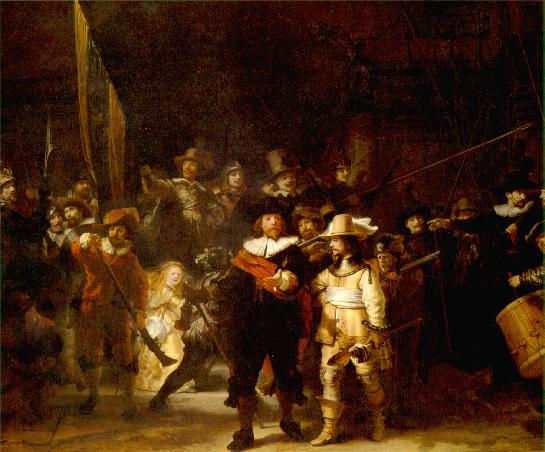
Rembrandt (full name Rembrandt Harmenszoon van Rijn) (Leiden 1606 - Amsterdam 1669), was the most acclaimed painter in the Netherlands—the greatest of the "Dutch Masters." He considered himself a religious painter, but he is most famous for his portraits. Rembrandt produced about 600 paintings including his more than 90 self portraits, he made 300 etchings, and an estimated number of about 1,400 drawings. Most of his drawings look unfinished, but he stated a drawing is finished when the artist has fulfilled his intentions. Some of his most famous paintings are: Jewish Bride (1632), Nightwatch (1642), The Syndics of The Cloth Guild (1661), Bathsheba (1654), Jacob Blessing the Sons of Joseph (1656), and a Self Portrait (1659).
Rembrandt's paintings are known for their depiction of light and shadow. The increasing number of portraits by Rembrandt and others demonstrated the new emphasis on individualism in the Renaissance.

Of all the Baroque masters, it was Rembrandt who evolved the most revolutionary technique and who seemed to grow into the Italians' spiritual heir.[1]

The Netherlands of the 17th century saw an extraordinary growth of artistic achievement, accompanied by great prosperity. Painters such as Rembrandt, Vermeer, Hals, De Hooch, and Ruisdael began to specialize in portraiture, landscape, still life, and genre painting. The Metropolitan Museum of Art, New York.
See also

- Painting Schools
- Painting Masterpieces PART II
- Gallery of Flemish and Dutch painting
- Flemish School of Painting
External links
- The Night Watch, Rembrandt's most famous painting
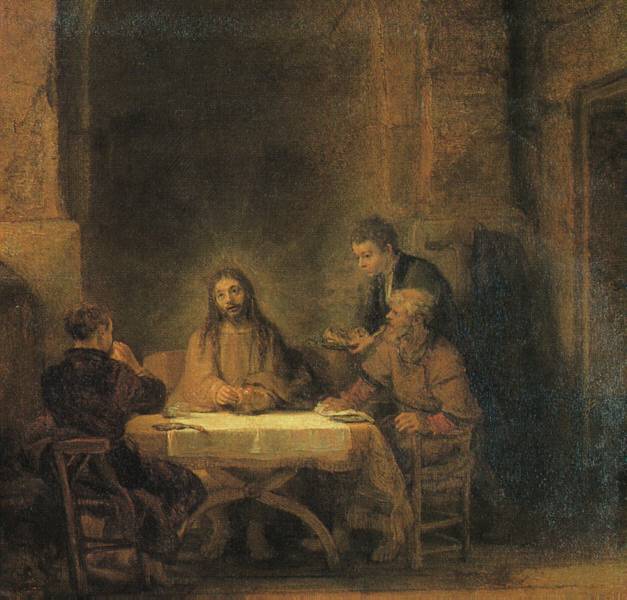
- Supper at Emmaus, one of his religious paintings.
- Rembrandt
- Rembrandt van Rijn:Selected Self-Portraits

"Nightwatch"
Petit Gallery

Self Portrait, 1630.

Abduction of Europa, 1632.

Christ In The Storm On The Sea Of Galilee, 1633.

The Polish Rider, 1655.

Jewish Bride, 1667.