Difference between revisions of "Diary"
Jump to navigation
Jump to search


Conservative (talk | contribs) |
Conservative (talk | contribs) |
||
| (50 intermediate revisions by 2 users not shown) | |||
| Line 1: | Line 1: | ||
| + | [[File:Statue of Leonardo DaVinci in Uffizi Alley, Florence, Italy.jpg|thumbnail|right|300px|Statue of [[Leonardo da Vinci]] in Tuscany, [[Italy]]. | ||
| + | <br /> | ||
| + | <br /> | ||
| + | Leonardo da Vinci practiced journaling.<ref>[https://www.developgoodhabits.com/famous-journals/ 9 Famous People Who Kept Journals]</ref>]] | ||
A '''diary''' is a written and/or audiovisual memorabilic record with entries organized by date. The process of maintaining a diary is referred to as journaling. According to Sarah Bence, OTR/L, "Journaling as a therapeutic activity is different than keeping a diary."<ref>[https://www.verywellhealth.com/journaling-7498123 The Benefits of Creating a Journaling Routine] By Sarah Bence, OTR/L, VeryWellHealth.com</ref> | A '''diary''' is a written and/or audiovisual memorabilic record with entries organized by date. The process of maintaining a diary is referred to as journaling. According to Sarah Bence, OTR/L, "Journaling as a therapeutic activity is different than keeping a diary."<ref>[https://www.verywellhealth.com/journaling-7498123 The Benefits of Creating a Journaling Routine] By Sarah Bence, OTR/L, VeryWellHealth.com</ref> | ||
== Benefits of journaling == | == Benefits of journaling == | ||
| − | * It improves [[self-distancing]] | + | * It improves [[self-distancing]], [[self-awareness]] and [[Mindfulness (Psychology)|mindfulness]].<ref>[https://www.verywellhealth.com/journaling-7498123 The Benefits of Creating a Journaling Routine] By Sarah Bence, OTR/L, VeryWellHealth.com</ref><ref>[https://psychcentral.com/blog/ready-set-journal-64-journaling-prompts-for-self-discovery Ready, Set, Journal! 64 Journaling Prompts for Self-Discovery], PsychCentral</ref><ref>[https://psychcentral.com/blog/journal-prompts-to-heal-emotions?utm_source=ReadNext 12 Journal Prompts for Emotional Health and Awareness], PsychCentral.com</ref><ref>[https://archive.ph/QwSAt What’s All This About Journaling?], New York Times, 2018</ref> Self-distancing is one's ability to reflect on past events/emotions as an objective observer.<ref>[https://www.verywellhealth.com/journaling-7498123 The Benefits of Creating a Journaling Routine] By Sarah Bence, OTR/L, VeryWellHealth.com</ref> This improves one's ability to break away from a nonstop cycle of obsessive thinking and brooding.<ref>[https://positivepsychology.com/benefits-of-journaling/ 5 Benefits of Journaling for Mental Health], PositivePsychology.com</ref> |
| − | * It helps manage [[stress]], [[anxiety]], and [[depression]].<ref>[https://www.verywellhealth.com/journaling-7498123 The Benefits of Creating a Journaling Routine] By Sarah Bence, OTR/L, VeryWellHealth.com</ref> | + | * Improves one's awareness, perception and understanding of the relevance of events (Creating coherent narratives of what has happened, etc.).<ref>[https://positivepsychology.com/benefits-of-journaling/ 5 Benefits of Journaling for Mental Health], PositivePsychology.com</ref> |
| + | |||
| + | * It encourages [[goal setting]] and the achievement of goals.<ref>[https://www.developgoodhabits.com/famous-journals/ 9 Famous People Who Kept Journals]</ref> Journaling helps one categorize things one writes in a journal as important (Important enough to write down).<ref>[https://www.developgoodhabits.com/famous-journals/ 9 Famous People Who Kept Journals]</ref> This helps also assist a person to be more receptive to opportunities that cause goal fulfillment.<ref>[https://www.developgoodhabits.com/famous-journals/ 9 Famous People Who Kept Journals]</ref> In addition, it reinforces one's awareness of goal tracking in terms of the degree that one accomplishes goals and helps one see how much progress one is making in life via looking at earlier journal entries.<ref>[https://healthy.kaiserpermanente.org/health-wellness/healtharticle.7-benefits-of-keeping-a-journal Why everyone should keep a journal — 7 surprising benefits], Kaiser Permanente</ref> Individuals can use journals to create specific goals and to monitor their progress as they take various steps towards accomplishing those goals.<ref>[https://www.usa.edu/blog/ways-journaling-benefits-students/ 10 Ways Journaling Benefits Students], University of St. Augustine for Health Sciences</ref> | ||
| + | |||
| + | *Increases one's [[problem solving]] abilities. PsychAlive.com indicates: "Scientifically, we use the left side of our brain for problem-solving. However, some problems, whether logical or social, need a touch of creativity to help you move forward. Writing down these problems can help you think about them in a new light and even gain a new perspective."<ref>[https://www.psychalive.org/10-life-changing-benefits-to-keeping-a-journal/ 10 Life-Changing Benefits You Can Enjoy By Keeping a Journal], Psychalive.com</ref> | ||
| + | |||
| + | *Enhances [[critical thinking]] skills. Journaling can help boost critical thinking skills. The University of St. Augustine for Health Sciences states: "A study published in the Journal of Nursing Education noted that both students and faculty found reflective journaling to be helpful for developing critical thinking skills."<ref>[https://www.usa.edu/blog/ways-journaling-benefits-students/ 10 Ways Journaling Benefits Students], University of St. Augustine for Health Sciences</ref> | ||
| + | |||
| + | *Increases [[emotional intelligence]]. The University of St. Augustine for Health Sciences notes: "Journaling can help you make sense of how you’re feeling about a certain person or situation that is troubling or inspiring you. It can also help you understand your triggers. The process of writing down your thoughts as honestly and with as little judgment as possible allows for self-discovery. When you get to know yourself better, you develop a deeper understanding of your reactions, strengths, and weaknesses, as well as what environments help you thrive."<ref>[https://www.usa.edu/blog/ways-journaling-benefits-students/ 10 Ways Journaling Benefits Students], University of St. Augustine for Health Sciences</ref> | ||
| + | |||
| + | * It helps manage [[stress]], [[anxiety]], and [[depression]] and the physical illness that they may cause.<ref>[https://www.verywellhealth.com/journaling-7498123 The Benefits of Creating a Journaling Routine] By Sarah Bence, OTR/L, VeryWellHealth.com</ref><ref>[https://positivepsychology.com/benefits-of-journaling/ 5 Benefits of Journaling for Mental Health], PositivePsychology.com</ref> Reflecting on stressful events helps one think more constructively/positively on the events plus helps one emotionally vent (For example, focus more on problem solving or focusing on better ways to mentally cope such as practicing [[mental toughness]] or [[psychological resilience]]).<ref>[https://positivepsychology.com/benefits-of-journaling/ 5 Benefits of Journaling for Mental Health], PositivePsychology.com</ref> Studies indicates that time spent journaling about one's deepest thoughts and feelings reduces the number of sick days that people take off work (Sohal, Singh, Dhillon & Gill, 2022).<ref>[https://positivepsychology.com/benefits-of-journaling/ 5 Benefits of Journaling for Mental Health], PositivePsychology.com</ref> | ||
| + | [[File:Benjamin Franklin 1767.jpg|200px|thumb|right|[[Benjamin Franklin]] practiced journaling.]] | ||
| + | * [[Gratitude]] journaling helps increase gratefulness/[[positive thinking]] by helping people focus more on the positive aspects of life via capturing situations, events, and interactions for which they are grateful.<ref>[https://positivepsychology.com/benefits-of-journaling/ 5 Benefits of Journaling for Mental Health], PositivePsychology.com</ref> | ||
| + | |||
| + | * Increase one's [[self-confidence]] and [[self-esteem]]. PsychAlive.com reports: "Since you’re writing down your thoughts and feelings, both positive and negative, you’ll be so much more mindful of how you react and deal with certain situations. Not only can this help you to become the person you want to be, but it can also improve your [[self-confidence]] and your self-esteem, which can lead to more [[happiness]]."<ref>[https://www.psychalive.org/10-life-changing-benefits-to-keeping-a-journal/ 10 Life-Changing Benefits You Can Enjoy By Keeping a Journal], Psychalive.com</ref> | ||
| + | |||
| + | *Increases one's [[writing]]/[[communication skills]].<ref>[https://www.psychalive.org/10-life-changing-benefits-to-keeping-a-journal/ 10 Life-Changing Benefits You Can Enjoy By Keeping a Journal], Psychalive.com</ref> | ||
| + | |||
| + | *Increases memory. Kaiser Permanente reports: "The Journal of Experimental Psychology published research that shows how writing your thoughts down can reduce intrusive thoughts about negative events and improve working memory.* Even the simple act of writing something down lets your brain know you want to remember it. That’s why note-taking is such an effective practice when learning something new."<ref>[https://healthy.kaiserpermanente.org/health-wellness/healtharticle.7-benefits-of-keeping-a-journal Why everyone should keep a journal — 7 surprising benefits], Kaiser Permanente</ref> | ||
| + | |||
| + | *Increase [[creativity]] and find inspiration. Kaiser Permanente states: "Leonardo da Vinci drew some incredible invention ideas in his journals. Like him, you can also use your journaling time to brainstorm or let your imagination run wild. The inspiration that may pop up while you’re writing or sketching might even surprise you."<ref>[https://www.psychalive.org/10-life-changing-benefits-to-keeping-a-journal/ 10 Life-Changing Benefits You Can Enjoy By Keeping a Journal], Psychalive.com</ref> The University of St. Augustine for Health Sciences notes: "If you’re the type of person who constantly has ideas coming to them, a journal is a great place to jot those down quickly so you don’t forget. You can revisit your notes later and write a more detailed entry around your idea."<ref>[https://www.usa.edu/blog/ways-journaling-benefits-students/ 10 Ways Journaling Benefits Students], University of St. Augustine for Health Sciences</ref> | ||
| + | |||
| + | *Increases one's [[intelligence]]/[[IQ]]: PsychAlive.com reports: "Writing has long been connected with the ability to increase your own intelligence and even to improve your IQ. By writing through a journal, you’re actively stimulating your brain, putting thoughts into written form and expanding your vocabulary."<ref>[https://www.psychalive.org/10-life-changing-benefits-to-keeping-a-journal/ 10 Life-Changing Benefits You Can Enjoy By Keeping a Journal], Psychalive.com</ref> | ||
| + | |||
| + | == Best journaling practices == | ||
| + | |||
| + | *[https://dayoneapp.com/blog/journaling/ Journaling for Beginners: How to Get Started in 10 Steps], Day One App (Popular Journaling App) | ||
| + | |||
| + | *[https://www.thecut.com/article/a-beginners-guide-to-keeping-a-journal.html A Total Beginner’s Guide to Keeping a Journal] | ||
| + | [[Image:Edison and phonograph.jpg|thumb|280px|right|[[Thomas Edison]] practiced journaling.<ref>[https://www.developgoodhabits.com/famous-journals/ 9 Famous People Who Kept Journals]</ref>]] | ||
| + | *[https://www.simplyfiercely.com/journaling-tips/ 11 Life-Changing Journaling Tips For Beginners] | ||
| + | |||
| + | *[https://vanillapapers.net/2019/11/13/journaling-tips/ 17 Powerful Journaling Tips For Beginners] | ||
| + | |||
| + | *[https://www.betterup.com/blog/how-to-start-journaling How to start journaling for mental health: 7 tips and techniques] | ||
| + | |||
| + | Videos: | ||
| + | |||
| + | *[https://www.youtube.com/playlist?list=PLbjmSS6LZDGpQIwj6QPZLAoo46P9A6VUX Best journaling practices - video playlist], Video playlist | ||
| + | |||
| + | == Journaling techniques == | ||
| + | |||
| + | *[https://moonsterleather.com/blogs/news/journaling-techniques 10 Powerful and Easy Journaling Techniques] | ||
| + | |||
| + | *[https://dayoneapp.com/blog/journaling-ideas/ 35+ Journaling Ideas to Try in 2024], Day One App | ||
| + | |||
| + | *[https://vanillapapers.net/2020/08/25/journaling-techniques/ 47 Life-Changing Journaling Techniques (And How To Start)] | ||
| + | |||
| + | *[https://www.sheownssuccess.com/personal-development/journaling-methods/ 29 Most Powerful Journaling Methods To Change Your Life] | ||
| + | |||
| + | *[https://students.ubc.ca/ubclife/creative-unexpected-ways-journaling Creative and unexpected ways of journaling] | ||
| + | |||
| + | *[https://www.skillshare.com/en/blog/10-types-of-journaling-for-peace-of-mind/ 10 Types of Journaling for Peace of Mind], Skillshare.com | ||
| + | |||
| + | == Famous journalers == | ||
| + | |||
| + | Famous journalers include: [[Leonardo da Vinci]], [[Benjamin Franklin]], [[Marie Curie]], [[Thomas Edison]], [[Mark Twain]], [[Lewis Carroll]], George Sand, [[Virginia Woolf]], [[John D. Rockefeller]], [[Anne Frank]], [[Louisa May Alcott]], [[Bob Dylan]], Dorothy Day, [[George Patton]], Buckminster Fuller and [[Marcus Aurelius]].<ref>[https://www.lifeskillsthatmatter.com/blog/number-one-self-awareness-habit the #1 self-awareness habit]</ref><ref>[https://www.developgoodhabits.com/famous-journals/ 9 Famous People Who Kept Journals]</ref> | ||
| + | |||
| + | == Journal articles == | ||
| + | |||
| + | *[https://www.ncbi.nlm.nih.gov/pmc/articles/PMC6305886/ Online Positive Affect Journaling in the Improvement of Mental Distress and Well-Being in General Medical Patients With Elevated Anxiety Symptoms: A Preliminary Randomized Controlled Trial], JMIR mental health. 2018 Oct-Dec; 5(4): e11290. Published online 2018 Dec 10. doi: 10.2196/11290 | ||
| + | |||
| + | == See also == | ||
| + | |||
| + | *[[Self-reflection]] | ||
| + | *[[Metacognition]] | ||
| + | |||
| + | ==References== | ||
| + | <references/> | ||
| + | |||
| + | [[Category: Writing]] | ||
| + | [[Category: Literature]] | ||
| + | [[Category: Psychology]] | ||
Latest revision as of 00:23, October 9, 2025

A diary is a written and/or audiovisual memorabilic record with entries organized by date. The process of maintaining a diary is referred to as journaling. According to Sarah Bence, OTR/L, "Journaling as a therapeutic activity is different than keeping a diary."[2]
Benefits of journaling
- It improves self-distancing, self-awareness and mindfulness.[3][4][5][6] Self-distancing is one's ability to reflect on past events/emotions as an objective observer.[7] This improves one's ability to break away from a nonstop cycle of obsessive thinking and brooding.[8]
- Improves one's awareness, perception and understanding of the relevance of events (Creating coherent narratives of what has happened, etc.).[9]
- It encourages goal setting and the achievement of goals.[10] Journaling helps one categorize things one writes in a journal as important (Important enough to write down).[11] This helps also assist a person to be more receptive to opportunities that cause goal fulfillment.[12] In addition, it reinforces one's awareness of goal tracking in terms of the degree that one accomplishes goals and helps one see how much progress one is making in life via looking at earlier journal entries.[13] Individuals can use journals to create specific goals and to monitor their progress as they take various steps towards accomplishing those goals.[14]
- Increases one's problem solving abilities. PsychAlive.com indicates: "Scientifically, we use the left side of our brain for problem-solving. However, some problems, whether logical or social, need a touch of creativity to help you move forward. Writing down these problems can help you think about them in a new light and even gain a new perspective."[15]
- Enhances critical thinking skills. Journaling can help boost critical thinking skills. The University of St. Augustine for Health Sciences states: "A study published in the Journal of Nursing Education noted that both students and faculty found reflective journaling to be helpful for developing critical thinking skills."[16]
- Increases emotional intelligence. The University of St. Augustine for Health Sciences notes: "Journaling can help you make sense of how youâre feeling about a certain person or situation that is troubling or inspiring you. It can also help you understand your triggers. The process of writing down your thoughts as honestly and with as little judgment as possible allows for self-discovery. When you get to know yourself better, you develop a deeper understanding of your reactions, strengths, and weaknesses, as well as what environments help you thrive."[17]
- It helps manage stress, anxiety, and depression and the physical illness that they may cause.[18][19] Reflecting on stressful events helps one think more constructively/positively on the events plus helps one emotionally vent (For example, focus more on problem solving or focusing on better ways to mentally cope such as practicing mental toughness or psychological resilience).[20] Studies indicates that time spent journaling about one's deepest thoughts and feelings reduces the number of sick days that people take off work (Sohal, Singh, Dhillon & Gill, 2022).[21]

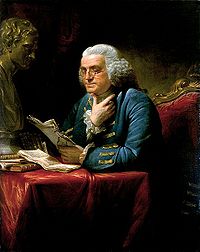
Benjamin Franklin practiced journaling.
- Gratitude journaling helps increase gratefulness/positive thinking by helping people focus more on the positive aspects of life via capturing situations, events, and interactions for which they are grateful.[22]
- Increase one's self-confidence and self-esteem. PsychAlive.com reports: "Since youâre writing down your thoughts and feelings, both positive and negative, youâll be so much more mindful of how you react and deal with certain situations. Not only can this help you to become the person you want to be, but it can also improve your self-confidence and your self-esteem, which can lead to more happiness."[23]
- Increases one's writing/communication skills.[24]
- Increases memory. Kaiser Permanente reports: "The Journal of Experimental Psychology published research that shows how writing your thoughts down can reduce intrusive thoughts about negative events and improve working memory.* Even the simple act of writing something down lets your brain know you want to remember it. Thatâs why note-taking is such an effective practice when learning something new."[25]
- Increase creativity and find inspiration. Kaiser Permanente states: "Leonardo da Vinci drew some incredible invention ideas in his journals. Like him, you can also use your journaling time to brainstorm or let your imagination run wild. The inspiration that may pop up while youâre writing or sketching might even surprise you."[26] The University of St. Augustine for Health Sciences notes: "If youâre the type of person who constantly has ideas coming to them, a journal is a great place to jot those down quickly so you donât forget. You can revisit your notes later and write a more detailed entry around your idea."[27]
- Increases one's intelligence/IQ: PsychAlive.com reports: "Writing has long been connected with the ability to increase your own intelligence and even to improve your IQ. By writing through a journal, youâre actively stimulating your brain, putting thoughts into written form and expanding your vocabulary."[28]
Best journaling practices
- Journaling for Beginners: How to Get Started in 10 Steps, Day One App (Popular Journaling App)

Videos:
- Best journaling practices - video playlist, Video playlist
Journaling techniques
- 35+ Journaling Ideas to Try in 2024, Day One App
- 10 Types of Journaling for Peace of Mind, Skillshare.com
Famous journalers
Famous journalers include: Leonardo da Vinci, Benjamin Franklin, Marie Curie, Thomas Edison, Mark Twain, Lewis Carroll, George Sand, Virginia Woolf, John D. Rockefeller, Anne Frank, Louisa May Alcott, Bob Dylan, Dorothy Day, George Patton, Buckminster Fuller and Marcus Aurelius.[30][31]
Journal articles
- Online Positive Affect Journaling in the Improvement of Mental Distress and Well-Being in General Medical Patients With Elevated Anxiety Symptoms: A Preliminary Randomized Controlled Trial, JMIR mental health. 2018 Oct-Dec; 5(4): e11290. Published online 2018 Dec 10. doi: 10.2196/11290
See also
References
- â 9 Famous People Who Kept Journals
- â The Benefits of Creating a Journaling Routine By Sarah Bence, OTR/L, VeryWellHealth.com
- â The Benefits of Creating a Journaling Routine By Sarah Bence, OTR/L, VeryWellHealth.com
- â Ready, Set, Journal! 64 Journaling Prompts for Self-Discovery, PsychCentral
- â 12 Journal Prompts for Emotional Health and Awareness, PsychCentral.com
- â Whatâs All This About Journaling?, New York Times, 2018
- â The Benefits of Creating a Journaling Routine By Sarah Bence, OTR/L, VeryWellHealth.com
- â 5 Benefits of Journaling for Mental Health, PositivePsychology.com
- â 5 Benefits of Journaling for Mental Health, PositivePsychology.com
- â 9 Famous People Who Kept Journals
- â 9 Famous People Who Kept Journals
- â 9 Famous People Who Kept Journals
- â Why everyone should keep a journal â 7 surprising benefits, Kaiser Permanente
- â 10 Ways Journaling Benefits Students, University of St. Augustine for Health Sciences
- â 10 Life-Changing Benefits You Can Enjoy By Keeping a Journal, Psychalive.com
- â 10 Ways Journaling Benefits Students, University of St. Augustine for Health Sciences
- â 10 Ways Journaling Benefits Students, University of St. Augustine for Health Sciences
- â The Benefits of Creating a Journaling Routine By Sarah Bence, OTR/L, VeryWellHealth.com
- â 5 Benefits of Journaling for Mental Health, PositivePsychology.com
- â 5 Benefits of Journaling for Mental Health, PositivePsychology.com
- â 5 Benefits of Journaling for Mental Health, PositivePsychology.com
- â 5 Benefits of Journaling for Mental Health, PositivePsychology.com
- â 10 Life-Changing Benefits You Can Enjoy By Keeping a Journal, Psychalive.com
- â 10 Life-Changing Benefits You Can Enjoy By Keeping a Journal, Psychalive.com
- â Why everyone should keep a journal â 7 surprising benefits, Kaiser Permanente
- â 10 Life-Changing Benefits You Can Enjoy By Keeping a Journal, Psychalive.com
- â 10 Ways Journaling Benefits Students, University of St. Augustine for Health Sciences
- â 10 Life-Changing Benefits You Can Enjoy By Keeping a Journal, Psychalive.com
- â 9 Famous People Who Kept Journals
- â the #1 self-awareness habit
- â 9 Famous People Who Kept Journals