Difference between revisions of "User:Interiot/Reports/Shortpages"
| Line 7: | Line 7: | ||
==[[William Loeb]] [13 bytes]== | ==[[William Loeb]] [13 bytes]== | ||
{{:William Loeb}} | {{:William Loeb}} | ||
| + | |||
| + | ==[[Oxford Cavaliers]] [13 bytes]== | ||
| + | {{:Oxford Cavaliers}} | ||
==[[Acme Shorts]] [13 bytes]== | ==[[Acme Shorts]] [13 bytes]== | ||
| Line 13: | Line 16: | ||
==[[Arlene Cole]] [13 bytes]== | ==[[Arlene Cole]] [13 bytes]== | ||
{{:Arlene Cole}} | {{:Arlene Cole}} | ||
| + | |||
| + | ==[[Evaporation]] [13 bytes]== | ||
| + | {{:Evaporation}} | ||
| + | |||
| + | ==[[Hadrian's wall]] [13 bytes]== | ||
| + | {{:Hadrian's wall}} | ||
==[[Trees]] [13 bytes]== | ==[[Trees]] [13 bytes]== | ||
| Line 88: | Line 97: | ||
==[[Whore]] [15 bytes]== | ==[[Whore]] [15 bytes]== | ||
{{:Whore}} | {{:Whore}} | ||
| + | |||
| + | ==[[Fuck your couch]] [15 bytes]== | ||
| + | {{:Fuck your couch}} | ||
==[[Butt sex]] [15 bytes]== | ==[[Butt sex]] [15 bytes]== | ||
| Line 139: | Line 151: | ||
==[[Niggers]] [15 bytes]== | ==[[Niggers]] [15 bytes]== | ||
{{:Niggers}} | {{:Niggers}} | ||
| − | |||
| − | |||
| − | |||
==[[Modern Terms S]] [16 bytes]== | ==[[Modern Terms S]] [16 bytes]== | ||
| Line 154: | Line 163: | ||
==[[Food]] [21 bytes]== | ==[[Food]] [21 bytes]== | ||
{{:Food}} | {{:Food}} | ||
| + | |||
| + | ==[[Duck]] [23 bytes]== | ||
| + | {{:Duck}} | ||
==[[Educative]] [24 bytes]== | ==[[Educative]] [24 bytes]== | ||
| Line 256: | Line 268: | ||
==[[Barbara Bush]] [46 bytes]== | ==[[Barbara Bush]] [46 bytes]== | ||
{{:Barbara Bush}} | {{:Barbara Bush}} | ||
| + | |||
| + | ==[[Bayonet]] [46 bytes]== | ||
| + | {{:Bayonet}} | ||
==[[Hugh Capet]] [47 bytes]== | ==[[Hugh Capet]] [47 bytes]== | ||
Revision as of 16:59, March 22, 2007
Expanded version of Special:Shortpages, generated via [9]. Template:TOCright
Controversy of the United Nations Troops [13 bytes]
Controversy of the United Nations Troops
William Loeb [13 bytes]
Oxford Cavaliers [13 bytes]
The Oxford Cavaliers rugby league team was one of the eight founder members of the Rugby League Conference. This league now has well over sixty teams across England and Wales, and will include Scottish teams from 2007.
The team is noteworthy as a pioneer of rugby league in the south of England. The primary reason for the expansion of RL from its northern heartlands since 1995 is due to the change in status of the regulations on amateurism in rugby union. Since rugby union declared itself an open game in 1995 amateur rugby union players are now able to play in both forms of rugby, whereas this was previously prohibited. Indeed, Oxford Cavaliers are now hosted by a rugby union club, Oxford Harlequins, with whom they enjoy good relations.
History
The first team came together in 1995, under the Chairmanship of Lionel Hurst, for a fixture against a Bath rugby league team, and then the first competitive fixture was played in 1996 in the inaugural Summer Conference, the forerunner to the Rugby League Conference which started in 1997.
In 1998, five Oxford Cavaliers players were called up for the Rugby League Conference squad. Skipper and scrum half Simon Hill, centre Paul Daly and forwards John Williams, Darrell Griffin and Graham Crane were named in a 22-man squad for the games against the North East League at Chester on Sunday, and against the Combined Services.
In 1999 they reached the regional final of the Rugby League Conference, were awarded the title of Rugby League Conference Club of the Year and John Williams, Steve Lacey, Simon Hill and Jon Flatman all received representative honours. In 2001, Lionel Hurst left the Oxford Cavaliers in order to become Chief Executive Officer of the London Broncos, the top flight rugby league club, which went on to become part of the Harlequins in 2006.
In 2000, Oxford's second player development rugby league camp was held by coaches from Super League outfit Halifax rugby league club. Twenty nominated under 13 boys from Oxford undertook a three-day residential course at the Hill End campus to receive training in all the skills and were put through their paces by several qualified coaches. They also received expert advice on nutrition, fitness and sports psychology.
Also in 2000, Oxford Cavaliers coach Dave Doran was appointed head coach of the Rugby League Conference representative side. The Cavaliers themselves finished a credible tenth place in the RLC composite table of twenty four teams.
In their brief history Oxford Cavaliers have managed to supply players to professional clubs, such as Mike Castle and Corey Simms to the London Skolars, Darrell Griffin to Wakefield Trinity Wildcats, Barry Randall and Brad Smith to London Broncos via Rochdale Hornets as well as Steve Robinson to Henley Hawks rugby union club. They continue to be the only open rugby league club in the city, although there is also an Oxford University rugby league team.
Honours 2006
Advanced Garden Services Oxfordshire Cup
Fixtures and Results 2006
TotalRugbyLeague.com Conference unless stated
Sun 23 April Away v Haringey Hornets (Friendly) Lost 26-22
Sat 29 April Away v Gosford All Blacks RFC (Winners: Advanced Garden Services Oxfordshire Cup) Won 64-14
Sat 6 May Away v Coventry Bears Won 24-0
Sat 13 May Home v Redditch Ravens Won 30-22
Sat 20 May Away v Burntwood Barbarians Lost 48-16
Sat 27 May Home v Plymouth Lost 44-22
Sat 3 June Home v Somerset Vikings Lost 51-14
Sat 10 June Home v Burntwood Barbarians Won 48-22
Sat 17 June Away v Bristol Sonics Lost 48-24
Sat 24 June Home v Gloucestershire Warriors 2 30pm
Sat 1 July Home v Coventry Bears Lost 82-0 Fixture played against Coventry First, rather than A team
Sat 8 July Away v Redditch Ravens Won 36-24
TotalRL.com Rugby League Conference: South West and Midlands 2006
| Club | Games Played | Games Won | Games Drawn | Points |
|---|---|---|---|---|
| Gloucestershire Warriors | 10 | 9 | 0 | 18 |
| Somerset Vikings | 10 | 8 | 0 | 16 |
| Plymouth | 10 | 6 | 0 | 12 |
| Burntwood Barbarians | 10 | 5 | 0 | 10 |
| Oxford Cavaliers | 10 | 4 | 0 | 8 |
| Bristol Sonics | 10 | 3 | 0 | 6 |
| Redditch Ravens | 10 | 0 | 0 | 6 |
| Coventry Bears A | 10 | 0 | 0 | 4 |
External links
| Rugby league in Britain and Ireland | |
|---|---|
|
Competitions | |
|
National teams | |
|
Federations | |
|
Former competitions | |
Acme Shorts [13 bytes]
Arlene Cole [13 bytes]
Evaporation [13 bytes]
Evaporation is part of the hydrological cycle and consists of molecules shifting from a liquid to a gaseous form. This occurs both when liquids are cold as well as when they are warm. It occurs more often, however, with warmer liquids. Evaporation is all about the energy in individual molecules, not about the average energy of a system. The average energy can be low and the evaporation still continues. All liquids can evaporate at room temperature and normal air pressure. Evaporation happens when atoms or molecules escape from the liquid and turn into a vapor. Not all of the molecules in a liquid actually have the same energy. The energy you can measure with a thermometer is really an average of all the molecules in the system. There are always a few molecules with a lot of energy and some with barely any energy at all. The molecules with a lot of energy are able to build up enough power to become a gas. Once they reach that energy level, they can leave the liquid. When the molecule leaves, it has evaporated.
Evaporation Rates
The rate of evaporation increases with a decrease in the gas pressure around a liquid. Molecules move from areas of higher pressure to lower pressure. The molecules are sucked into the surrounding area, evening out the pressure. If the vapor pressure of the area increases to a specific level, the rate of evaporation will slow down.
See also
Hadrian's wall [13 bytes]
Trees [13 bytes]

A tree is a tall plant, usually with roots, a trunk, branches, and leaves. Trees produce oxygen and absorb carbon dioxide from the air. Also, certain types of trees may bear fruit, such as apples.
Trees are an important part of the Bible. They were created, along with all other plants, on the Third Day of Creation.[1] It was from the Tree of Knowledge of Good and Evil that Eve brought evil into the world.[2] Jotham used a parable about trees to criticize his brother Abimelech.[3] And it was on the wood of a tree that our Savior, Jesus Christ, was crucified. In fact, a commonly used name for Jesus Christ is "Tree of Life."
Trees are a flashpoint for environmentalists, who are nicknamed "tree-huggers". Yet environmentalists in 2023 are suing the Biden Administration to stop it from planting more trees.
In the 1970s plastic shopping bags were introduced in grocery stores and retail sales outlets to "Save the Trees"; during the covid lockdown hoax of 2020 plastic shopping bags were alleged by "the science" to facilitate the spread of coronavirus and were banned by local leftist municipalities, who forced a return to murdering trees for paper shopping bags.
The harvesting of trees for commercial or forest management purposes is logging.
Other uses of the term
In mathematics, a "tree" is a graph with no cycles, so called because these graphs often resemble natural trees. Trees can be used to perform functions as computers use binary trees in order to perform operations.
A tree is also an important data structure in computer science.
See also
References

Theodore Rousseau, Lallee des Chataigniers (France).
Secular Humanism [13 bytes]

Secular humanism is humanism that is atheistic/agnostic in nature. It is a philosophy which holds that human beings are the most important figures, and that social problems are best solved without the involvement of religious doctrine. People who are secular humanists purport to focus on ways to better themselves and human beings as a whole. The American Humanist Association's motto on the main page of their website is "good without a God".[2] Secular humanists, like atheists as a whole, are often viewed as self-centered (see: Atheism and uncharitableness and Atheism and hedonism and Atheist population and immorality and Views on atheists).
One of the goals of secular humanism was to make atheism more humane, but the atheist population, including its secular humanist faction which has engaged in bitter infighting for years, has fallen significantly short of this standard of behavior (see: Atheism and social justice).[3]
Infighting within the secular humanism faction of atheism
See also: Atheist factions
Paul Kurtz is considered by some to be the founder the secular humanism movement.[1] Paul Kurtz was an atheist philosopher who formerly taught at the State University of NY at Buffalo. In addition, he also founded the organization the Center for Inquiry which focuses on promoting secular humanism. In 2009, Dr. Kurtz lost his leadership position at the Center for Inquiry.[4]
Currently, there is an ideological struggle within the modern secular humanism faction of atheism concerning how militant the movement should be which primarily arose post New Atheism movement which is a more militant form of atheism. (see also: Militant atheism). Paul Kurtz is against the secular humanism movement becoming more militant but some newer followers of secular humanism disagree with Kurtz.[4]
Kurtz's ouster from the Center of Inquiry leadership position
On October 10, 2010, a contentious exchange between members of the Secular Humanism faction of atheism founded by Paul Kurtz and the atheist Ron Lindsay was caught on tape.Video - Part one and Video - Part 2
During the exchange Ron Lindsay said that infighting has been occurring within the Secular Humanism faction of atheism for years.[3] A Paul Kurtz supporter said that Kurtz was censored by Ron Lindsay and his supporters and Kurtz was driven out of the organization that he founded (Center for Inquiry).[5] Lindsay claimed, however, that Kurtz voluntarily resigned from the organization he founded and Kurtz was never censored. Furthermore, Lindsay said that Kurtz's idea of a "planetary federation" was impractical.[5] Kurtz countered that he was never allowed to publish why he resigned from the organization and that he was censored by the organization that he founded.[5]
Dr. Kurtz described the events surrounding the loss of his leadership position as a "shattering blow".[4]
Schism within the Sunday Assembly atheist church movement
The Sunday Assembly "atheist church" movement was founded in 2013 by the secular humanists and comedians Pippa Evans and Sanderson Jones.[6] In 2014, it was reported that there was a schism in the movement as far as whether or not they should use the word "atheist" in their movement and/or whether they should just cater to atheists.[6]
Dr. Sam Harris is one of the founders of the New Atheism movement. Sam Harris is quite aware of the stigma surrounding atheism and has even advocated that atheists no longer call themselves atheists.[7] In fact, Dr. Harris has said concerning the label of atheist, "It's right next to child molester as a designation."[7]
Paul Kurt's lack of a legacy
According to Compete.com Paul Kurtz's website had 600 unique visitors as of March 2012.[8] In addition, the organization that he founded and was forced to resign from, the Center for Inquiry, has had a precipitous decline in their organization's website traffic in 2012.[8]
PZ Myers: Humanist awards and his bestiality comments and other ill-behavior
PZ Myers received the American Humanist Association's 2009 Humanist of the Year award and International Humanist Award in 2011.
Atheist animal trainer objects to PZ Myers' comments about bestiality
See also: Atheism and bestiality and Evolutionary belief and bestiality and PZ Myers on bestiality

Bestiality is the act of engaging in sexual relations with an animal.
On May 22, 2012, PZ Myers specifies under what conditions he thinks the practice of bestiality would be acceptable.[11]
On November 14, 2014, an atheist animal trainer wrote in response:
| “ | We now have the PZ Myers Humanist Guide to Bestiality:
>> THEN sex with an animal is ethical... PZ Myers possesses numerous character flaws that make him ill-suited as an A/S/humanism spokesperson and representative: his explosive temper; his violence-tinged threats; his foul language; his preference for personal insults over reasoned debate; his propensity to smear and slander any & all who oppose him;..his willingness to abandon skepticism and science to serve the pomo constructs of radical feminism and social justice warriordom. Of all these, nothing is more odious, repulsive, or damaging to the reputation of A/S & humanist activism, than Myers’ condoning of bestiality.[12] |
” |
Rebuke of PZ Myers by fellow atheists concerning his ill-behavior

See also: PZ Myers and social justice and Atheism and social justice
The Irish atheist Michael Nugent wrote to PZ Myers in September 2014:
| “ | Some of the content of your blog is hurtful and unjust in itself, it also undermines the effectiveness of attempts to promote compassion and empathy and social justice, and it is additionally harmful because of your prominence as a perceived spokesperson for organised atheism...
PZ, is this really how you want to be remembered? Having defended you against unjust attacks from others, I am now asking you to take a long hard look at what you are doing, consider apologising to people who you have unjustly hurt and defamed, and start focusing on actually promoting compassion and empathy and social justice if those ideas are important to you.[13] |
” |
In April 2015, Atheist Ireland announced, "Atheist Ireland is publicly dissociating itself from the hurtful and dehumanising, hateful and violent, unjust and defamatory rhetoric of the atheist blogger PZ Myers."[14] The atheist biologist Massimo Pigliucci said of Myers, "one cannot conclude this parade without mentioning P.Z. Myers, who has risen to fame because of a blog where the level of nastiness (both by the host and by his readers) is rarely matched anywhere else on the Internet...".[15]
Lawrence Krauss Humanist of the Year in 2015 and his statement on incest
In 2015, Arizona State University professor Lawrence Krauss was named the 2015 Humanist of the Year by the American Humanists Association.[16]
In response to the question, "Why is incest wrong?", Krauss said, "It's not clear to me that it is wrong."[17] See also: Atheism and incest
See also
Notes
- ↑ 1.0 1.1 The New Atheism and Secular Humanism. Center for Inquiry]. 19 October 2009. "Paul Kurtz, considered by many the father of the secular humanist movement, is Professor Emeritus of Philosophy at the State University of New York at Buffalo."
- ↑ American Humanist Association website
- ↑ 3.0 3.1 Kurtz and Ron Lindsay Argument Audio Part Two
- ↑ 4.0 4.1 4.2 Redirecting a Long Life of Godlessness
- ↑ 5.0 5.1 5.2 Kurtz and Ron Lindsay Argument Audio Part Two
- ↑ 6.0 6.1 Atheist Church Split: Sunday Assembly And Godless Revival's 'Denominational Chasm', Huffington Post, 2014
- ↑ 7.0 7.1 Roberts, Jessica, et al. (June 19, 2007). "Interview with an atheist". News21. Retrieved on July 30, 2014.
- ↑ 8.0 8.1 Paul Kurtz is another atheist failure without a legacy
- ↑ Atheist Achilles Heels: Objective Morality and Sacred Life
- ↑ The “objective morality” gotcha
- ↑ The “objective morality” gotcha, PZ Myers, May 22, 2012
- ↑ PZ Myers, Animal Lover
- ↑ The LBJ legend and my email to PZ Myers by Michael Nugent on September 19, 2014
- ↑ Atheist Ireland publicly dissociates itself from the harmful and hateful rhetoric of PZ Myers by Michael Nugent, April 7, 2015
- ↑ Reflections on the skeptic and atheist movements By Massimo Pigliucci Scientia Salon, Posted: May 13, 2015
- ↑ Humanist of the year
- ↑ Lawrence Krauss on incest
Garginflies [13 bytes]
Fun [13 bytes]
James Cameron [13 bytes]
James Cameron is an Academy award-winning movie director from Kapuskasing, Ontario, Canada. He has written and directed many immensely popular films, including:
Collectively, his films have grossed over $6 billion worldwide[1] and he ranks as one of the highest-grossing directors of all time. His 1997 film Titanic was the highest-grossing movie of all time, until he broke his own record with the 2010 film Avatar.
Since directing Titanic, Cameron has become an avid underwater filmographer. He also created the 2001 documentary Titanic: Ghosts of the Abyss, which used underwater cameras to explore the wreck of RMS Titanic.
In 2007, Cameron put together a documentary claiming an ossuary in the Holy Land could contain the bones of Jesus Christ. The work is considered to be more hype than reality.[2] In addition Cameron is an atheist.[3]
In 2010, Cameron challenged global warming "deniers" to a public debate, but canceled at the last minute.[4][5]
References
- ↑ http://www.boxofficemojo.com/alltime/world/
- ↑ http://dsc.discovery.com/news/2007/02/25/tomb_arc.html?category=archaeology&guid=20070225073000 Discovery Channel News
- ↑ http://hollowverse.com/james-cameron/
- ↑ http://newsbusters.org/blogs/noel-sheppard/2010/08/23/filmmaker-james-cameron-backs-out-global-warming-debate-he-organized
- ↑ https://www.washingtontimes.com/news/2010/aug/26/cold-feet-on-global-warming/
Dolphins [13 bytes]
| Dolphin | |
|---|---|

| |
| Pacific White-Sided Dolphin Lagenorhynchus obliquidens | |
| Scientific classification | |
| Kingdom Information | |
| Kingdom | Animalia |
| Subkingdom | Bilateria |
| Phylum Information | |
| Phylum | Chordata |
| Sub-phylum | Vertebrata |
| Infraphylum | Gnathostomata |
| Class Information | |
| Superclass | Tetrapoda |
| Class | Mammalia |
| Sub-class | Theriiformes |
| Infra-class | Holotheria |
| Order Information | |
| Superorder | Preptotheria |
| Order | Cetacea |
| Sub-order | Odontoceti |
| Family Information | |
| Families | Delphinidae Platanistidae Iniidae Lipotidae Pontoporiidae |
| Population statistics | |
Dolphins (Greek: δελφίς, delphís, "dolphin") are a number of kinds of Cetaceans related to the toothed whales of the suborder Odontoceti, and are found throughout the world's oceans and several major river systems. Although fish-like in appearance, dolphins are mammals which breath air and suckle their young on milk.
Description
Dolphins are streamlined for a life in the water; the body is cigar-shaped and tapered towards the tail, bearing a smooth, hairless skin which has a “rubbery” feel to the touch. The forehead bears a large, bulbous mass called a “melon”, which is thought to be the area where sound waves are focused when the animal echolocates or communicates with others. Behind the melon on top of its head is a single blowhole through which it breathes when it comes to the surface.
Dolphins have a pair of pectoral fins behind the head, which they use for steering. Primary propultion comes from the tail, which bears horizontal flukes made from subcutaneous dermal tissue; movement through the water consists of vertical sweeps of the tail. Speeds of dolphins have been estimated at 23-25 mph (37–40 km/h), which is enough to allow for “porpoising” i.e. the leaping of the animal out of the water at various times. Some species have been observed to reach higher speeds.
Most species of dolphins also bear a dorsal fin on their backs, made from the same dermal tissue as the tail flukes, and is believed to act as a stabilizer while moving. In some species (orca, grampus), the dorsal fin is rather large relative to the size of the body; in several others the fin is a small ridge extending over a portion of the back (river dolphins), or entirely non-existent (right whale dolphin).
Dolphins range in size from Maui's dolphin (Cephalorhynchus hectori maui) of New Zealand, which at 3.9 feet in length makes it the smallest cetacean of any kind; to the male orca or killer whale (Orcinus orca), which can reach lengths in excess of 30 feet and weigh in at 6 tons.
The word "porpoise" has also been used as an alternative name for dolphins; indeed, both names have been used interchangeably between dolphins and members of Phocaenidae, which include the true porpoises. The differences between the two are rather slight: dolphins have a beak-shaped snout bearing conical teeth, while porpoises have a blunt snout bearing spade-shaped teeth.
"Dolphin" is also a name of a species of game fish related to mackerals, and known as either mahi-mahi or dorado.
Reproduction
Captive animals provided much of the data for dolphin reproduction. Courtship and mating occurs during spring, with a gestation of 11 to 12 months. A single calf is born tail-first, which almost immediately begins to swim and surface for air. Calves in captivity have been known to nurse for up to 12 months before weaning; in the wild weaning is suspected to be much sooner.
Range
Dolphins are found in nearly all oceans and seas of the world, from tropical environments to arctic conditions. Most species are pelagic (deep ocean), and some inhabit continental shelves towards the coast. There are four species of river dolphin; two inhabit the freshwater rivers of South America,[1] one in India, and the fourth – which may in fact be extinct[2] – lives in China.
Diet
Nearly all dolphins feed on small fish (herring, sardines, mackerel, etc.), shrimp, or mullusks (squid, cuttlefish); some individuals have been seen feeding exclusively on one particular food source as a matter of preference. Orcas are the exception, as they feed not only on fish, but seals, other dolphins, and several species of the larger whales as well. One female orca off California has also been spotted routinely killing great white sharks (Charcharodon charcharias) just for their livers.
Intelligence

Dolphins are rated as being superior in intelligence to domestic dogs, and some scientists have made claims that they equal or surpase the intelligence of some primates. It has also been theorized that the sounds made by dolphins are actually a language. John Lilly, an American neurologist, conducted some experiments during the 1960s to test the validity of this theory without success; however, research still continues at several universities and laboratories around the world.
Dolphins and man
Dolphins and man have had a relationship with each other since ancient times, adapting well to human companionship either in captivity or out. Several dolphin species, notably bottlenose and common dolphins, pilot whales and orcas, are popular performers in marine-themed amusement parks and aquariums. Dolphins have also been trained by the United States Navy to retrieve objects or weapons lost at sea, or to act as “guard dogs” around submarine facilities.
Man has also affected dolphins in another manner: hunting and wholesale slaughter. Despite the affectionate image a dolphin has, man has feared the competition dolphins allegedly bring with regard to commercial fishing. The Japanese conduct yearly harvests against dolphins in which thousands are unhumanely slaughtered, and in the late-20th century tuna boats – which ironically rely on dolphins to locate schools of tuna – trapped and drowned thousands more via nets.
Flipperpithecus
See also: Flipperpithecus and Paleoanthropology and Evolution and Cases of Fraud, Hoaxes and Speculation
Flipperpithecus was the name of the "humanoid species" arising from a fossil find that is most likely part of dolphin's rib. The name "Flipperpithecus" was given by anthropologist Dr. Tim White and reported in Science News.[3]
Dr. White added "The problem with a lot of anthropologists is that they want so much to find a hominid that any scrap of bone becomes a hominid bone."[4][5]
References
- ↑ http://www.acsonline.org/factpack/Boto.htm
- ↑ http://news.nationalgeographic.com/news/2006/12/061214-dolphin-extinct.html
- ↑ W. Herbert, Science News. 123:246 (1983)
- ↑ Ian Anderson, "Hominoid collarbone exposed as dolphin's rib", New Scientist, 28 April 1983, page 199.
- ↑ http://www.creationism.org/articles/quotes.htm
Zombie [13 bytes]
The fictional creatures known as Zombies are the reanimated corpses of dead persons.
History
The phrase originates with the Voodoo religion of the Caribbean, where it is alleged, due to the historically high mortalities among living slave laborers, zombies were procured to work on plantations. In fact these zombies may actually have been living abductees; an extract of toxins from the puffer fish is believed to have been used in their preparation, rendering them tractable, speechless and impervious to sensations such as pain and fatigue.
In Popular Culture
Zombies commonly feature in a popular sub-genre of horror films, such as Night of the Living Dead. Cinematic zombies fall into two main categories: fast and slow. Slow zombies are frequently portrayed as mindless, lurching, animated cadavers animated only by an unquenchable lust for blood and human brains, and can typically be put down permanently only by means of decapitation or a gunshot to the head. Fast zombies, such as in 28 Days Later, are usually portrayed as infected with a mind rotting diseases, such as rabies or mad cow, rather than reanimated corpses. Some variations stick to the destruction of the brain rule while others act more like normal humans in the way they respond to injuries. Moreover, both are usually able to spread their condition by a mere bite, causing anyone so injured to turn into a zombie in a matter of hours. Sometimes, blood or other bodily fluids can spread the infection.
Zombies are also common antagonists in fantasy role-playing games, often being reanimated by necromantic magicians, where they are also usually classified as undead beings, and thus certain people, such as clerics, are able to utterly annihilate them with pure faith alone.
Famous movies involving zombies
- George A. Romero's "Dead series"
- The "Evil Dead" series (The Evil Dead, Evil Dead 2, Army of Darkness)
- The 28 * Later series.
Famous videogames involving Zombies
- Resident Evil series (various platforms)
- Dead Rising (Xbox360)
- House of the Dead (Arcade)
- 'Nazi Zombies' game mode in Call of Duty 5 and Black Ops (various platforms)
- Left 4 Dead series (various platforms)
Famous books involving Zombies
- World War Z
- The Zombie Survival Guide
Other uses
In computer terminology, a Zombie is a computer which has been infected by malware, usually without the owner suspecting anything, and made to perform as a server for spam or other malicious content, thus isolating the original bad actor from a trace by law enforcement. A large percentage of junk email and phishing attempts are transmitted by zombie networks.
Another use of the term is in the construction "philosophical zombie" or "p-zombie"; this essentially a Gedankenexperiment to investigate whether it would be possible to determine, within a naturalistic framework, whether or not a being who behaved like a human being were conscious or not.
Vietnam War [13 bytes]
| Interiot/Reports/Shortpages | |
|---|---|

| |
| Overview | |
| Date | 1959-1975 |
| Location | Vietnam |
| Victor | N/A |
| Combatants | |
| Anticommunist Forces South Vietnam United States |
Communist Forces North Vietnam Khmer Rouge Pathet Lao Viet Cong |
| Commanders | |
| Ngo Dinh Diem John F. Kennedy Lyndon Johnson Robert McNamara William Westmoreland Richard Nixon Nguyen Van Thieu |
Ho Chi Minh Le Duan Hoang Van Thai |
| Strength | |
| around 1,420,000 (1968) | around 860,000 (1968) |
The Vietnam War, also known as the Second Indochina War or The American War (in Vietnam), was fought primarily between North Vietnamese Communist troops and South Vietnamese forces supported by American soldiers. The war was a fight over whether South Vietnam should have an atheistic, Communist government, as a "hot war" in the ongoing Cold War between the US and the Soviets. Communist professor Stephen Kotkin claims the United States "won the peace" with the installment of communism over all of South Vietnam.[1] Today Vietnam is an atheist state.[2]
This war was in progress nearly continuously since the surrender of Japan, which occupied Vietnam during World War II, in 1945. Ho Chi Minh, an operative of the Comintern (the Soviet organization charged with promoting Marxist–Leninist revolution around the world),[3] led the movement for a unified, Communist Vietnam from 1941 on. He served as the dictator of North Vietnam until the late 1950s, though he remained the figurehead president. He remained a popular icon of the New Left around the world, despite heading a totalitarian dictatorship and murdering hundreds of thousands of people.
Prelude
During World War II the Japanese occupied Vietnam and disarmed the French. With the vacuum caused by the defeat of Japan, an opportunity arose for the Communists to declare the "independence" of Vietnam in 1945. No nation recognized the new regime and the French returned and swept it away, with remnants hiding in the mountains. The United States backed France and its puppet emperor Bao Dai. Ho Chi Minh began a campaign to fight a weakened France and seize independence through force. France's economy was shattered by the war and so by 1953, 80% of the money and material used by Bao Dai's troops came from the United States. Nonetheless, in early 1954 French were defeated at the Battle of Dien Bien Phu over many months when the fortress was overrun by a well-forged Vietnamese fighting force. More than 500,000 Vietnamese died in this conflict with France (the First Indochina War).
The French sued for peace at talks in Geneva, the upshot of which was the creation of four independent countries in their former colony of Indochina: Cambodia, Laos, North Vietnam and South Vietnam. North Vietnam was run by Ho Chi Minh as a totalitarian Communist dictatorship, while the South was run based on the Western model. Neither side respected the legitimacy of the other; as a consequence, the division was widely regarded as temporary. A British diplomat suggested that free elections be held in the North and South to determine the future of a unified Vietnam. South Vietnam consistently opposed such arguments on the grounds that free elections were impossible in the communist North. The United States was willing to accept free elections and a reunified Vietnam, Communist-led and hostile to China. Indeed, US officials favored such a default outcome; they listed it in secret communications never intended for public consumption (but released in the Pentagon Papers) under the heading "advantages."[4] The US gradually intervened, due to the insistence of the North on a campaign of military aggression, as part of its wider Cold War strategy of containment.
A unity government was established in Laos, and the US was firmly committed to defending South Vietnam from conquest. Huge numbers of North Vietnamese desperately fled to the South for freedom. Cambodia was neutral and united behind the rule of Sihanouk. Despite repeated diplomatic efforts by the US to bring about a peaceful regional settlement; Hanoi became increasingly convinced that the revolution could be spread throughout Indochina only by force.
The North Vietnamese Terror
During the 1920s and 1930s, Communist forces waged an insurrection of mass murder and terrorism in an effort to seize power in Vietnam. The communist Viet Minh collaborated with French colonial forces to massacre supporters of the Vietnamese nationalist movements in the forties. When the Viet Minh went to war against France they continued their campaign to wipe out the nationalist groups. (America refused to back the French against the communists until 1950.)[5] The Japanese invasion of French Indochina proved to be a catalyst for Vietnamese independence, as it united the Vietnamese people behind the Communist resistance to imperial domination. In 1953, Ho launched a "rent reduction" campaign in which communist planners decided to massacre 1 out of every 1,000 North Vietnamese.[6]
From mid 1953 to early 1956, the North Vietnamese Communists embarked on a ruthless "land reform" in which landowners, dissidents, and French collaborators were slaughtered en masse in a "genocide triggered by class discrimination."[7] Declassified Politburo documents confirm that 1 in 1,000 North Vietnamese (i.e., about 14,000 people) were the minimum quota targeted for execution during the earlier "rent reduction" campaign; the number killed during the multiple stages of the considerably more radical "land reform" was probably many times greater.[8] In 1957, during its "Rectification of Errors" campaign, North Vietnam admitted that it had wrongly executed about 15,000 communist cadre during the "land reform", and that 30% of the "landlords" executed were party members; i.e., that about 50,000 people were executed in total.[9][10][11][12] Lam Thanh Liem, a major authority on land issues in Vietnam, conducted multiple interviews in which communist cadres independently confirmed that 20-30% of those executed were actually fellow communists, but gave higher estimates for executions ranging from 120,000 to 200,000. Such figures match the "nearly 150,000 houses and huts which were allocated to new occupants".[13][14] Official records from the time suggest that 172,008 "landlords" were killed during the "land reform", of whom 123,266 (71.66%) were later found to be wrongly classified.[15] The full death toll was even greater because victims' families starved to death under the "policy of isolation."[16] As communist defector Le Xuan Giao explained: "There was nothing worse than the starvation of the children in a family whose parents were under the control of a land reform team. They isolated the house, and the people who lived there would starve. The children were all innocent. There was nothing worse than that. They wanted to see the whole family dead."[17]
In 1959, Hanoi's politburo received a series of reports indicating that even though the North had been directing a phase one guerrilla insurgency in the South for two years, the South was socially and economically out-pacing the North. "By Tet of 1959," William Colby writes in his book, Lost Victory, "it was plain that a nationalist and non-Communist Vietnam was firmly established. It was also becoming apparent that its future was, if anything, more promising than the gray and regimented society in the North."[18]
In response, the North decided to rapidly escalate the campaign to conquer South Vietnam, Laos, and Cambodia using the Ho Chi Minh trail. To "hide" the fact that "there had been an invasion from the North," as one North Vietnamese commander openly admitted, seemingly indigenous forces were deployed in the initial phases of the conflict. Originally part of the Vietminh and honorary branches of the North Vietnamese army; groups of Cambodian (the Khmer Rouge), Laotian (the Pathet Lao), and South Vietnamese (the Vietcong) Communists were dispatched by the North to overthrow the governments of their respective countries. Thousands of North Vietnamese troops overtly aided them by providing arms and training, and by invading and occupying large chunks of Cambodia and Laos to assist them. By 1961 northern Communists were assassinating one hundred southern hamlet, village, and/or district officials each month. By 1962 that figure had grown to one thousand per month.[18]
The atrocities escalated rapidly with no end in sight. By 1965, the guerilla war was largely over, and the army of North Vietnam was using conventional warfare to try and overrun Cambodia and South Vietnam. The US began sending military advisors to South Vietnam in 1950. By 1965, it reluctantly decided to commit combat troops to prevent a Communist takeover.
The Viet Cong massacres were described as follows:
The village chief and his wife were distraught. One of their children, a seven-year-old boy, had been missing for four days. They were terrified, they explained to Marine Lt. Gen. Lewis W. Walt, because they believed he had been captured by the Vietcong.
Suddenly, the boy came out of the jungle and ran across the rice paddies toward the village. He was crying. His mother ran to him and swept him up in her arms. Both of his hands had been cut off, and there was a sign around his neck, a message to his father: if he or anyone else in the village dared go to the polls during the upcoming elections, something worse would happen to the rest of his children.
The VC delivered a similar warning to the residents of a hamlet not far from Danang. All were herded before the home of their chief. While they and the chief’s pregnant wife and four children were forced to look on, the chief’s tongue was cut out. Then his genital organs were sliced off and sewn inside his bloody mouth. As he died, the VC went to work on his wife, slashing open her womb. Then, the nine-year-old son: a bamboo lance was rammed through one ear and out the other. Two more of the chief’s children were murdered the same way. The VC did not harm the five-year-old daughter — not physically: they simply left her crying, holding her dead mother’s hand.
General Walt tells of his arrival at a district headquarters the day after it had been overrun by VC and North Vietnamese army troops. Those South Vietnamese soldiers not killed in the battle had been tied up and shot through their mouths or the backs of their heads. Then their wives and children, including a number of two- and three-year-olds, had been brought into the street, disrobed, tortured and finally executed: their throats were cut; they were shot, beheaded, disemboweled. The mutilated bodies were draped on fences and hung with signs telling the rest of the community that if they continued to support the Saigon government and allied forces, they could look forward to the same fate.
These atrocities are not isolated cases; they are typical. For this is the enemy’s way of warfare, clearly expressed in his combat policy in Vietnam. While the naive and anti-American throughout the world, cued by communist propaganda; have trumpeted against American “immorality” in the Vietnam war — aerial bombing, the use of napalm, casualties caused by American combat action — daily and nightly for years, the communists have systematically authored history’s grisliest catalogue of barbarism. By the end of 1967, they had committed at least 100,000 acts of terror against the South Vietnamese people. The record is an endless litany of tortures, mutilations and murders that would have been instructive even to such as Adolf Hitler.
In 1960, some 1,500 South Vietnamese civilians were killed and 700 abducted. By early 1965, the communists’ Radio Hanoi and Radio Liberation were able to boast that the VC had destroyed 7,559 South Vietnamese hamlets. By the end of 1967, 15,138 South Vietnamese civilians had been killed, 45,929 kidnapped. Few of the kidnapped were ever seen again.[19]
The War
In 1958, North Vietnam launched an invasion of Laos.[20]
In 1959, by its own admission, North Vietnam decided on war in South Vietnam. North Vietnam created the Viet Cong and sent 20,000 men to attack the South. In 1961, North Vietnam used 30,000 troops to build invasion routes via Laos and Cambodia. North Vietnam later admitted that it “played a decisive role” in bringing to power the Pathet Lao in Laos and the Khmer Rouge in Cambodia.[21]
The Kennedy administration, which had repeatedly intervened to halt right-wing coups, acquiesced in November 1963 to the overthrow of the weak South Vietnam leader Diem by a coalition of generals. President Nixon would later characterize this decision as a catastrophic betrayal of an ally that contributed to the ultimate disintegration of South Vietnam. The casus belli for full combat intervention by the United States was an exaggerated confrontation between North Vietnamese P4 torpedo boats and the USS Maddox on August 2, 1964, and a second alleged attack by North Vietnam on August 4, 1964, which involved both the USS Maddox and USS Turner Joy; the events became known as the "Gulf of Tonkin incident". Shortly thereafter, President Johnson got Congress to pass the "Gulf of Tonkin Resolution". President Johnson then deployed US military forces for warfare against North Vietnam. He had the US respond with a massive bombing campaign called "Operation Rolling Thunder". Although a swift victory over North Vietnam would have taken a matter of months, the risk of Chinese intervention was considered too great to accept. Thus, Vietnam was fought to avoid "another Korea".
President Johnson, a tormented but ultimately sincere man, could not bear the burden of the war. His incoherent war policy, combined with the lies and deceptions he employed to sell it, resulted in a loss of public faith in his honesty. He began to doubt himself, while his incompetent administration, exemplified by Robert McNamara, began to have doubts about the morality of US policy. Many of them would join the anti-war movement.
Richard Nixon was subsequently elected President on a pledge to end the war by prosecuting it. His shrewd diplomacy, backed with the immense intellect of his National Security Advisor and Secretary of State, Henry Kissinger, hoped to negotiate an end to the war through a show of force.
Although Sihanouk designated all insurgents "red Khmers," or "Khmer Rouge," in reality there were two main indigenous insurgent groups. One was the Khmer Viet Minh, modeled on the Pathet Lao, that Hanoi held total political authority over. The other was called the Khmer Krahom, a fanatical Maoist cult that would soon be led by one Saloth Sar, who would later become infamous for his genocidal brutality under his assumed name, Pol Pot. Both traced their roots back to a common cadre trained by Ho Chi Minh in China from 1925 to 1930. At Geneva, Hanoi had attempted to secure a KVM "zone" in northeastern Cambodia that would have been modeled on the Pathet Lao zone they secured in Laos. This amounted to an attempt to divide Cambodia into Communist and non-Communist halves, like Vietnam.
By 1968, the KK had 14–15,000 fighters, while the KVM had 12,000. North Vietnam had invaded and occupied large chunks of Cambodia. Nearly half of the country was faced with North Vietnamese or other Communist occupation. The Viet Cong was active in the country with about 30,000 troops, and worked with the KVM to launch invasions of Cambodia from North Vietnam. The North Vietnamese had 60,000 troops on Cambodian soil. This would be the equivalent in the United States of nearly 4 million armed and organized troops from Mexico and Canada overrunning most of the country. These figures are from 10 months prior to the start of any US bombing, which began in late 1968 under President Johnson.
By 1969, the North had accelerated its long-term plan, dubbed "Campaign X," to conquer Cambodia. By 1970, it had the supply lines, troops, and logistical support necessary to force the collapse of Cambodia. Sihanouk had long done little to disguise his support for the North Vietnamese Communists, but now he grew afraid. "Hanoi," he said, "could easily force the collapse of both Cambodia and what is left of Laos if it was not faced with American opposition." Therefore, he encouraged the Americans to bomb KK, KVM, VC, and North Vietnamese "sanctuaries" in Cambodia so as to send Hanoi a message that it had better back down immediately. Demographic evidence indicates that the US bombings of Cambodia, especially the Menu bombings, ultimately killed about 40,000 Cambodian combatants and civilians.[22] Some estimates go as high as 100,000 killed by the bombing.[23] Many leftists opposed to the war considered the bombing to be a war crime. The Khmer Rouge claimed that 600–800,000 died in the war,[24] which is about three times the real figure,[25] and far-left activists such as Noam Chomsky have not only embraced these numbers but also attributed all of the deaths to American bombing and thus implied that the Khmer Rouge underestimated the full toll from the war[24]—despite the demographic impossibility of their assertions.
In 1970, North Vietnamese troops invaded and attempted to overrun the entire country of Cambodia at the request of the indigenous Communist forces, who had surrounded the capital and hoped one small push would be enough to overthrow the weak Lon Nol regime. Nixon responded forcefully with an incursion and bombing campaign to force the North Vietnamese out. Justifying his actions, he stated:
"Cambodia, a small country of 7 million [actually 8 million] people, has been a neutral nation since the Geneva agreement of 1954 - an agreement, incidentally, which was signed by the Government of North Vietnam.
American policy since then has been to scrupulously respect the neutrality of the Cambodian people. We have maintained a skeleton diplomatic mission of fewer than 15 in Cambodia's capital, and that only since last August. For the previous 4 years, from 1965 to 1969, we did not have any diplomatic mission whatever in Cambodia. And for the past 5 years, we have provided no military assistance whatever and no economic assistance to Cambodia.
North Vietnam, however, has not respected that neutrality.
For the past 5 years - as indicated on this map that you see here - North Vietnam has occupied military sanctuaries all along the Cambodian frontier with South Vietnam. Some of these extend up to 20 miles into Cambodia. The sanctuaries are in red and, as you note, they are on both sides of the border. They are used for hit and run attacks on American and South Vietnamese forces in South Vietnam.
These Communist occupied territories contain major base camps, training sites, logistics facilities, weapons and ammunition factories, airstrips, and prisoner-of-war compounds.
For 5 years, neither the United States nor South Vietnam has moved against these enemy sanctuaries because we did not wish to violate the territory of a neutral nation. Even after the Vietnamese Communists began to expand these sanctuaries 4 weeks ago, we counseled patience to our South Vietnamese allies and imposed restraints on our own commanders.
In contrast to our policy, the enemy in the past 2 weeks has stepped up his guerrilla actions and he is concentrating his main forces in these sanctuaries that you see on this map where they are building up to launch massive attacks on our forces and those of South Vietnam.
North Vietnam in the last 2 weeks has stripped away all pretense of respecting the sovereignty or the neutrality of Cambodia. Thousands of their soldiers are invading the country from the sanctuaries; they are encircling the capital of Phnom Penh. Coming from these sanctuaries, as you see here, they have moved into Cambodia and are encircling the capital."[26]
Although North Vietnam would invade and annex South Vietnam and invade, occupy, force the collapse of and establish total political control over Laos; it would ultimately fail to meet this objective in Cambodia. Though it supported, or rather offered support to, the KK; its goal of directly establishing political control over Cambodia would not be reached until 1979. Some commentators, like William Shawcross, have controversially argued that the US bombing, by forcing out the North Vietnamese, helped to create the conditions that allowed Pol Pot to come to power. Shawcross and others have also claimed that the US bombing was the main propaganda tool used to recruit members for the KK, and that it helped radicalize the Cambodian populace and swell the ranks of the Communists.
Documents uncovered from the Soviet archives after 1991 reveal that the North Vietnamese invasion of Cambodia in 1970 was launched at the explicit request of the Khmer Rouge and negotiated by Pol Pot's then second in command, Nuon Chea.[27]
When Nixon came into office, there were more than 500,000 U.S. troops in Vietnam, and their number was increasing. Hanoi insisted that to obtain a cease-fire, the U.S. had to meet two preconditions: First, the U.S. had to overthrow the South Vietnamese government, disband its police and army and replace it with a communist-dominated government. Second, it had to establish an unconditional timetable for the withdrawal of its forces, to be carried out regardless of subsequent negotiations or how long they might last. The presence of North Vietnamese troops in Laos and Cambodia was declared not an appropriate subject for negotiations. Between 1969 and 1972, he withdrew 515,000 American troops, ended American ground combat in 1971 and reduced American casualties by nearly 90%. According to Kissinger, "a breakthrough occurred in 1972 because the administration's strategic design finally came together in its retaliation for the North Vietnamese spring offensive. When the U.S. mined North Vietnam's harbors, Hanoi found itself isolated because, as a result of the opening to China in 1971 and the summit in 1972, Beijing and the Soviet Union stood aside. Hanoi's offensive was defeated on the ground entirely by South Vietnamese forces assisted by U.S. air power. Faced with a military setback and diplomatic isolation, Le Duc Tho, Hanoi's principal negotiator, abandoned Hanoi's 1969 terms in October 1972. He accepted conditions publicly put forward by Nixon in January 1972 -- and decried as unachievable in the U.S. domestic debate. The terms of the resulting Paris peace agreement were an unconditional cease-fire and release of prisoners; continuation of the existing South Vietnamese government; continued U.S. economic and military help for it; no further infiltration of North Vietnamese forces; withdrawal of the remaining U.S. forces; and withdrawal of North Vietnamese forces from Laos and Cambodia."[28]
Nixon brought about the first peace agreements between Israel and Egypt, and dramatically lessened the scale of the bloodshed in Indochina. For a time, it seemed peace might be within our reach. Nixon was re-elected by a landslide in 1972.
Meanwhile, the Khmer Krahom fell under the control of its most fanatical members, led by Pol Pot and Ieng Sary. They were beyond the control of Hanoi and sought to completely annihilate Cambodian society and restart from scratch. When they besieged the capital again, the US again launched a bombing raid against Communist forces. The US Seventh Air Force argued that the bombing prevented the fall of Phnom Penh in 1973 by killing 16,000 of 25,500 Khmer Rouge fighters besieging the city.
The communist leaders had expected that the ceasefire terms would favor their side. But Saigon, bolstered by a surge of U.S. aid received just before the ceasefire went into effect, began to roll back the Vietcong. The communists responded with a new strategy hammered out in a series of meetings in Hanoi in March 1973, according to the memoirs of Tran Van Tra.
As the Vietcong's top commander, Trà participated in several of these meetings. With U.S. bombings suspended, work on the Ho Chi Minh Trail and other logistical structures could proceed unimpeded. Logistics would be upgraded until the North was in a position to launch a massive invasion of the South, projected for the 1975–1976 dry season. Trà calculated that this date would be Hanoi's last opportunity to strike before Saigon's army could be fully trained.
In 1974, Congress voted not to enforce the commitments agreed to in the Paris Peace Accords. Air support for Cambodia, South Vietnam, and Laos was cut off. The military aid promised was scaled back or never materialized, and the North was allowed to resume support for the Khmer Rouge. "After Nixon stepped down over Watergate," said one Communist commander, "we knew we would win."[29] Without the logistical support provided by the Ho Chi Minh trail, the North would not have been able to launch an invasion of South Vietnam by 1975, which it predicted would be its "last chance" before the South was self-sufficiently able to defend itself.[29] The US canceled the bombing of Communist positions on the trail. In Cambodia, last minute efforts on the part of the US to arrange for a peace settlement involving Sihanouk ended in failure. When the US Congress vetoed Ford's call for a resumption of air support in Cambodia, panic and a sense of doom filled the capital, which was mercilessly shelled for more than a year by the Communists. President Ford openly predicted a "bloodbath" and stated that the Congress's decision to abandon Cambodia to the Khmer Rouge, in particular, would lead to "an unbelievable horror story".[30] The US frantically abandoned Saigon, and the Pathet Lao advanced throughout Laos.
Aftermath
Professor R.J. Rummel calculates that Communist Vietnam directly killed 1.7 million people from 1945 to 1987 in democide alone (not counting war casualties or boat people),[31] from a total range of 700,000 to 3.7 million murdered.[32] Some 400,000 to 2.5 million of these were killed after 1975. These figures include Laotians and Cambodians killed by Hanoi.
Phnom Penh, the capital of Cambodia, fell to followers of the Communist Party of Kampuchea, commonly known as the Khmer Rouge, on April 17, 1975. Over the next four years, the Khmer Rouge enacted a genocidal policy that would kill over one-fourth of all Cambodians, or more than 2 million people. UN investigation reported 2–3 million dead, while UNICEF estimated 3 million had been killed.[33] Demographic analysis by Patrick Heuveline suggests that between 1.17 and 3.42 million Cambodians were killed,[34] while Marek Sliwinski estimates that 1.8 million is a conservative figure.[35] Researcher Craig Etcheson of the Documentation Center of Cambodia suggests that the death toll was between 2 and 2.5 million, with a "most likely" figure of 2.2 million. After 5 years of researching grave sites, he concluded that "these mass graves contain the remains of 1,386,734 victims of execution".[36] Even the Khmer Rouge acknowledged that 2 million had been killed—though they attributed those deaths to a subsequent Vietnamese invasion.[37] By late 1979, UN and Red Cross officials were warning that another 2.25 million Cambodians faced death by starvation due to "the near destruction of Cambodian society under the regime of ousted Prime Minister Pol Pot,"[38][39][40] who were saved by American and international aid.
The Vietnamese Communists, led by Le Duan, perpetrated a huge bloodbath in South Vietnam, murdering hundreds of thousands of South Vietnamese men, women, and children in cold blood. Up to 155,000 refugees fleeing the final NVA Spring Offensive were killed or abducted on the road to Tuy Hoa in 1975.[41] Sources have estimated that 165,000 South Vietnamese died in the re-education camps out of 2.5 million sent,[42][43] while the number executed could have been as high as 200,000[44] (Jacqueline Desbarats estimates an absolute minimum of 100,000 executions[42][45]). Victims were beheaded, eviscerated or buried alive.[46] Rummel estimates that slave labor in the "New Economic Zones" caused 50,000 deaths (out of a total 1 million deported).[42][47] The number of boat people who died is estimated between 200,000 and 400,000, out of the 2.5 million that fled (according to the UN).[48] There were also tens of thousands of suicides after the North Vietnamese take-over.[49] In 1988, Vietnam suffered a famine that afflicted millions.[50]
The Pathet Lao overthrew the Royalist Government of Laos in December 1975. They established a Communist dictatorship known as the Lao People's Democratic Republic. The Pathet Lao waged a campaign of genocide, exterminating an estimated over 100,000 Hmong tribespeople. They inflicted massacres, terror bombing, concentration camps, and mass rape.[51] The Communists killed over 184,000 people in Laos altogether.[52]
More than 3 million people fled Vietnam, Cambodia, and Laos as “boat people,” about half of whom have been resettled by the United States.
After repeated border clashes in 1978, Vietnam invaded Cambodia and ousted the Khmer Rouge, installing a puppet government headed by Khmer Rouge defector Heng Samrin. From January until July 1979, according to CIA estimates, around 350,000 people were killed, primarily by Vietnam's refusal to allow foreign aid for a time. In addition, a comparable number of people fled Cambodia for Thailand.[53] The toll from the entire famine over the years 1979-81 is estimated at about 500,000 dead (according to Etcheson).[54] Some 25-50,000 Vietnamese died in combat,[55] while perhaps 100,000 Cambodian combatants and civilians died in the war itself.[54][55] Tens of thousands more were killed by the Khmer Rouge, which controlled parts of the country late into 1979 and waged a guerilla war against the Vietnamese-backed government.[54] The total number of people killed by the Samrin regime in democide has never been clearly documented. Rummel estimates 230,000;[54] but this is mere guesswork. As noted, scores of thousands more were killed in the civil war that followed the invasion and by Khmer Rouge guerillas. Rummel believes that the full toll from this period could be in excess of one million.[56] This claim may be an exaggeration, but as is common in post-genocide societies, the population growth rate for Cambodia in the eighties was exceptionally high—which could have masked the full extent of the democide.
In response to the Soviet-backed Vietnamese invasion, China invaded Vietnam in 1979. The two countries fought a brief border war, known as the Third Indochina War, which cost over 200,000 casualties, including some 30,000 deaths.
In 1981, Pol Pot made his famous declaration denying guilt for the brutalities committed by the organization he led:
Pol Pot said that he knows that many people in the country hate him and think he’s responsible for the killings. He said that he knows many people died. When he said this he nearly broke down and cried. He said he must accept responsibility because the line was too far to the left, and because he didn’t keep proper track of what was going on. He said he was like the master in a house he didn’t know what the kids were up to, and that he trusted people too much. For example, he allowed [one person] to take care of central committee business for him, [another person] to take care of intellectuals, and [a third person] to take care of political education.... These were the people to whom he felt very close, and he trusted them completely. Then in the end ... they made a mess of everything.... They would tell him things that were not true, that everything was fine, that this person or that was a traitor. In the end they were the real traitors. The major problem had been cadres formed by the Vietnamese.
Communist Vietnam's refusal to allow international food aid into Cambodia after 1979 so as to starve out whatever remained of the Khmer Rouge resistance nearly led to the mass death of millions of people from starvation and disease.[39]
Vietnam fought three more wars after 1975 and armed Communist insurgencies with billions of dollars in an attempt to overrun Thailand and Malaysia. In South Vietnam, a nightmarish police state was established based on the Stalinist model: Political parties were outlawed; all music, books, literature, movies, and other media published prior to 1975 were banned completely; rationing, malnutrition, and famine ensued; ongoing class discrimination, xenophobic ethnic cleansing, and religious persecution continue to this day.[57][58][59][60][61]
The US and other Western countries covertly armed the non-Communist forces of Son Sann and Prince Sihanouk in an attempt to force out the Vietnamese troops occupying Cambodia. These brave guerillas also engaged in extensive fighting with the Khmer Rouge.[62] (See Reagan Doctrine)
Far from bringing peace, American defeat vastly increased the scale of the bloodshed in Indochina, as 3-4 million people were slaughtered in a bloodbath far surpassing the expectations of even the most fervent supporters of the war. Although North Vietnam agreed to "peace" in 1973; no one protested its subsequent invasion of South Vietnam, let alone Vietnam's wars with China, Laos, and Cambodia. The campuses were silent on the Holocaust in Cambodia, despite their hysterical response to the limited US incursion in 1970. The bloodbath received little media coverage at the time.
Evidence exists that the United States left behind POWs in Vietnam when it withdrew, even though the government denied such claims.[63]
Failure of US campaign to help the South
Military, political, and social historians have ever after debated why the United States was unable to defeat the North Vietnamese.
James Q. Wilson wrote: "First, Presidents Kennedy and Johnson both wanted to avoid losing Vietnam without waging a major war in Asia." [64]
Another factor was careerism of the officer corps. The number of officers in the US army grew disproportionately from the end of World War II, with a 1-in-15 ratio dropping to 1 in 6. Competition for promotions was handled badly by General Westmoreland, who permitted a six-month tour of duty for officers. This was hardly enough time to learn how to engage the enemy successfully, and gave rise to resentment among the largely working-class enlisted men.[Citation Needed]
America at first operated on the assumption that victory by body count was possible and would eventually bring the North Vietnamese to the peace table. There were in fact peace negotiations following Operation Linebacker II in December 1972, but these succeeded mostly in giving the United States its prisoners back and time to withdraw from the fight. It was simply impossible for the North Vietnamese leadership, which had been fighting in some form for 30 years, to imagine the indefinite existence of South Vietnam apart from unification under their rule.
Cost of the War
195,000-430,000 South Vietnamese civilians died in the war.[65][66] 50,000-65,000 North Vietnamese civilians died in the war.[65][67] The Army of the Republic of Vietnam lost between 171,331 and 220,357 men during the war.[65][68] The official US Department of Defense figure was 950,765 communist forces killed in Vietnam from 1965 to 1974. Defense Department officials believed that these body count figures need to be deflated by 30 percent. In addition, Guenter Lewy assumes that one-third of the reported "enemy" killed may have been civilians, concluding that the actual number of deaths of communist military forces was probably closer to 444,000.[65] During the peak war years, almost a third of civilian deaths were the result of Viet Cong atrocities.[69] Between 200,000 and 300,000 Cambodians died in the war,[34][70][71] as well as 20,000 Laotians.[72]
Over the course of the war, the United States suffered 46,226 battle deaths with 153,311 wounded 5,486 missing and 10,326 non-battle deaths. 3.3 million troops fought over the course of the war, with the largest number of 625,866 reached on March 27, 1969. The North Vietnamese claimed to have lost 1 million men.[73] Such a casualty rate, if applied to the United States, would have meant 13 million Americans killed and 3.9 million missing in action.[74]
| “ | They were quite a group, the boys of Vietnam -- boys who fought a terrible and vicious war without enough support from home, boys who were dodging bullets while we debated the efficacy of the battle. It was often our poor who fought in that war; it was the unpampered boys of the working class who picked up the rifles and went on the march. They learned not to rely on us; they learned to rely on each other. And they were special in another way: They chose to be faithful. They chose to reject the fashionable skepticism of their time. They chose to believe and answer the call of duty. They had the wild, wild courage of youth. They seized certainty from the heart of an ambivalent age; they stood for something.
And we owe them something, those boys. We owe them first a promise: That just as they did not forget their missing comrades, neither, ever, will we. And there are other promises. We must always remember that peace is a fragile thing that needs constant vigilance. We owe them a promise to look at the world with a steady gaze and, perhaps, a resigned toughness, knowing that we have adversaries in the world and challenges and the only way to meet them and maintain the peace is by staying strong. ---President Ronald Reagan, 1986 |
” |
The death toll from US defeat far surpassed that exacted by the war itself.
Controversies about the War
Max Boot wrote:
Numerous bits of conventional wisdom have accreted around the Vietnam War. It is commonly held that Ho Chi Minh was a Vietnamese nationalist above all, not a true communist, and that his victory was inevitable. That Ngo Dinh Diem was an unpopular and repressive reactionary. That the United States had no vital strategic interest in defending South Vietnam. That the ‘domino theory’ was a myth. That the U.S. was right not to invade North Vietnam or Laos for fear of triggering Chinese intervention. Mark Moyar, a young, bold, and iconoclastic historian, takes a sledge hammer to these hoary beliefs. [His book] is ‘revisionist’ in the best sense of the word.” [10]
Jeffrey Record contends that the military was relegated, as a result of its constitutional position, to the role of an accomplice in what Record states was the most strategically reckless American enterprise of the 20th century. He charges President Lyndon B. Johnson and Defense Secretary Robert S. McNamara with harshly suppressing their military advisers, with Johnson believing that his hawkish Joint Chiefs of Staff were out to destroy his Great Society by their wild-eyed schemes.[75]
Many politically correct "history books" make the My Lai Massacre into an important event of the war. In March 1968 in the hamlet of My Lai, approximately 400 civilians were killed by American troops under the command of 2nd Lt. William Calley. Many troops present that day protested and did not take part in the event. After the event, the U.S. Army conducted an investigation and concluded there had been poor training in the Laws and Rules of Engagement, poor discipline and poor leadership up to the brigade commander. Atrocities on some level occur in every war. Since the 19th century, the U.S. is one of the few nations who prosecute its soldiers for such acts when they happen. The enemy in Viet Nam "conveniently" overlooked their far more numerous acts of atrocities and used this event for propaganda.[76] This does not justify the massacre, but 3 to 5,000 civilians were killed and found in mass graves after the retaking of Hue following the Tet Offensive, a point not often noted. Other atrocities are listed in other sections of this article.
Largely because of misreporting during the war (see Media Bias below) as well as the anti-war movement, various returning veterans in Vietnam were treated horribly by the anti-war crowd, where they often were spat upon and denounced as "baby killers.[77] Ironically, as Leftists, many of the anti-war protestors tended to support abortion.
Media Bias
Charges of western media bias in favor of the Communist side have often been made by critics,[78] who see such alleged bias as being crucial in turning military victories by America into a loss of the war, much by means of propaganda. Underlying the importance of such is the often quoted exchange between Colonel Harry G. Summers, Jr. and his North Vietnamese counterpart, Colonel Tu. During one of his liaison trips to Hanoi, Colonel Summers, Jr. told Tu, "You know, you never beat us on the battlefield," Colonel Tu responded, "That may be so, but it is also irrelevant."[79]
The success of the propaganda war has seemed enigmatic to many. “If there is to be an inquiry related to the Vietnam War, it should be into the reasons why enemy propaganda was so widespread in this country, and why the enemy was able to condition the public to such an extent that the best educated segments of our population (that is, media and university elite) gave credence to the most incredible allegations.” (Final Report - Chief of Military History - U.S. Government)
British "Encounter" journalist Robert Elegant stated,
For the first time in modern history, the outcome of a war was determined not on the battlefield but on the printed page and, above all, on the television screen. Looking back coolly, I believe it can be said (surprising as it may still sound) that South Vietnamese and American forces actually won the limited military struggle. They virtually crushed the Viet Cong in the South, the "native" guerrillas who were directed, reinforced, and equipped from Hanoi; and thereafter they threw back the invasion by regular North Vietnamese divisions. Nonetheless, the war was finally lost to the invaders after the U.S. disengagement because the political pressures built up by the media had made it quite impossible for Washington to maintain even the minimal material and moral support that would have enabled the Saigon regime to continue effective resistance....Never before Vietnam had the collective policy of the media sought by graphic and unremitting distortion, the victory of the enemies of the correspondents own side.[80]
Some journalists have admitted that their reporting was decidedly biased, and had profound effects on history. West German correspondent Uwe Siemon-Netto confessed, "Having covered the Viet Nam war over a period of five years for West German publications, I am now haunted by the role we journalists have played over there.
In relation to not reporting the true nature of the Hanoi regime and its actions resulting from the American withdrawal, he stated,
"Those of us who had wanted to find out knew of the evil nature of the Hanoi regime. We knew that, in 1956, close to 50,000 peasants were executed in North Viet Nam. We knew that after the division of the country nearly one million North Vietnamese had fled to the South. Many of us have seen the tortured and carved-up bodies of men, women, and children executed by the Viet Cong in the early phases of the war. And many of us saw, in 1968, the mass graves of Hue, saw the corpses of thousands of civilians still festively dressed for Tet, the Vietnamese New Year."
"Why, for heaven's sake, did we not report about these expressions of deliberate North Vietnamese strategy at least as extensively as of the My Lai massacre and other such isolated incidents that were definitely not part of the U.S. policy in Viet Nam?. What prompted us to make our readers believe that the Communists, once in power in all of Viet Nam, would behave benignly? What made us, first and foremost Anthony Lewis, belittle warnings by U.S. officials that a Communist victory would result in a massacre?
Why did we ignore the fact that the man responsible for the executions of 50,000 peasants, Truong Chinh, was—and still is—one of the most powerful figures in Hanoi. What made us think that he and his comrades would have mercy for the vanquished South Vietnamese? What compelled, for example, Anthony Lewis shortly after the fall of Saigon to pat himself on the shoulder and write, "so much for the talk of a massacre?"
"...Are we journalists not in part responsible for the death of the tens of thousands who drowned? And are we not in part responsible for the hostile reception accorded to those who survive?...However, the media have been rather coy; they have not declared that they played a key role in the conflict. They have not proudly trumpeted Hanoi's repeated expressions of gratitude to the mass media of the non-Communist world, although Hanoi has indeed affirmed that it could not have won "without the Western press."[81]
CBS Evening News with Walter Cronkite regularly carried news reports from its Moscow Bureau Chief, Bernard Redmont. When peace negotiations commenced with North Vietnam in Paris, Redmont became CBS News Paris Bureau Chief. What Redmont never reported during the ten year conflict was, Redmont had been a KGB operative since the 1930s, and member of the notorious Silvermaster group.[82] Redmont was the only journalist to whom his fellow Comintern party member, and North Vietnamese chief negotiator, Mai Van Bo, granted an interview to bring the Communist point of view into American living rooms in what has been called, "the living room war."
The most manifest example of such biased reporting is held to be the portrayal of the TET offensive, in which western media was charged with inspiring and aiding the propaganda war of the communists.
Truong Nhu Tang stated years later,
The Tet Offensive proved catastrophic to our plans. It is a major irony of the Vietnam War that our propaganda transformed this debacle into a brilliant victory. The truth was that Tet cost us half our forces. Our losses were so immense that we were unable to replace them with new recruits. (Truong Nhu Tang - Minister of Justice - Viet Cong Provisional Revolutionary Government - The New York Review, October 21, 1982)
In addition to his biased reporting, FBI documents, obtained through a Freedom of Information Act by Yahoo news, evidence that legendary CBS News anchor Walter Cronkite collaborated with anti-Vietnam War activists in the 1960s, going so far as to offer advice on how to raise the public profile of protests and even promising that CBS News would rent a helicopter to take liberal Senator Edmund Muskie to and from the site of an anti-war rally.[83]
An ongoing example of such liberal bias is the work on Vietnam by the extreme left-wing propagandist, historical revisionist and genocide-denier Marilyn Young, which is required reading in many universities, even though she denies the North Vietnamese "land reform" bloodbath by relying entirely on official Communist press releases (as well as Moise and Porter, who in turn rely entirely on official North Vietnamese press releases). According to her, Communist Vietnam killed only 15,000(!) people at most during the "reform" and all other accounts of its atrocities were fabrications made up by the Western media (hence North Vietnamese media is a more reliable source than any in the West—a point she quite explicitly argues); even though official North Vietnamese government records document over 172,000 executions of individuals named as landowners during the 1954-6 period alone.[7]
Young ignores the testimony of former North Vietnamese government officials like Hoang Van Chi, as well as foreign witnesses like Gerard Tongas; she denies the irrefutable evidence of the "disappearance" of at least 150,000 landowners from 1953 to 1956;[84] she dismisses US intelligence; accuses Vietnamese experts like Lam Thanh Liem of lying; and mocks the survivors of Communist genocide as CIA propagandists. She endorses Noam Chomsky's nonsensical lies, supports the North Vietnamese invasion of South Vietnam, paints a glowing picture of the concentration camps, and reduces the role of Khmer Rouge atrocities to 500–1,000,000 by citing the obscure and unknown Pol Pot apologist Michael Vickery—despite the 1,386,734 victims of execution in the mass graves!
Young further blames America for Pol Pot's rise, attributes all of the deaths in the entire war solely to the United States, and (on page 310) argues that the "boat people" really fled Vietnam not due to Communist repression, but rather the US trade embargo. She also simply denies the Hue Massacre.
Finally, Young claims that South Vietnam was the aggressor and that its imaginary “violation” of the 1973 cease-fire prompted the invasion from the “peace-loving” North—which is not surprising in the light of her reliance on official Communist sources, although it suggests quite a chasm between their claims and reality.[85]
Notably, all of Young's sources on North Vietnamese crimes come from the North Vietnamese government itself, and she fails to cite a single dissident Vietnamese publication independent of that government in her entire work, while casting suspicion on the honesty of Vietnamese refugees. That she is a respected Professor indoctrinating American youth is consistent with the overall liberal propaganda that has come to characterize American higher education.
Paul Bogdanor notes: "The bloodbath deniers simply ignore or dismiss the evidence from dissident publications, communist defectors and foreign witnesses. They rely on official North Vietnamese publications, which they take at face value. This is what passes for scholarship on the 'anti-imperialist' left."[84] And Young is but one gulag-denying professor out of many.
Young's denial of the "land reform" bloodbath is not unique. Gareth Porter, an investigative historian and journalist on U.S. national security policy, wrote the key bloodbath-denial work, titled simply "The Myth of the Bloodbath." Professor Robert F. Turner, drawing on his knowledge of thousands of captured Viet Cong documents, scores of interviews with Communist defectors, and extensive research on the "land reform;" carefully refuted all of Porter's charges, demonstrating that they could not withstand any serious critical scrutiny and that some 300,000 people were, in fact, killed during the genocide.[86]
Porter is shown repeatedly contradicting himself, lying, making judgments that lack evidence and credibility, and accusing others of mistranslating a language he could barely speak. Although Porter's work was apparently sufficient to convince Young, its manifest sloppiness is contrary to honest scholarship. Vietnamese scholar Hoang Van Chi (1913–1988), who worked as a revolutionary and diplomat writing history and political science, also responded to Porter, who accused him of being a CIA propagandist in a ridiculous ad hominem attack.[87] Porter would later deny the Cambodian genocide and express admiration and outspoken support for Pol Pot in the infamous Cambodia: Starvation and Revolution.
Many US reporters admired the Khmer Rouge, while prominent intellectuals openly denied the Cambodian genocide. During the genocide, human rights abuses in Chile and South Korea got more coverage than Cambodia.[88] Some journalists, mocking the claims of a bloodbath, were so bold as to sing the following lyrics to the tune of "She Was Poor But She Was Honest": "Oh will there be a dreadful bloodbath/ When the Khmer Rouge come to town?/ Aye, there'll be a dreadful bloodbath/ When the Khmer Rouge come to town."[89]
Vietnam War in Popular Culture
The war and its aftermath were the inspiration for several films, including The Green Berets, The Deer Hunter, Platoon, Hamburger Hill, and We Were Soldiers.
The TV series Tour of Duty was about a U.S. Army platoon in country around the time of the Tet Offensive. The series Magnum, P.I, Night Court, Airwolf, and Area 88 all had Vietnam veterans as main or major characters. In the military drama series JAG, the main character's father was a US Navy pilot lost over North Vietnam, and the main character's desire to find out what happened to him is the focus of a major story arc over the first few seasons. In addition, the spinoff NCIS: Los Angeles has the major character Henrietta Lang having conducted operations during Vietnam, and at least two arcs during the 8th and 9th seasons involving her dealt with the Vietnam War, or more accurately, the aftermath.
Quotes
See: Vietnam War Quotes.
See also
- Allen Ross Culpepper
- M-16 and M-14 rifles used by America and the South Vietnamese
- Kalashnikov (AK-47) and SKS rifles used by Viet Cong
- List of wars involving the United States
- Battle of Hamburger Hill
References
- ↑ https://archive.is/O6o0L
- ↑ Jan Dodd, Mark Lewis, Ron Emmons. The Rough Guide to Vietnam, Vol. 4, 2003. p. 509: "After 1975, the Marxist-Leninist government of reunified Vietnam declared the state atheist while theoretically allowing people the right to practice their religion under the constitution."
- ↑ Triumph Forsaken, book by Mike Moyar
- ↑ The Pentagon Papers (Beacon Press, 1971), vol. 3, p. 661.
- ↑ Robert F. Turner, Vietnamese Communism: Its Origins and Development (Hoover Institution Press, 1975), pp57-9, 67-9, 74 and “Myths of the Vietnam War,” Southeast Asian Perspectives, September 1972, pp14-8
- ↑ Alec Holcombe, Politburo's Directive Issued on May 4, 1953, on Some Special Issues regarding Mass Mobilization Journal of Vietnamese Studies, Vol. 5, No. 2 (Summer 2010), pp. 243-247, quoting a translated Politburo directive from May 4, 1953. This directive was published in Complete Collection of Party Documents (Van Kien Dang Toan Tap), a 54 volume work authorized by the Vietnamese Communist Party.
- ↑ 7.0 7.1 http://www.rfa.org/english/news/vietnam_landreform-20060608.html
- ↑ Alec Holcombe, Politburo's Directive Issued on May 4, 1953, on Some Special Issues regarding Mass Mobilization Journal of Vietnamese Studies, Vol. 5, No. 2 (Summer 2010), pp. 243-247, quoting a translated Politburo directive from May 4, 1953. This directive was published in Complete Collection of Party Documents (Van Kien Dang Toan Tap), a 54 volume work authorized by the Vietnamese Communist Party.
- ↑ Nhan Dan, August 13, 1957.
- ↑ Time, July 1, 1957, p. 13, says they were given a proper burial.
- ↑ Gittinger, J. Price, "Communist Land Policy in Viet Nam", Far Eastern Survey, Vol. 29, No. 8, 1957, p. 118.
- ↑ Lam Thanh Liem (1990), "Chinh sach cai cach ruong dat cua Ho Chi Minh: sai lam hay toi ac?" in Jean-Francois Revel et al., Ho Chi Minh, Nam A, pp. 179-214. "Vo Nhan Tri found and read a top-secret report on the number of communist cadres falsely accused and executed: 15,000."
- ↑ Lam Thanh Liem (1990), "Chinh sach cai cach ruong dat cua Ho Chi Minh: sai lam hay toi ac?" in Jean-Francois Revel et al., Ho Chi Minh, Nam A, pp. 179-214.
- ↑ Dommen, Arthur J. (2001), The Indochinese Experience of the French and the Americans, Indiana University Press, p. 340, quotes comparable figures for communist cadre executed.
- ↑ The History of the Vietnamese Economy (2005), Vol. 2, edited by Dang Phong of the Institute of Economy, Vietnamese Institute of Social Sciences. Landlords were classified as 5.68% of the population, but only a fraction of them were killed. These figures are proportionally comparable to those for China's land reform, in which millions of "landlords" were slaughtered.
- ↑ Nhan Vhan, November 5, 1956: "In the agrarian reform, illegal arrests, imprisonments, investigations (with barbarous torture), executions, requisitions of property, and the quarantining of landowners’ houses (or houses of peasants wrongly classified as landowners), which left innocent children to die of starvation, are not exclusively due to the shortcomings of the leadership, but also due to the lack of a complete legal code. If the cadres had felt that they were closely observed by the god of justice... calamities might have been avoided for the masses." Nhan Vhan was one of the best-known opposition periodicals that was allowed during the three-month period of relative intellectual freedom in the fall of 1956, modeled on Mao's "Hundred Flowers" campaign.
- ↑ Turner, Robert F. "Expert Punctures 'No Bloodbath' Myth". Human Events, November 11, 1972.
- ↑ 18.0 18.1 http://www.vietnam.ttu.edu/events/1996_Symposium/96papers/story.htm
- ↑ http://www.paulbogdanor.com/left/vietnam/hochiminh.html
- ↑ http://countrystudies.us/laos/24.htm
- ↑ The Economist, February 26, 1983; Washington Post, April 23, 1985.
- ↑ Marek Sliwinski, Le Génocide Khmer Rouge: Une Analyse Démographique (L’Harmattan, 1995), pp41-8.
- ↑ http://www.yale.edu/cgp/Walrus_CambodiaBombing_OCT06.pdf
- ↑ 24.0 24.1 http://www.paulbogdanor.com/200chomskylies.pdf
- ↑ Marek Sliwinski, Le Génocide Khmer Rouge: Une Analyse Démographique
- ↑ http://www.mekong.net/cambodia/nixon430.htm
- ↑ Dmitry Mosyakov, “The Khmer Rouge and the Vietnamese Communists: A History of Their Relations as Told in the Soviet Archives,” in Susan E. Cook, ed., Genocide in Cambodia and Rwanda (Yale Genocide Studies Program Monograph Series No. 1, 2004), p54ff. Availible online at: http://128.36.236.77/workpaper/pdfs/GS20.pdf "In April–May 1970, many North Vietnamese forces entered Cambodia in response to the call for help addressed to Vietnam not by Pol Pot, but by his deputy Nuon Chea. Nguyen Co Thach recalls: “Nuon Chea has asked for help and we have liberated five provinces of Cambodia in ten days.”"
- ↑ http://articles.latimes.com/2007/may/31/opinion/oe-kissinger31/2
- ↑ 29.0 29.1 http://www.grunt.com/scuttlebutt/corps-stories/vietnam/north.asp
- ↑ http://www.paulbogdanor.com/left/cambodia/bloodbath1.pdf
- ↑ http://www.hawaii.edu/powerkills/SOD.CHAP6.HTM
- ↑ http://www.hawaii.edu/powerkills/COM.TAB1.GIF
- ↑ William Shawcross, The Quality of Mercy: Cambodia, Holocaust, and Modern Conscience (Touchstone, 1985), p115-6.
- ↑ 34.0 34.1 Heuveline, Patrick (2001). "The Demographic Analysis of Mortality in Cambodia." In Forced Migration and Mortality, eds. Holly E. Reed and Charles B. Keely. Washington, D.C.: National Academy Press.
- ↑ Marek Sliwinski, Le Génocide Khmer Rouge: Une Analyse Démographique (L'Harmattan, 1995).
- ↑ Sharp, Bruce (April 1, 2005). Counting Hell: The Death Toll of the Khmer Rouge Regime in Cambodia. Retrieved on January 9, 2013.
- ↑ Khieu Samphan, Interview, Time, March 10, 1980
- ↑ New York Times, August 8, 1979.
- ↑ 39.0 39.1 http://www.time.com/time/magazine/printout/0,8816,947511,00.html
- ↑ http://www.time.com/time/magazine/printout/0,8816,912511,00.html
- ↑ Wiesner, Louis, Victims and Survivors: Displaced Persons and Other War Victims in Viet-Nam, 1954-1975 (Greenwood Press, 1988), pp. 318-9.
- ↑ 42.0 42.1 42.2 Desbarats, Jacqueline. "Repression in the Socialist Republic of Vietnam: Executions and Population Relocation", from The Vietnam Debate (1990) by John Morton Moore. "We know now from a 1985 statement by Nguyen Co Tach that two and a half million, rather than one million, people went through reeducation....in fact, possibly more than 100,000 Vietnamese people were victims of extrajudicial executions in the last ten years....it is likely that, overall, at least one million Vietnamese were the victims of forced population transfers."
- ↑ Anh Do and Hieu Tran Phan, Camp Z30-D: The Survivors, Orange County Register, April 29, 2001.
- ↑ Al Santoli, ed., To Bear Any Burden (Indiana University Press, 1999), pp272, 292-3.
- ↑ Morris, Stephen J. Glastnost and the Gulag: The Numbers Game, Vietnam Commentary, May–June 1988.
- ↑ Jacqueline Desbarats and Karl D. Jackson, "Research Among Vietnamese Refugees Reveals a Bloodbath," Wall Street Journal, April 22, 1985.
- ↑ Rummel, Rudolph, Statistics of Vietnamese Democide, in his Statistics of Democide.
- ↑ Associated Press, June 23, 1979; San Diego Union, July 20, 1986. See generally Nghia M. Vo (2006), The Vietnamese Boat People, 1954 and 1975-1992, McFarland.
- ↑ Le Thi Anh, "The New Vietnam", National Review, April 29, 1977, estimated some 20,000 post-war mass suicides.
- ↑ Crossette, Barbara, Hanoi, Citing Famine Fears, Seeks Emergency Aid, The New York Times, May 15, 1988.
- ↑ Forced Back and Forgotten (Lawyers’ Committee for Human Rights, 1989); and Jane Hamilton-Merrit, Tragic Mountains: The Hmong, the Americans, and the Secret Wars for Laos (Indiana University Press, 1999)
- ↑ http://users.erols.com/mwhite28/warstat5.htm#Lao75
- ↑ http://www.mekong.net/cambodia/demcat.htm
- ↑ 54.0 54.1 54.2 54.3 http://www.hawaii.edu/powerkills/SOD.TAB4.1A.GIF
- ↑ 55.0 55.1 http://users.erols.com/mwhite28/warstat3.htm
- ↑ http://www.hawaii.edu/powerkills/SOD.CHAP4.HTM
- ↑ http://www.paulbogdanor.com/left/vietnam/toai.pdf
- ↑ http://www.paulbogdanor.com/left/vietnam/hoan.html
- ↑ http://www.paulbogdanor.com/left/vietnam/morris.pdf
- ↑ http://www.ocf.berkeley.edu/~sdenney/Vietnam-Reeducation-Camps-1982
- ↑ http://www.ocf.berkeley.edu/~sdenney/SRV-Discrimination-1990
- ↑ Far Eastern Economic Review, December 22, 1988
- ↑ Kirkwood, R. Cort (September 1, 2018). Evidence of POWs From Vietnam. The New American. Retrieved September 1, 2018.
See also:- Kirkwood, R. Cort (August 26, 2018). McCain Was No Maverick on POWs. The New American. Retrieved August 26, 2018.
- ↑ When Richard Nixon became president, he wanted to end the war by pulling out American troops, and he did so. None of the three presidents wanted to win, but all wanted to report "progress." All three administrations instructed military commanders always to report gains and rely on suspect body counts as a way of measuring progress. [1]
- ↑ 65.0 65.1 65.2 65.3 Lewy, Guenter (1978). America in Vietnam. New York: Oxford University Press. Appendix 1, pp.450-453
- ↑ Thayer, Thomas C (1985). War Without Fronts: The American Experience in Vietnam. Boulder: Westview Press. Ch. 12.
- ↑ Wiesner, Louis A. (1988). Victims and Survivors Displaced Persons and Other War Victims in Viet-Nam. New York: Greenwood Press. p.310
- ↑ Thayer, Thomas C (1985). War Without Fronts: The American Experience in Vietnam. Boulder: Westview Press. p.106.
- ↑ Guenter Lewy, America in Vietnam (Oxford University Press, 1978), pp272-3, 448-9.
- ↑ Marek Sliwinski, Le Génocide Khmer Rouge: Une Analyse Démographique (L’Harmattan, 1995)
- ↑ Banister, Judith, and Paige Johnson (1993). "After the Nightmare: The Population of Cambodia." In Genocide and Democracy in Cambodia: The Khmer Rouge, the United Nations and the International Community, ed. Ben Kiernan. New Haven, Conn.: Yale University Southeast Asia Studies.
- ↑ Small, Melvin & Joel David Singer, Resort to Arms: International and Civil Wars 1816–1980.
- ↑ Encyclopedia of Military History, Dupuy & Dupuy, 1979, Chart Page 1221
- ↑ Who Lost Vietnam?, by Joseph L. Galloway, a senior writer for U.S. News & World Report
- ↑ The wrong war. Why We Lost in Vietnam, by Jeffrey Record.
- ↑ Dunnigan & Nofi, Dirty Little Secrets of the Vietnam War (1999)
- ↑ https://americanhistory2013vietnamwar.weebly.com/treatment-of-returning-troops.html
- ↑ Leonard Magruder, “I was there and that’s not the way it was”
- ↑ On Strategy: A Critical Analysis of the Vietnam War, Harry G. Summers
- ↑ How to Lose A War: The Press and Viet Nam; Encounter (London), vol. LVII, No. 2, August 1981, pp. 73-90
- ↑ Uwe Siemon-Netto in the International Herald Tribune, reprinted in Encounter, October 1979
- ↑ KGB file 43173 vol. 2 (v) pp. 46-55, Alexander Vassiliev, Notes on A. Gorsky’s Report to Savchenko S.R., 23 December 1949. Original document from KGB Archives [2].
- ↑ http://news.yahoo.com/s/ynews/ynews_ts2067/print
- ↑ 84.0 84.1 http://www.paulbogdanor.com/left/vietnam/landreform.html
- ↑ Vietnam Wars, 1945-90 by Marilyn Young.
- ↑ http://www.paulbogdanor.com/deniers/vietnam/turner.pdf
- ↑ http://www.paulbogdanor.com/deniers/vietnam/chi.pdf
- ↑ "Irvine derived from the Television News Index and Abstracts a statistical table on media coverage of human rights in Chile, South Korea, North Korea, Cuba and Cambodia. The news organizations covered were the New York Times, the Washington Post, and the three television networks, ABC, CBS, and NBC in 1976. The findings were startling. In table 4.1, the reader will see that, contrary to the Porter-Hildebrand-Chomsky-Herman claims, the New York Times and Washington Post published four and nine stories on human rights in Cambodia, respectively. According to table 4.1, Chile received more than eight times the coverage "on human rights problems" as did Cambodia. South Korea was covered merely 5.6 times more often. The total allocation of media resources to Cambodia paled in comparison to the massive campaign against Chile and South Korea, two non-communist countries. Perhaps the reason why Chomsky and Herman used anecdotal evidence to prove their theories was because they knew that aggregate analysis would show they were wrong." Sophal Ear. "The Khmer Rouge Canon." http://jim.com/canon.htm
- ↑ http://jim.com/canon.htm#ch2
Further reading
- Prados, John. Vietnam: The History of an Unwinnable War, 1945–1975 (2009) 704 pages
- Jennings, Phillip. America's victory in Vietnam 244 pages "A well-researched, brisk review of the central myths of the Vietnam War, set in historical context." (James S. Robbins, Washington Times)
External links
- Vietnam War Bibliography by Richard Jensen
- Larry Berman, Perfect Spy: The Incredible Double Life of Pham Xuan An, Time Magazine (Smithsonian Books/HarperCollins, 2007). [11]
- SIGINT and the Fall of Saigon, April 1975.
- "Secrecy, Freedom and Empire: Lessons for Today from Vietnam and the Pentagon Papers".
- Vietnam War.
- Capt. Marshal Hanson, U.S.N.R (Ret.) Capt. Scott Beaton, Vietnam (Fact vs Fiction)
- Vietnam and the Media, part 1 (archived)
- Myths and Realities in the Vietnam Debate
- Vietnam War Myths
- How the Vietnam War Was Won and Lost by Prager University
- Goldwater on Vietnam
Hockey [13 bytes]

Ice Hockey is a team sport played on an ice rink. As in field hockey, the object of the game is to get a puck into the opposing team's goal (a small net). The game consists of three periods of twenty minutes each. In case of tie, there is a "sudden death" overtime period or a series of "shootouts".[12] Each team consists of six players; three "forwards," (left wing, right wing, center) two "defensemen" (left defenseman, right defenseman) and a "goalie."
The sport is popular in Canada, some Northern and Eastern European Countries (notably Sweden, the Czech Republic, Slovakia, Russia and Finland) and many parts of the United States (notably the northern midwest and the East Coast region).
The top professional league in North America is the National Hockey League (NHL), and the league championship trophy is called the Stanley Cup. The Stanley Cup is the oldest professional sports trophy in North America. The Montréal Canadiens have won the Stanley Cup 23 times, the most of any team in the league.
Players wear ice skates and try to get the puck through the net to score a point. Often known as a bloody sport, broken teeth, bones, and other appendages are common.
Canada
Stick and ball games on ice had been played for decades before 1875 especially in the Maritimes and at military garrisons. In its modern form hockey was standardizes by McGill students in 1875 under rules brought to Montreal by Haligonian J.G.A. Creighton. The game rapidly spread nationwide. The Stanley Cup was created in 1893 by Lord Stanley, Canada's governor general. Almost exclusively a Canadian sport, ice hockey was seasonal, without uniform rules, played outdoors informally whenever and wherever there was available a large enough piece of ice; with its severely cold setting, the sport attracted virtually no spectators. Professional teams emerged after 1900. Five cities in the U.S. and Ontario formed the International Hockey League (IHL) in 1904. The American-based league marked the beginning of the professionalization of ice hockey. The IHL attracted high-caliber players from Canada, thus depleting that country's stock. Although many Canadian amateur teams secretly paid their players, most Canadian hockey associations still embraced the principles of amateurism. The IHL existed for only three years, but that was long enough to spark the creation of a Canadian-based professional league, the Ontario Professional Hockey League, in 1908. Though some have attributed the IHL's short life to a lack of spectators, the primary reason the league failed was a loss of good players back to Canadian teams that by 1906 played in hockey associations, such as the Eastern Canada Amateur Hockey Association, that allowed professionals to play alongside amateurs. The National Hockey League was formed in (1917).[1]
The extremes of masculinity and violence ignited the Ottawa Silver Seven and Montreal Wanderers rivalry of 1907. Newspapers depicted the game as a combination of "brutal butchery" and "strenuous spectacle," speaking to public perceptions and different ways of experiencing the game. Ideals of respectable, middle-class masculinity and rough, working-class masculinity co-existed within accounts of fast, skilled, rugged, hard-hitting hockey.[2]
Facing severe economic pressures during the Great Depression, the Canadian Amateur Hockey Association was forced to reevaluate its purist position on amateurism in ice hockey and to rethink its relation to the amateur sports infrastructure in Canada, which was headed by the Amateur Athletic Union of Canada. The poor performance of the defending champion Canadian hockey team at the 1936 Olympics, in a context of international dispute over player eligibility and the authority of national bodies to determine that eligibility, crystallized the problems Canadian hockey faced and led to substantial changes in policies and procedures.[3]
Despite being excluded from Winnipeg's senior hockey league for the 1919-20 season, the Winnipeg Falcons, made up of the children of Icelandic immigrants, became Canadian national champions and won the 1920 Olympic gold medal in Antwerp. Combined with their willingness to serve Canada in World War I, their success made this team a symbol of Canadian manhood, unaffected by the ethnic stereotyping and discrimination that affected some other sports teams during the 1920s.[4]
Maurice "Rocket" Richard (1921–2000) is one of the nation's most important sports icons, especially in Quebec. Playing for the Montreal Canadiens (1942–60) he scored 544 regular season goals and 82 more in playoffs. Famed for his dashing style of play, his intensity, determination, and scoring prowess, Richard the first 50-goal scorer in NHL history in 1944-45, with a 50-game schedule. Richard was named to the All Star team 14 times, won two Hart trophies as league MVP, and led the Canadiens to eight Stanley Cups.[5]
In September 1972, Canada's best hockey players from the National Hockey League (NHL) played the elite amateurs from the Soviet Union in a friendly series known as the Summit Series. When Canadian prime minister Pierre Trudeau met his Soviet counterpart, Aleksei Kosygin, in 1971, their discussions included increasing the hockey competitions between the two countries. Soon after, hockey hierarchies of both nations decided on a series of eight games, four to be played across Canada (in Montreal, Toronto, Winnipeg and Vancouver) and four in Moscow. For Canadians, the Summit Series was intended to be a celebration of their global supremacy in ice hockey. The architects of Soviet hockey, on the other hand, had designs on surprising Canada and the world with their skill and claiming the Canadian game as their own. Over the course of the month, the games captured the imagination of both nations. Far beyond any hockey match, the series pitted East against West - Communism against capitalism - and many of the players were swept away with the sense of history in the making that the games engendered. What was to be a friendly contest became instead, thanks to the machinations of the USSR, a politically charged event with extensive cultural repercussions - quite literally, a Cold War.[6]
See also:
Further reading
- Boyd, Bill. All Roads Lead to Hockey: Reports from Northern Canada to the Mexican Border. (2006). 240 pp
- Dryden, Ken. "Soul on Ice: A Century of Canadian Hockey." Beaver(Dec 2000/Jan 2001), Vol. 80, Issue 6 in EBSCO
- Dryden, Ken, and Roy MacGregor. Home Game: Hockey and Life in Canada (1989)
- Gruneau, Richard. Hockey night in Canada: Sport, identities and cultural politics, (1993)
- Hollan, Andrew C., 'Playing in the Neutral Zone: Meanings and uses of ice hockey in the Canada-U.S. Borderlands, 1895-1915', American Review Of Canadian Studies, 2004, 34(1).
- Hughes-Fuller, Helen Patricia. "The Good Old Game: Hockey, Nostalgia, Identity." PhD dissertation U. of Alberta 2002. 258 pp. DAI 2004 64(7): 2496-A. DANQ81202 Fulltext: ProQuest Dissertations & Theses
- Melançon, Benoît. The Rocket: A Cultural History of Maurice Richard (2009), outstanding interpretation, emphasizing how Canadians understood their great hero. online review
- Moore, Mark. Saving the Game: Pro Hockey's Quest to Raise its Game from Crisis to New Heights. (2nd ed. 2006). 420 pp.
- Morrow, Don, and Kevin Wamsley. Sport in Canada: A History. (2005). 318 pp. ISBN 978-0-19- 541996-2. online review
- Stubbs, Dave, and Neal Portnoy. Our Game: The History of Hockey in Canada (2006) excerpt and text search
- Wong, John Chi-Kit. "The Development of Professional Hockey and the Making of the National Hockey League." PhD dissertation U. of Maryland, College Park 2001. 432 pp. DAI 2002 62(9): 3152-A. DA3024988 Fulltext: ProQuest Dissertations & Theses
References
- ↑ Daniel S. Mason, "The International Hockey League and the Professionalization of Ice Hockey, 1904-1907." Journal of Sport History 1998 25(1): 1-17. Issn: 0094-1700
- ↑ Stacy L. Lorenz, and Geraint B. Osborne, "'Talk about Strenuous Hockey': Violence, Manhood, and the 1907 Ottawa Silver Seven-Montreal Wanderer Rivalry." Journal of Canadian Studies 2006 40(1): 125-156. Issn: 0021-9495 Fulltext: Ebsco
- ↑ John Wong, "Sport Networks on Ice: the Canadian Experience at the 1936 Olympic Hockey Tournament." Sport History Review 2003 34(2): 190-212. ISSN: 1087-1659
- ↑ Ryan Eyford, "From Prairie Goolies to Canadian Cyclones: the Transformation of the 1920 Winnipeg Falcons." Sport History Review 2006 37(1): 5-18. Issn: 1087-1659
- ↑ Melançon Benoît, Les Yeux de Maurice Richard: Une Histoire Culturelle, (2006)
- ↑ J. J. Wilson, "27 Remarkable Days: the 1972 Summit Series of Ice Hockey Between Canada and the Soviet Union." Totalitarian Movements and Political Religions 2004 5(2): 271-280. ISSN: 1469-0764 Fulltext: EBSCO; Markku Jokisipilä, "Maple Leaf, Hammer, and Sickle: International Ice Hockey During the Cold War." Sport History Review 2006 37(1): 36-53. Issn: 1087-1659
Petal [13 bytes]
Peter Andre [13 bytes]
Oven [13 bytes]
Masturbation [15 bytes]
Anal sex [15 bytes]
Beating off [15 bytes]
Oral Sex [15 bytes]
Fallatio [15 bytes]
Intercourse [15 bytes]
Condoms [15 bytes]
Safe sex [15 bytes]
Premarital sex [15 bytes]
Premarital sex is sex that occurs prior to marriage. It has been argued that "Previous sexual experience with a partner weakens mutual commitment in marriage and creates an unstable foundation for the conjugal relationship." [13] Jim Duley notes that in the past, premarital sex did not exist:
[F]or much of Jewish and Christian history having sex was one of the ways you got married in the first place. Civil marriage licenses were invented quite recently (beginning in the 17th century). Only the wealthy had "weddings" in the sense we have them today. People simply moved in together (the bride went to live with the groom's family) -- sometimes with ritual and sometimes without any at all. The obsession in some cultures with the virginity of the bride has real roots in determining whether she was not "already married" -- that is, the "possession" of another man "acquired" by sexual intercourse.
In the early part of the Christian Era, Jewish scholars compiled the Talmud, a foundation of Jewish law. In the Talmud it is clear there were three ways to solemnify a marriage: by contract (between families generally), by gift or by sex. As early Christianity is deeply tied to Judaism, it us likely that early Christians had similar practices, since the Talmud generally reflected what was going on already. It didn't create new customs or laws for the most part.
By the Middle Ages, Jewish sages noted that customs (not laws) had changed to the point that marriages were being entered into only by the first two methods - and generally both - which is why men gave their bride a ring (a gift) and the witnesses signed a ketubah (a wedding contract). Vestiges of the third method still remain in the chuppah - the wedding canopy - symbolizing the marriage tent / bed. The fact that Jewish couples often enter a brief isolation together after a wedding (now generally to reflect on what they just did and perhaps grab a quiet bite to eat) is clearly an evolution from what started as a consummation of the marriage.
So, at some level Christianity could "solve the problem of" premarital sex by going back to its roots and simply recognizing that historically these people may actually already be seen as married in he eyes of G-d. It would certainly save their parents all the trouble of hiring a caterer and a DJ.
See also
- Immorality
- Moral relativism
- Amoral
- Moral degeneration
- Chastity until marriage
- Celibacy for ordained Catholic priests, monks and nuns
- San Francisco values
- Hollywood values
- Promiscuity
- Ten Commandments
Does Jack Of All Trades Rock Your Socks Off? [15 bytes]
Does Jack Of All Trades Rock Your Socks Off?
Examples of Bias in Conservapedia [15 bytes]
Examples of Bias in Conservapedia
Examples of bias in conservapedia [15 bytes]
Examples of bias in conservapedia
Whore [15 bytes]
Fuck your couch [15 bytes]
Butt sex [15 bytes]
Incest [15 bytes]
According to the Merriam-Webster dictionary, incest is "sexual intercourse between persons so closely related that they are forbidden by law to marry; also: the statutory crime of such a relationship."[1] Sociologists call incest "the universal taboo", due to the fact that every human society condemns it, regardless of their other beliefs. Incest almost always occurs among estranged relatives, due to a psychological effect called reverse sexual imprinting (also known as the Westermarck effect). Essentially, if someone is raised from birth around someone they know, instead of becoming sexually attracted to that person, they become protective of that person. Sons tend to be protective of their mothers, and fathers tend to be protective of their daughters for this reason. The reason the incest taboo is embedded so deeply into human instinct is probably because of the significantly higher risk of birth defects among conception between direct relatives. Between cousins, the probability is double the normal rate (of 4%)- if reproduction among relatives gets any closer than that, the probability spikes dramatically.
Biblical prohibitions on incest
Sexual relations between closely-related individuals are prohibited in the Old Testament in the Book of Leviticus: Leviticus 18:6-16[2] and Leviticus 20:19-22,[3] and in the Book of Deuteronomy: Deuteronomy 22:30[4] and Deuteronomy 27:20-23.[5]
References
- ↑ Incest - definition by the online Merriam-Webster dictionary
- ↑ https://www.biblegateway.com/passage/?search=Leviticus+18%3A6-16&version=KJV
- ↑ https://www.biblegateway.com/passage/?search=Leviticus+20%3A19-22&version=KJV
- ↑ https://www.biblegateway.com/passage/?search=Deuteronomy+22%3A30&version=KJV
- ↑ https://www.biblegateway.com/passage/?search=Deuteronomy+27%3A20-23&version=KJV
Genital [15 bytes]
Stupidity [15 bytes]
Intelligence testing began in an organized way in the early 20th Century with the Stanford-Binet test. The purpose was to form an estimate of a person's aptitude before investing time and money in their education, in the belief that aptitude or intelligence was a fixed quantity.
At the time these tests were developed, medical science and psychology were in their infancy. Ideas such as eugenics still had currency, and intelligence tests were used to weed out so-called "defectives".
Testers classified people as idiots, imbeciles, morons, normal, above average, and geniuses on a numerical scale based on mental age. For children, dividing the mental age by chronological age produces the intelligence quotient (IQ) used for placement in slow or rapid classes.
The study based on survey data from 702 Nordic research works concludes that a typical neuropsychologist used 9 tests in a standard assessment, and 25 tests overall in their practice. The selection of tests to use has been influenced by nationality, competence level, practice profile, and by attitude toward test selection. Testing patients with psychiatric disorders was associated with more tests.[4] The average IQ scores for many populations have been rising at an average rate of three points per decade since the early 20th century (Flynn effect). It is not clear if whether "people are getting more and more clever" or just there are differences between past and current testing.[5][6]
In the United States, intelligence tests were to classify recruits and draftees for service in World War II. The more technical jobs were assigned to men with higher scores. Sociologists also noted racial differences in IQ scores, and some supposed that these differences were inherent. A controversy over this matter has raged ever since.
Open questions for psychologists and sociologists focus on what produces differences in intelligence, whether intelligence can be developed or stunted by upbringing and education, and why different races or cultural groups have significantly different scores.
The two main reasons given are:
- that there may be inherent differences between the races
- that upbringing, education and social factors can skew the results
Influence of environment
After nearly a century of IQ testing and educational reforms, some researchers have begun to assert that IQ can be influenced by the child's environment by as much as 30 points.[7] See Educational games.
A 1976-year study that covered 258 children (IQ between 80 and 119) finally concluded that the major correlating factor is "a favorable parental social and educational background".[8] The more recent 2016-year study also showed that the measured IQ potential is significantly lower in developing countries.[9] and increases after the national statistics improves ([9] references Nigeria and Kenya).
Test results can also be influenced by other factors. Steele and Joshua Aronson found that when they gave a group of Stanford undergraduates a standardized test and told them that it was a measure of their intellectual ability, the white students did much better than their black counterparts. But when the same test was presented simply as an abstract laboratory tool, with no relevance to ability, the scores of blacks and whites were virtually identical.[10] See Pressure and failure.
Socioeconomic factors
Socioeconomic factors can cause differences in regional intelligence levels (for example, wealth which can affect the quality of education, health care and nutrition). Although social scientists have disputes about the accuracy of IQ scores in a given region, regions do vary in terms of their IQ scores.[11][12][13] Ethnic groups facing discrimination as immigrants and their IQs temporarily dropping and then later rebounding when the discrimination is over, strongly suggests that IQ is significantly affected by one's environment and not due to any inherent and permanent genetic differences between races.[14]
Research suggesting that people might be able to increase their IQ

- 8 Ways to Increase Your IQ Levels, Healthline.com
Research which suggests that increasing creative problem solving can boost a person's intelligence (IQ score)
See also: Creativity
- We Can Boost IQ: Revisiting Kvashchev’s Experiment, Journal of Intelligence. 2020 Dec; 8(4): 41. Published online 2020 Nov 26. doi: 10.3390/jintelligence8040041
Abstract for the 2020 journal article We Can Boost IQ: Revisiting Kvashchev’s Experiment published in the Journal of Intelligence:
| “ | This paper examined the effects of training in creative problem-solving on intelligence. We revisited Stankov’s report on the outcomes of an experiment carried out by R. Kvashchev in former Yugoslavia that reported an IQ increase of seven points, on average, across 28 tests of intelligence. We argue that previous analyses were based on a conservative analytic approach and failed to take into account the reductions in the IQ test variances at the end of the three-years’ training. When standard deviations of the initial test and 2nd retest were pooled in the calculation of the effect sizes, the experimental group’s performance was 10 IQ points higher on average than that of the control group. Further, with the properly defined measures of fluid and crystallized intelligence, the experimental group showed a 15 IQ points higher increase than the control group. We concluded that prolonged intensive training in creative problem-solving can lead to substantial and positive effects on intelligence during late adolescence (ages 18–19).[15] | ” |
Divergent/convergent thinking and creativity
- Why Creative Problem Solving Requires Both Convergent and Divergent Thinking, National Inventors Hall of Fame website
- How Convergent and Divergent Thinking Foster Creativity
Divergent/convergent thinking, creativity and intelligent problem solving
- Convergent vs. divergent thinking: Finding the right balance for creative problem solving
- Convergent vs. Divergent Thinking: How to Use Both to Think Smarter
Genius level of intelligence
See also: Genius
A genius is a person who is exceptionally intelligent and/or creative, either generally or in some particular aspect. In terms of general intelligence, a genius or near-genius IQ is considered to start around 140 to 145.[16]
Liberal bias

The field of intelligence testing has been acrimonious and contentious. Researchers such as Arthur Jensen and Charles Murray have been pilloried in the mass media, accused of maintaining views which different or even opposite of their actual views.[20]
One professor had to come to Jensen's defense, after Stephen Jay Gould attacked him in print:
- I object to Gould's tendency to visit the alleged sins of early investigators on present day investigators. If Goddard, Brigham, and others once tended to view various human races as relatively superior or inferior in intelligence and therefore relatively worthy or unworthy, this does not mean that present-day investigators, like Jensen (1980) or Rushton (1995), are necessarily guilty of such views. In fact, from my personal acquaintance with Jensen and his publications, I can attest that he does not view the African race (if one accepts that it is a race) as in any way less worthy than other so-called races. [14]
Charles Murray said:
- As soon as anyone argues that racial differences in intelligence are authentic, not an artifact of biased tests, everyone decodes that as saying the differences are grounded in genes. It is a non-sequitur, but an invariable one in my experience. America's intellectual elites are hysterical about the possibility of black - white genetic differences in IQ.
- As you know, The Bell Curve actually took a mild, agnostic stand on the subject. Dick Herrnstein and I said that nobody yet knows what the mix between environmental and genetic causes might be, and it makes no practical difference anyway. The only policy implication of the black - white difference, whatever its sources, is that the U.S. should return forthwith to its old ideal of treating people as individuals.
- But how many people know this? No one who hasn't read the book. Everyone went nuts about genes, so much so that most people now believe that race and genes is the main topic of our book. [15]
The Bell Curve book is not the only controversial study on IQ among different races or groups of people. Danish professor Helmuth Nyborg has conducted studies of IQ which indicate politically incorrect results such as: on average, white people have higher IQs than black people, and men have slightly higher IQs than women. His latest research finds that on average, atheists have IQs about 5.8 points higher than people of faith, prompting similar outrage among his critics, who claim that such results might be due to cultural biases.[16]
See also
- Theory of multiple intelligences
- Moral intelligence
- Bodily-kinesthetic intelligence
- Emotional intelligence
- Atheism and intelligence
- GRE (Graduate Record Examinations test)
- Creative problem solving
- Schizophrenia
External links
- As the Bell Curves - Charles Murray and Daniel Seligman - (Originally published in The National Review, December 8, 1997)
Notes
- ↑ The Human Body: God's Masterpiece
- ↑ The Enigmatic Human Brain by Wallace G. Smith
- ↑ The Most Complex Structure, Creation Moments
- ↑ Egeland J, Løvstad M, Norup A, Nybo T, Persson BA6, Rivera DF, Schanke AK, Sigurdardottir S, Arango-Lasprilla J. (2016). Following international trends while subject to past traditions: neuropsychological test use in the Nordic countries. Clin Neuropsychol. Sep 27:1-22. [3]
- ↑ William T. Dickens and James R. Flynn, Heritability Estimates Versus Large Environmental Effects:The IQ Paradox Resolved, Psychological Review 2001. Vol. 108, No. 2. 346-369.
- ↑ William T. Dickens and James R. Flynn, "The IQ Paradox: Still Resolved," Psychological Review 109, no. 4 (2002).
- ↑ 3 weeks of intensive play of WFF 'N PROOF: The Game of Modern Logic increased average IQ scores by more than 20 points. [4]
- ↑ Fisch RO, Bilek MK, Horrobin JM, Chang PN (1976) Children with superior intelligence at 7 years of age: a prospective study of the influence of perinatal, medical, and socioeconomic factors. Am J Dis Child. 1976 May;130(5):481-7. Abstract available at https://www.ncbi.nlm.nih.gov/pubmed/1274898
- ↑ 9.0 9.1 Kodila-Tedika O1, Asongu SA2, Azia-Dimbu F3. (2016) J Biosoc Sci. 2016 May 26:1-13, available at [5] Statistics and intelligence in developing countries
- ↑ [6]
- ↑ 11.0 11.1 WORLD RANKING OF COUNTRIES BY THEIR AVERAGE
- ↑ Book Review: IQ and the Wealth of Nations, Nature
- ↑ Controversial study of African IQ levels is 'deeply flawed', Science Daily, January 21, 2010
- ↑ Charles Murray Still Convinced That Whites Are Smarter Than Blacks by Kevin Drum, Mother Jones, 2017
- ↑ We Can Boost IQ: Revisiting Kvashchev’s Experiment, Journal of Intelligence. 2020 Dec; 8(4): 41. Published online 2020 Nov 26. doi: 10.3390/jintelligence8040041
- ↑ What Goes Into the Making of a Genius?
- ↑ Are we becoming more STUPID? IQ scores are decreasing - and some experts argue it's because humans have reached their intellectual peak, Daily Mail, 2014
- ↑ https://brght.org/iq/country/
- ↑ https://worldpopulationreview.com/country-rankings/average-iq-by-country
- ↑ Evolution advocate Gould portrays Murray as saying intelligence can be measured with a single number; Murray, of course, makes it clear in his book (as well as in a follow-up retort to Gould) that intelligence is too complex to be measured with a single number.
4chan [15 bytes]
Himbl Bimbl [15 bytes]
Porno [15 bytes]
Black jesus [15 bytes]
Terrorist jesus [15 bytes]
Fellatio [15 bytes]
Masochism [15 bytes]
Bukkake [15 bytes]
Fuck [15 bytes]
Rape [15 bytes]
Rape is the crime of forcing a person into sexual intercourse against their will. Statutory rape is the crime of coercing a child[1] (see age of consent).
United States government reports define the term "rape" very broadly to include even a threat of rape without any physical contact.[2]
Most Rapes by Country
Crime statistics of rapes per 1,000 people by country. [3]
- South Africa: 1.19538
- Seychelles: 0.788294
- Australia: 0.777999
- Montserrat: 0.749384
- Canada: 0.733089
- Jamaica: 0.476608
- Zimbabwe: 0.457775
- Dominica: 0.34768
- United States: 0.301318
- Iceland: 0.246009
- United Kingdom: 0.142172
- Spain: 0.140403
- France: 0.139442
- Korea, South: 0.12621
Punishment for rape
The Old Testament lists several punishments for rape, such as:
- If a man happens to meet a virgin who is not pledged to be married and rapes her and they are discovered, 29 he shall pay her father fifty shekels[a] of silver. He must marry the young woman, for he has violated her. He can never divorce her as long as he lives. (Deuteronomy 22:28-29)
This is generally interpreted as meaning laying an obligation on the rapist rather than on the young woman: she can refuse him, even after he pays the modern equivalent of a $60,000 penalty.
Atheism and rape
See also: Atheism and rape and Mass rape of German women by the Soviet army
Atheism offers no condemnation of rape and it provides no moral basis for a society to attempt to prevent and deter rape. Western atheists often assert there are no absolutes in morality and argue for moral relativism (see: Atheism and morality).
Commenting on Western atheism and rape, the Christian apologist Ken Ammi wrote:
| “ | When considering any and every atheist condemnation of any action whatsoever it is of primary importance to keep in mind that they are expressing personal opinions about the act(s) they are condemning. They are merely telling you their personal preferences in the form of morality borrowed from the Judeo-Christian worldview. They are piling unfounded assertion, upon unfounded assertion, upon unfounded assertion, and building a tel of arguments from outrage, arguments from personal incredulity, arguments for embarrassment, etc.[4] | ” |
Christian apologist Kyle Butt wrote: "In fact, in my debate with Dan Barker, Barker admitted that fact, and stated that under certain circumstances, rape would be a moral obligation (Butt and Barker, 2009)"[5] (see: Atheist Dan Barker Says Child Rape Could Be Moral).
TheAmazingAtheist is YouTube's most subscribed to YouTube channel produced by an atheist and as of February of 2012 it had over 280,000 subscribers. In 2012, he viciously told a rape victim "you deserved it" and told her that her rapist "deserved a medal". He also told her that she should try to relive the rape in her mind.
Mass rape of German women by the Soviet army

See also: Mass rape of German women by the Soviet army
The Soviet Union practiced state atheism and militant atheism. According to the University of Cambridge, historically, the "most notable spread of atheism was achieved through the success of the 1917 Russian Revolution, which brought the Marxist-Leninists to power."[7] See also: Atheism and communism and Soviet atheism
The journalist Peter Hitchens is the ex-atheist brother of atheist Christopher Hitchens and he covered the Soviet Union during its latter years before it collapsed. According to Peter Hitchens, an atheistic society degraded the morals of the Russian people during the Soviet period (see: Soviet Union and morality).[8]
As Allied troops entered and occupied Germany during the latter part of World War II, mass rapes occurred in connection with combat operations and during the occupation which followed. Historians in the Western World generally conclude that the majority of the rapes were committed by Soviet servicemen. The majority of the rapes happened in the Soviet occupation zone.
Estimates of the number of German women sexually assaulted by Soviet soldiers have ranged up to 2 million.[9][10][11][12][13] The historian William Hitchcock declared that in many cases women were the victims of repeated rapes, some women experienced as many as 60 to 70 rapes.[14]
For more information, please see:
Mass rape of German women by the Soviet army
See also
Notes
- ↑ The various definitions of rape range from the broad (coercing an individual to engage in any sexual act) to the specific (forcing a woman to submit to sexual intercourse). Rape and sexual assault
- ↑ http://www.ojp.usdoj.gov/bjs/////abstract/cvus/definitions.htm
- ↑ Crime Statistics > Rapes NationMaster.com
- ↑ http://www.truefreethinker.com/articles/atheism-bible-rape-evilbiblecom-and-dan-barker-part-1-6
- ↑ http://www.apologeticspress.org/APContent.aspx?category=12&article=2333
- ↑ Roberts, Andrew. "Stalin's army of rapists: The brutal war crime that Russia and Germany tried to ignore", Daily Mail, 24 October 2008.
- ↑ "Investigating atheism: Marxism". University of Cambridge (2008). Retrieved on July 17, 2014. “The most notable spread of atheism was achieved through the success of the 1917 Russian Revolution, which brought the Marxist-Leninists to power. For the first time in history, atheism thus became the official ideology of a state.”
- ↑ Britain needs God
- ↑ Heineman, Elizabeth (1996). "The Hour of the Woman: Memories of Germany's "Crisis Years" and West German National Identity". American Historical Review 101 (2): 354–395.
- ↑ Kuwert, P.; Freyberger, H. (2007). "The unspoken secret: Sexual violence in World War II". International Psychogeriatrics 19 (4): 782–784. doi:10.1017/S1041610207005376.
- ↑ BBC - History - World Wars: The Battle for Berlin in World War Two. Bbc.co.uk. Retrieved on 10 December 2014.
- ↑ Hanna Schissler The Miracle Years: A Cultural History of West Germany, 1949–1968 [7]
- ↑ Silence Broken On Red Army Rapes In Germany. NPR.org (17 July 2009). Retrieved on 10 December 2014.
- ↑ Hitchcock, William I. (2004). The Struggle for Europe: The Turbulent History of a Divided Continent, 1945 to the Present. Anchor Books. ISBN 978-0-385-49799-2.
Nigger [15 bytes]
Gas Chamber [15 bytes]
Niggers [15 bytes]
Modern Terms S [16 bytes]
900 BC [18 bytes]
Glenn Greenwald [19 bytes]
Glenn Edward Greenwald (born March 6, 1967) is an American lawyer, journalist, columnist and author. As a columnist, Greenwald has written for The Guardian and Salon magazine and writes on civil liberties and national security matters. Greenwald is a critic of the Obama / Biden surveillance state.
Greenwald was a co-founder The Intercept, which he later left claiming, "The same trends of repression, censorship and ideological homogeneity plaguing the national press generally have engulfed the media outlet I co-founded, culminating in censorship of my own articles."[1]
When the Biden junta admitted it was colluding with Big Tech to censor free speech and violate the rights of Americans, Greenwald tweeted, "This is the union of corporate and state power, one of the classic hallmarks of fascism.”[2] In July 2022, Ukrainian dictator Vladimir Zelensky added Greenwald to his blacklist.[3]
Criticism
Greenwald was criticized by Trevor Louden and Cliff Kincaid in 2013 for defending Julian Assange of Wikileaks and NSA whistleblower Edward Snowden. Greenwald has spoken at many Socialist conferences.[4]
Censorship and hypocrisy
In August 2025, as propagandist Glenn. Greenwald didn't like the exposure of all 12 viral photos of children in Pallyweid propaganda. While Gaza regime steals aid, beats up Gazans taking food who don't pay fees and UNRWA complicit or helping in halting US and Israel aid from reaching Gazans all to make Israel look bad, the pro Hamas Islamist sites (al Jazeera, Anadolu and more) disseminated photos to MSM of children with precondition diseases to deceive and shock the world. And as noted: "Those who care about the truth will note that these children were not presented as the initial victims of anything; they were deceptively promoted to reflect the average Gazan. To suggest otherwise betrays a fleeting relationship with reality."
He was upset at the 'messengers' revealing the truth: Glenn Greenwald, a self-proclaimed “free speech absolutist”, argued not just for our censorship, but for our “trial at the Hague”. [5]
Awards
Greenwald was named by Foreign Policy magazine as being one of the Top 100 Global Thinkers of 2013[6]. For the Snowden revelations The Guardian was awarded the 2014 Pulitzer Prize for Public Service; Greenwald had been the lead reporter on the story.
Personal
Since 2005, Greenwald has lived in Rio de Janeiro with his (same sex) husband, David Miranda, who is now a (Brazilian) Federal Congressman representing Rio state. In 2017, Greenwald and Miranda adopted two sibling children from Maceió[7].
References
- ↑ https://greenwald.substack.com/p/my-resignation-from-the-intercept
- ↑ https://nypost.com/2021/07/16/government-dictating-what-social-media-bans-is-tyrannical/
- ↑ https://twitchy.com/samj-3930/2022/07/26/glenn-greenwald-comes-out-swinging-after-zelensky-puts-him-rand-paul-tulsi-gabbard-and-others-on-a-mccarthyite-blacklist/
- ↑ http://www.aim.org/aim-column/glenn-greenwald-regularly-attends-marxist-leninist-conferences/
- ↑ Journalists Against Journalism. The Free Press. Aug 25, 2025
- ↑ The Leading Global Thinkers of 2013. Foreign Policy. Retrieved on 2014-06-29.
- ↑ http://www.usasurvival.org/home/ck06.11.13.html#axzz4iPTM2g2i (archived link here)
Food [21 bytes]
Food is solid or liquid nutrient that is ingested by an organism for energy and nourishment. The leading foods for humans are rice, wheat, corn, soybeans, potatoes, sugar, fish, milk, and meat.

History
The history of food is a cultural study that involves multidisciplinary approaches from economics, sociology and demography, and even literature. Food is not simply planted, harvested, processed, transported, sold, and consumed—rather historians explore the many and complex roles that food plays as nutrient, symbol, and theme in everyday life, in aristocratic and royal circles, and in religious codes. When the food supply fails, disaster strikes. Food is an ideal entry point for the cultural historian seeking to uncover hidden levels of meaning in social relationships. Food plays a vital symbolic role in celebrations and religious ceremonies and is an important marker of social status, gender identity, and ethnic, religious, and national affiliations. Modernization has intensified the importance of food in society. Food production, preparation, marketing, and consumption are intimately connected with modern and postmodern trends such as industrialization, the rise of mass media, economic globalization, multiculturalism and the changing position of women.
International trade
The study of the international flow of food has been a staple of the scholarly literature; for example, the spices and aromatics that linked Europe to the Middle East, and Asia. (It is a hoary myth that the spices were used to disguise rancid meat.) In the 19th century Europe, looking for more interesting fats, turned to palms, coconuts, and peanuts imported from their colonial possessions; by the 1960s the newly independent former colonies had to compete with the increasing supplies of soybean oil from the United States. Then after 2006 soybean fields were replanted with corn to produce ethanol, a heavily subsidized substitute for gasoline.
Europe

Until the 20th century, the peasants and the poor of Europe ate mostly bread (or pasta), supplemented by vegetables and fish. Meat was reserved for special occasions. English peasants in the medieval period experienced seasonal fluctuation in the availability of food, but extreme scarcity and widespread mortality was rare except for the early fourteenth century, especially during the great famine of 1315-1318. However, by 1400 portions of meat, fish, and ale increased; roasting and frying started to replace the traditional cooking technique of boiling; and agricultural prosperity in England ushered in an era of cheap and plentiful food. By the twentieth century, per capita consumption of bread had dropped off precipitously due to social and economic modernization and the availability of a wider choice of foods.
World War I
The British blockade cut off regular food shipments to Germany, and hunger grew serious, especially in the "turnip winter" of 1917-1918, when people were reduced to turnips meant for horses. At the end of the war there were severe food shortages and famines in Eastern Europe.[1]
World War II
Severe food shortages were systemic throughout Europe during the war, except in Britain (which had an elaborate rationing system). In Germany memories of the turnip winter of 1917-18 (when people ate turnips because there was so little food) led the government to force occupied countries to ship large supplies of food to Germany. Elsewhere the black market flourished, as farmers secretly sold foods to the cities at prices far higher than allowed.
French cuisine and its effect on the Western World
See also: French cuisine
The French are well known for their culinary achievements.[2]

Rebecca Franklin in her article entitled A Brief Introduction to French Food and Cooking wrote:
| “ | French food and cooking are generally considered the backbone and underpinning of many cuisines across the Western world. The influence and recognition of classical French cooking techniques are legendary. This status is precisely why French cuisine can be intimidating for a beginner to learn.
French food leaves many cooks feeling that they have to live up to a certain unattainable elegance and flair. In the U.S. that may come mainly from the influence of Julia Child, the well-known writer (and later television personality) who brought French cooking to the American public. Mastering the Art of French Cooking (the title of Ms. Child's famous book) is considered by many to be the pinnacle of her culinary achievement and helped make classic French cuisine more well-known to American home cooks.[4] |
” |
Immigrants to France and French cuisine
See also: Immigrants and French cuisine
France has had a significant amount of evangelical Christian and Islamic immigrants in recent years. Many of France's immigrants are from former French colonies in Africa and Asia. According the Seattle Times article French cuisine, shaped by the immigrant experience, immigration is having an influence on French cuisine.[5]
Communist systems
The Communist systems of Eastern Europe and China privileged industrial workers, at the expense of farmers. Major famines took place in the Russian Ukraine in the 1930s (as the government removed grain from the countryside to force people to move to the cities), and in China (1959–61).
In Poland after 1945 modernization was accompanied by demands for more meat instead of bread by workers and in time also by the peasants. The new demands on meat production could not be met because of the government's policy of investing in factories, not farms. Increasing the performance of the government was measured by the availability of meat, and the performance was poor. Fearing mass protests, the Communist party did not balance the market by raising prices but instead spent its money on growing subsidies to keep food prices low. Every attempt to raise price caused grumbling; twice (1970, 1976) the government had to reverse the increases. By 1980 the scale of the imbalance of demand and supply led to the introduction of controls of meat and processed meat products, a system that broke down in 1989, when in view of roundtable talks and rumors about anticipated price increases, the farmers simply ceased selling meat. The final solution was introducing market prices in the summer of 1989. The chronic imbalance of supply and demand can be related to the coexistence of a system of trading and distributing food products that from 1948 was state-owned and subjected to the directives of the Communist ideologues and an agricultural sector comprising private farms and reacted to market stimuli.[6]
China
After Mao Zedong's Communists came to power in 1949 in China, they planned to provide industrial regions with a steady food supply, so they began compulsory delivery of agricultural products in 1953. In 1955-56 collectivization was accelerated. Dissatisfied with the achievements of agriculture, the Chinese leadership endeavored to catch up with the most developed countries. This resulted in the "Great Leap Forward" in 1958, which created large people's communes in the countryside. Home kitchens and utensils were destroyed to force families to eat in communal dining halls. The result was an unparalleled famine; upwards of thirty million died.[7] Mao Zedong finally change methods and by 1965 the level of agricultural production reached that of the years prior to the "great leap," but the country's population had by then increased by another eighty million. The upheavals of the Cultural Revolution of 1966-76 further damaged agricultural efficiency. The economic reforms initiated by Deng Xiaoping in 1978 were first introduced in agriculture. The return to family-based agriculture greatly increased peasant productivity.
Japan
Japanese farmers as late as the 1950s spent most of their income on rice as their staple diet and on fish and shellfish as subsidiary items. Landowning farmers, with higher incomes, also purchased meat, dairy products, and eggs. By the 1930s both groups had started making small purchases of Western-style "luxury" foods, nontraditional seasonings, and fruits.
Dietary/cooking practices of atheists

See: Dietary practices of atheists (Dietary habits of various irreligious regions)
Atheism, culinary arts, food science, inspiration and innovation
See also: Atheism and food science and Atheism, culinary arts, inspiration, innovation and food science
The Institute of Food Technologists defines food science as "the discipline in which the engineering, biological, and physical sciences are used to study the nature of foods, the causes of deterioration, the principles underlying food processing, and the improvement of foods for the consuming public".[8]
Despite the efforts of food scientists and chefs in irreligious cultures to develop more flavorful food, there have been a significant amount of irreligious cultures with bland food that is not exciting from a culinary point of view (See also: Atheism and food science and Atheism and culinary science).
United States and Canada
South
The South was pig country. The animals were easy to take care of—they fed themselves on mast in the forest, and came when called. Hogs could be herded and walked to distant markets, providing income for farmers from remote areas. Pork, ham and bacon—fried and covered with molasses—became popular in colonial days for all classes, including slaves and the rural poor. Hog-calling and hog-butchering became a ritual, as did the cooking and eating of barbecued pork. While pork's importance has diminished in the South, the continued popularity of barbecue and barbecue restaurants remains high.[9]
Ethnic foods
Immigrants from Europe 1840-1910 all had experienced hunger in their countries of origin. Irish, Italians, and Eastern European Jews looked at America as a place where food was abundant and available to all. The prospect of improving their limited, sometimes meager, diets was a major "pull" factor in their decision to emigrate to America. The new land fully delivered on that promise: Irish, Italian, and Jewish immigrants enjoyed a better, richer, more varied diet in the United States than they ever did in the past. The abundant availability of food significantly shaped subjective and collective identities. On the one hand, it helped redefine immigrants into free consumers in a single democratic market. In this perspective, the abundance of food that immigrants encountered in America function as a shaping element in a common American culture. On the other, these dietary revolutions made the construction of private and public ethnic rituals possible and thus played an important role in the parallel processes of “ethnicization” of immigrant groups.[10]
Diner (2001) shows that Italian immigrants created a symbolically lush Italo-American food culture based on their memories of crushing poverty and landlord exploitation in peasant Italy, while the Irish, whose ethnic memory linked colonialist starvation to collective identity, did nearly the opposite, eating because they must but refusing to elevate food to any sort of iconic status (such symbolization was reserved for hunger).
While sharing with other immigrants the deep impress of American material abundance, a conspicuous feature of which was a variety of protein-rich meals, eastern European Jews differed on account of the dense religious significance that centuries of halakic existence had imparted to their foodways. Diner (2001) depicts the sanctification of food in the shtetl, based on scriptural and rabbinic sanctions for eating well. Jewish political activism sometimes centered on food; witness the famous kosher meat protests of the turn of the century and labor struggles within the Jewish food industry. By 1929 waiters' unions controlled roughly eight hundred restaurants in New York City. When bakers, poultry handlers, and other food-industry employees went on strike, consumers overwhelmingly sided with the workers. Conflicts emerged between "experts" such as nutritionists and social workers and immigrant housewives, who were criticized for their unenlightened cookery. Immigrant Jewish women flocked to cooking classes, demonstrating their anxieties and aspirations about food and its Jewish and American meanings.[11]
Pizza caught on late and slowly in the United States. The first restaurant appeared in Lower Manhattan in 1905, but the popularity of pizza did not take off until the 1940s. With many changes from the old Italian recipes and interest in the market of returning GI's, by the mid-1950s, pizza was suddenly in fashion. It became a staple in school lunch menus in the 1960s, and with home delivery the cheap, easy-to-eat meal soon became the favorite food of millions of Americans, regardless of ethnicity.[12]
Ethnic entrepreneurs—such as the Swedish immigrant Carl Swanson of TV dinner fame and the Italian immigrant Hector Boiardi who morphed into Chef Boyardee—developed national brands that, lacking any clear ethnic markers. Businessmen whose products had no clear ethnic identity (Fleischmann's margarine) or who themselves had no connection to the ethnicity of the food they purveyed (such as the German immigrant William Gebhardt who developed a brand of Mexican foods) played key roles in the spread of ethnic foods to grocery stores consumers nationwide. The separation of ethnicity from entrepreneurship found its most influential expression in the fast foods of the late twentieth century—with Ray Kroc's Czech ancestry having no visible impact on the nature of McDonald's Egg McMuffin.[13]
1945-1975
The coming of television into homes starting around 1950s changed dining habits, leading to more informal lifestyles. Families started eating in front of the television set, so dining moved out of the kitchen and dining room. Changes came in food preparation and new cooking and dining equipment. Women's magazines instructed housewives on the best setting and introduced new products, such as vinyl furniture, frozen dinners, tray tables, and plastic dishes.
Historiography
In the late 20th century with the growth of cultural studies and the new social history, the history of food began attracting more scholarly attention. Two book series appeared, Food in American History series by Greenwood Press, and Arts and Traditions of the Table: Perspectives on Culinary History series by Columbia U. Press. Food in England, the classic history of all things culinary in England from the Middle Ages by the social historian, Dorothy Hartley has been constantly in print since its initial publication in 1954.
NOVA food classification system and ultra-processed food. Ultra-processed food and health risks.

See also: Consumption of ultra-processed foods and health risks and NOVA food classification system
According to the Canadian Society of Intestinal Research:
| “ | Ultra-Processed Foods: The term comes from the NOVA food classification system, a system created to classify foods based on how they are processed and for what purpose (extending shelf life, fortifying with vitamins and minerals, creating ready-to-eat or ready-to-heat foods, etc.). They classify food into four groups: unprocessed or minimally processed foods, processed culinary ingredients, processed foods, and ultra-processed foods. ultra-processed foods are defined as “formulations of several ingredients which, besides salt, sugar, oils, and fats, include food substances not used in culinary preparations, in particular flavours, colours sweeteners, emulsifiers, and other additives used to imitate sensorial qualities of unprocessed or minimally processed foods and their culinary preparations or to disguise undesirable qualities of the final product.”[14] | ” |
In addition, according to numerous peer-reviewed medical science journals, ultra-processed food (often called merely processed food by laymen and others) poses numerous, serious health risks.[15] PubMed has over 1,800 medical journal articles related to the health risks of ultra-processed/processed food.[16]
For more information, please see: Consumption of ultra-processed foods and health risks
Bugs as food
See also: Bugs as food
Bugs as food is a push by Leftist environmentalists and globalists to replace traditional food with a human diet based on bugs instead.
Foodborne Diseases in the Edible Insect Industry
- Food and Agriculture Organization (FAO) highlights possible food safety issues with edible insects, Food and Safety News website, 2021
- Foodborne Diseases in the Edible Insect Industry in Europe—New Challenges and Old Problems, Foods 2023, 12(4), 770; https://doi.org/10.3390/foods12040770
See also
- Diet
- Vegetarianism and Religious vegetarianism
- Consumption of ultra-processed foods and health risks
- Comfort food
- Spices
- Cooking
- Bread
- Breakfast cereals
- Fast food
- Green Revolution
- Hamburger
- Irish Potato Famine, 1840s
- Subcontinental Cuisine in the UK
- Mexican cuisine
- Pasta
- Pork
External links
Basic further reading
- Achaya, K. T. A Historical Dictionary of Indian Food (2002) excerpt and text search
- Ashkenazi, Michael and Jacob, Jeanne. Food Culture in Japan. 2003. 207 pp. excerpt and text search
- Civitello, Linda. Cuisine and Culture: A History of Food and People (2007) excerpt and text search
- Davidson, Alan, et al., eds. The Oxford Companion to Food (2nd Ed 2006), 907 pages with 2,650 entries covering the world's foods, seasoning, cuisine, cooking methods, chefs, historical developments, and myths. ie=UTF8&s=books&qid=1198221064&sr=1-1 excerpt and text search
- Federico, Giovanni. Feeding the World: An Economic History of World Agriculture, 1800-2000. (2005). 388 pp. excerpt and text search
- Fernández-Armesto, Felipe. Near a Thousand Tables: A History of Food. Free Press, 2002. 258 pp. excerpt and text search
- Ferguson, Priscilla Parkhurst. Accounting for Taste: The Triumph of French Cuisine. 2004. 258 pp.
- Freedman, Paul. ';'Food: The History of Taste (California Studies in Food and Culture) (2007)
- Gabaccia, Donna. We Are What We Eat: Ethnic Food and the Making of Americans Harvard University Press, (1998). 278 pages. excerpt and text search
- Grew, Raymond. Food in Global History 1999 online edition
- Kiple, Kenneth F. and Ornelas, Kriemhild C., ed. The Cambridge World History of Food. 2 vol. (2000). 1958 pp. The most complete world history; especially strong on issues of nutrition and health excerpt and text search
- Levenstein, Harvey. Paradox of Plenty: A Social History of Eating in Modern America (1993) excerpt and text search
- Oddy, Derek J. From Plain Fare to Fusion Food: British Diet from the 1890s to the 1990s. 2003. 269 pp. online edition
- Pilcher, Jeffrey. Food In World History (2005) excerpt and text search
- Ogle. Maureen. Ambitious Brew: The Story of American Beer (2007) excerpt and text search
- Scholliers, Peter. Food, Drink and Identity: Cooking, Eating and Drinking in Europe since the Middle Ages Berg, 2001 online edition
- Simoons, Frederick J. Food in China: A Cultural and Historical Inquiry (1990) excerpt and text search
- Smith, Andrew F. ed. The Oxford Encyclopedia of Food and Drink in America (2004), 2 vol, 1584 pages excerpt and text search from Amazon.com
- Spencer, Colin. British Food: An Extraordinary Thousand Years of History. 2003. 416 pp. excerpt and text search
- Toussaint-Samat, Maguelonne. A History of Food. Basil Blackwell, 1992. 801 pp.; popular history from perspective of a French chef
- Wheaton, Barbara Ketcham. Savoring the Past: The French Kitchen and Table from 1300 to 1789. U. of Pennsylvania Press, 1983. 341 pp.
Advanced bibliography
Surveys
- Davidson, Alan, et al, eds. The Oxford Companion to Food (2nd Ed 2006), 907 pages with 2,650 entries covering the world's foods, seasoning, cuisine, cooking methods, chefs, historical developments, and myths. excerpt and text search
- Freedman, Paul, ed. Food: The History of Taste (2007), essays by scholars
- Grew, Raymond. Food in Global History Westview Press, 1999 online edition
- Kiple, Kenneth F. and Ornelas, Kriemhild C., ed. The Cambridge World History of Food. 2 vol. Cambridge U. Press, 2000. 1958 pp. The most complete world history; especially strong on issues of nutrition and health excerpt and text search
- Fernández-Armesto, Felipe. Near a Thousand Tables: A History of Food. Free Press, 2002. 258 pp. excerpt and text search
- Flandrin, Jean-Louis, and Massimo Montanari, eds. Food. A Culinary History from Antiquity to the Present (1999), 40 essays on Europe by French scholars
- Pilcher, Jeffrey. Food In World History (2005) excerpt and text search
- Root, Waverley. Food, An Authoritative and Visual History and Dictionary of the Foods of the World. Simon and Schuster, 1980. 602 pp. ISBN 0-671-22589-8
- Super, John C. "Food and History" Journal of Social History 36.1 (2002) 165-178, review essay; in Project Muse
- Toussaint-Samat, Maguelonne. A History of Food. Basil Blackwell, 1992. 801 pp.; popular history from perspective of a French chef
Policy issues
- Belasco, Warren and Scranton, Philip, ed. Food Nations: Selling Taste in Consumer Societies. Routledge, 2002. 288 pp.
- Bonanno, Alessandro et al., ed. From Columbus to ConAgra: The Globalization of Agriculture and Food. U. Press of Kansas, 1994. 294 pp.
- Cathie, John. The Political Economy of Food Aid. (1982). 200 pp.
- Chetley, Andrew. The Politics of Baby Foods: Successful Challenges to an International Marketing Strategy. (1986). 189 pp.
- Cook, Guy. Genetically Modified Language: The Discourse of Arguments for GM Crops and Food (2004) online edition
- Evans, Lloyd T. Feeding the Ten Billion: Plants and Population Growth. Cambridge University Press (1998).
- Federico, Giovanni. Feeding the World: An Economic History of World Agriculture, 1800-2000. Princeton U. Press, 2005. 388 pp. excerpt and text search
- Fletcher, Nichola. Charlemagne's Tablecloth: A Piquant History of Feasting. St. Martin's, 2005. 256 pp.
- Fussell, Betty. The Story of Corn. U. of New Mexico Press, 2004. 356 pp.
- Kurlansky, Mark. Salt: A World History (2003)
- Long, Lucy M., ed. Culinary Tourism. U. Press of Kentucky, 2004. 306 pp.
- Paarlberg, Robert L. Food Trade and Foreign Policy: India, the Soviet Union, and the United States. Cornell U. Press, 1985. 266 pp.
- Shaw, Gareth; Curth, Louise; and Alexander, Andrew. "Selling Self-service and the Supermarket: the Americanisation of Food Retailing in Britain, 1945-60." Business History 2004 46(4): 568-582. Issn: 0007-6791 Fulltext: Ebsco
- Toke, Dave. The Politics of GM Food: A Comparative Study of the UK, USA, and EU (2004) online edition
- Shaw, D. John. The UN World Food Programme and the Development of Food Aid Palgrave, 2001 online edition
- Sen, Amartya. Poverty and Famines: An Essay on Entitlement and Deprivation Oxford University Press, 1982 online edition
- Wilson, C. Anne. Waste Not, Want Not: Food Preservation from Early Times to the Present Day Edinburgh University Press, 1991 online edition
Ancient and medieval

- Alcock, Joan P. Food in the Ancient World (Food through History) (2005)
- Bober. Phyllis Pray. Art, Culture, and Cuisine. Ancient and Medieval Gastronomy (1999)
- Carlin, Martha, and Joel T. Rosenthal (eds.) Food and Eating in Medieval Europe (1998).
- Garnsey, Peter. Food and Society in Classical Antiquity Cambridge University Press, 1999 online edition
Europe
- Burnett, John. England Eats Out: A Social History of Eating Out in England from 1830 to the Present. (2004). 363 pp.
- Ferguson, Priscilla Parkhurst. Accounting for Taste: The Triumph of French Cuisine. U. of Chicago Press, 2004. 258 pp.
- Glants, Musya and Toomre, Joyce, eds. Food in Russian History and Culture. Indiana U. Press, 1997. 304 pp. excerpt and text search from Amazon.com
- Greenspoon, Leonard J. and Simkins, Ronald A., ed.; Shapiro, Gerald. Food and Judaism. Creighton U. Press, 2005. 345 pp.
- Kaplan, Steven. Good Bread Is Back: A Contemporary History of French Bread, the Way It Is Made, and the People Who Make It (2006) excerpt and text search
- Kaplan, Steven. The Bakers of Paris and the Bread Question, 1700-1775 (1996), 758pp excerpt and text search
- Oddy, Derek J. From Plain Fare to Fusion Food: British Diet from the 1890s to the 1990s. Rochester, N.Y.: Boydell & Brewer, 2003. 269 pp. online edition
- Rebora, Giovanni. Culture of the Fork: A Brief History of Food in Europe. Columbia U. Press, 2001. 196 pp. excerpt and text search
- Scholliers, Peter. Food, Drink and Identity: Cooking, Eating and Drinking in Europe since the Middle Ages Berg, 2001 online edition
- Spencer, Colin. British Food: An Extraordinary Thousand Years of History. Columbia U. Press, 2003. 416 pp. excerpt and text search* * Wheaton, Barbara Ketcham. Savoring the Past: The French Kitchen and Table from 1300 to 1789. U. of Pennsylvania Press, 1983. 341 pp.
- Zuckerman, Larry. The Potato: How the Humble Spud Rescued the Western World. Faber & Faber, 1998. 304 pp.
Asia
- Achaya, K. T. A Historical Dictionary of Indian Food (2002) excerpt and text search
- Achaya, K. T. Indian Food: A Historical Companion. Oxford U. Press, 1994. 322 pp.
- Anderson, E. N. The Food of China Yale U. Press, 1988. 263 pp.
- Ashkenazi, Michael and Jacob, Jeanne. Food Culture in Japan. 2003. 207 pp. excerpt and text search
- Cwiertka, Katarzyna and Walraven, Boudewijn, ed. Asian Food: The Global and the Local. Richmond, England: Curzon, 2002. 190 pp.
- Farquhar, Judith. Appetites: Food and Sex in Postsocialist China. Duke U. Press, 2002. 341 pp.
- Simoons, Frederick J. Food in China: A Cultural and Historical Inquiry (1990) excerpt and text search
Latin America
- Abarca, Meredith E. Voices in the Kitchen: Views of Food and the World from Working-class Mexican and Mexican American Women (2006) excerpt and text search
- Dunmire, William W. Gardens of New Spain: How Mediterranean Plants and Foods Changed America. (2004). 375 pp. text search and preview
- Ochoa, Enrique C. Feeding Mexico: The Political Uses of Food Since 1910. Scholarly Resources, 2000. 267 pp.
- Super, John C. and Wright, Thomas C., eds. Food, Politics, and Society in Latin America. U. of Nebraska Press, 1985. 261 pp.
United States and Canada

- Abarca, Meredith E. Voices in the Kitchen: Views of Food and the World from Working-class Mexican and Mexican American Women (2006) excerpt and text search
- Arnold, Eleanor, ed. Feeding Our Families: Memories of Hoosier Homemakers. (Memories of Hoosier Homemakers series.) Indianapolis: Indiana Extension Homemakers Assoc., 1983. 153 pp.
- Audet, Bernard. Se Nourrir au Quotidien en Nouvelle-France [Everyday eating habits in New France]. Quebec: Editions GID, 2001. 367 pp.
- Bentley, Amy. Eating for Victory: Food Rationing and the Politics of Domesticity. U. of Illinois Press, 1998. 238
- Bentley, Amy. “Booming Baby Food: Infant Food and Feeding in Post–World War II America,” Michigan Historical Review 32 (Fall 2006), 63–87.
- Blunt, Katharine, et al. eds. Food Guide for War Service at Home, (1918) food situation in U.S. and Europe. online edition
- Charlton, Mark W. The Making of Canadian Food Aid Policy. McGill-Queen's U. Press, 1992. 242 pp.
- Cinotto, Simone. "Leonard Covello, the Covello Papers, and the History of Eating Habits among Italian Immigrants in New York." Journal of American History 2004 91(2): 497-521. Issn: 0021-8723 Fulltext: History Cooperative and Ebsco
- Denker, Joel. The World on a Plate: A Tour through the History of America's Ethnic Cuisine. Westview, 2003. 196 pp.
- Diner, Hasia R. Hungering for America: Italian, Irish, and Jewish Foodways in the Age of Migration. Harvard U. Press, 2001. 292 pp.
- Gabaccia, Donna. We Are What We Eat: Ethnic Food and the Making of Americans Harvard University Press, (1998). 278 pages. excerpt and text search
- Goodwin, Lorine Swainston. The Pure Food, Drink, and Drug Crusaders, 1879-1914. McFarland, 1999. 352 pp.
- Levenstein, Harvey. Paradox of Plenty: A Social History of Eating in Modern America (1993) excerpt and text search
- Levenstein, Harvey. Revolution at the Table: The Transformation of the American Diet (1988). excerpt and text search
- McFeely, Mary Drake. Can She Bake a Cherry Pie?: American Women and the Kitchen in the Twentieth Century (2000) excerpt and text search
- McLean, Alice L. Cooking in America, 1840–1945. (Greenwood, 2006. xxx, 194 pp. isbn 0-313-33574-5.)
- McWilliams, James E. A Revolution in Eating: How the Quest for Food Shaped America. (Arts and Traditions of the Table: Perspectives on Culinary History series.) Columbia U. Press, 2005. 386 pp.
- Ogle. Maureen. Ambitious Brew: The Story of American Beer (2007) excerpt and text search
- Oliver, Sandra L. Food in Colonial and Federal America. Greenwood, 2005. 230 pp. (Food in American History series.)
- Parkin, Katherine J. Food Is Love: Food Advertising and Gender Roles in Modern America. U. of Pennsylvania Press, 2006. 296 pp. excerpt and text search
- Smith, Andrew F. ed. The Oxford Encyclopedia of Food and Drink in America (2004), 2 vol, 1584 pages excerpt and text search from Amazon.com
- Smith, Andrew F. The Turkey: An American Story. (University of Illinois Press, 2006. xxii, 224 pp. isbn 978-0-252-03163-2.) excerpt and text search

- Smith, Andrew F. Peanuts: The Illustrious History of the Goober Pea. U. of Illinois Press, 2002. 234 pp. excerpt and text search
- Smith, Andrew F. Pure Ketchup: A History of America's National Condiment. Smithsonian Inst. Press, 2001. 242 pp.
- Stavely, Keith W. F. and Fitzgerald, Kathleen. America's Founding Food: The Story of New England Cooking. U. of North Carolina Press, 2004. 396 pp. excerpt and text search
- Williams, Susan. Food in the United States, 1820s–1890. (Greenwood, 2006. xvi, 240 pp. isbn 0-313-33245-2.)
- Witt, Doris. Black Hunger: Soul Food and America. U. of Minnesota Press, 2004. 292 pp. online edition

Notes
- ↑ Blunt (1918)
- ↑ A Brief Introduction to French Food and Cooking BY Rebecca Franklin
- ↑ A Brief Introduction to French Food and Cooking BY Rebecca Franklin
- ↑ A Brief Introduction to French Food and Cooking BY Rebecca Franklin
- ↑ French cuisine, shaped by the immigrant experience, Seattle Times
- ↑ Jerzy Kochanowski, "'Jestesmy Juz Przyzwyczajeni' Prolegomena Do Spoleczno - Modernizacyjnych Kulis 'Problemu Miesnego' W Prl," ["We've Become Accustomed": Prolegomena to the Social Modernization Background of the "Meat Problem" in the People's Republic of Poland]. Przeglad Historyczny 2005 96(4): 587-605. Issn: 0033-2186
- ↑ Gene Hsin Chang, and Guanzhong James Wen, "Communal Dining and the Chinese Famine of 1958-1961." Economic Development and Cultural Change 1997 46(1): 1-34. Issn: 0013-0079 in JSTOR
- ↑ Heldman, Dennis R. "IFT and the Food Science Profession." Food Technology. October 2006. p. 11.
- ↑ Michael D. Thompson, "'Everything but the Squeal': Pork as Culture in Eastern North Carolina." North Carolina Historical Review 2005 82(4): 464-498. Issn: 0029-2494 Fulltext: Ebsco
- ↑ Diner (2001) p. 229
- ↑ Diner (2001) pp 209, 216
- ↑ Hanna Miller, "American Pie." American Heritage 2006 57(2): 30-34, 36, 38. Issn: 0002-8738 Fulltext: Ebsco
- ↑ Gabaccia (1998)
- ↑ Everything in moderation? Focusing on ultra-processed foods, Canadian Society of Intestinal Research website
- ↑ Ultra-Processed Food Availability and Noncommunicable Diseases: A Systematic Review, International Journal of Environmental Research and Public Health, 2021 Jul 10;18(14):7382. doi: 10.3390/ijerph18147382.
- ↑ PubMed search results for the keyword "Processed food"
Duck [23 bytes]
| Duck | |
|---|---|

| |
| Ring-necked duck Aythya collaris female (l), male (r) | |
| Scientific classification | |
| Kingdom Information | |
| Domain | Eukaryota |
| Kingdom | Animalia |
| Subkingdom | Bilateria |
| Branch | Deuterostomia |
| Phylum Information | |
| Phylum | Chordata |
| Sub-phylum | Vetebrata |
| Infraphylum | Gnathostomata |
| Class Information | |
| Superclass | Tetrapoda |
| Class | Aves |
| Sub-class | Neornithes |
| Infra-class | Neoaves |
| Order Information | |
| Superorder | Anserimorphae |
| Order | Anseriformes |
| Infraorder | Anserides |
| Family Information | |
| Family | Anatidae |
| Population statistics | |
Ducks are species of waterfowl birds of the family Anatidae, which also includes screamers, geese, and swans. In a more specific sense, the name "duck" is applied to the smaller members of the family.
Etymology
The word "duck" originates in 14th century Old English, with the word dūce; a verb meaning lowering one's head or body to avoid something. This evolved into the Middle English word douken, which in turn became the word used today.[1] The word also describes the actions of many of the birds themselves, as they suddenly dip their heads into the water when searching for food, leaving their rear parts upended above the water's surface.
Description
Ducks are streamlined, bearing waterproof plumage. Males are strikingly different in coloration than females; depending on the species the male exhibits bold or iridescent color patterns over some or most of its body. Females are usually a brownish color throughout. The feet are fully-webbed on three toes and are set further to the rear as opposed to other birds, giving it a characteristic "waddling" gait when walking. The bill gently curves downward from the head into a rounded, almost flattened tip.
Taxonomy
Ducks have no precise toxonomic classification; some species of ducks are commonly called "geese", while others - such as the mergansers - are neither geese nor ducks.
- Subfamily: Anatinae; dabbling ducks (40-50 species)
- Subfamily: Aythyinae; diving ducks (15 species)
- Subfamily: Dendrocygninae; whistling ducks (8 species)
- Subfamily: Merginae; eiders, scoters, sawbills, sea-ducks (20 species)
- Subfamily: Oxyurinae; stiff-tail ducks (8 species)
- Subfamily: Stictonettinae (1 species)
- Subfamily: Tadorninae – shelducks (21 species)
- Subfamily: Thalassorninae (1 species)
Ducks as food
Ducks are frequently hunted and raised as livestock for their meat. Since ducks are cleaner animals in general than chickens their meat is much less likely to be infected with salmonella and as a result their meat can be served rare (like steak). It is much more aromatic and fatty than the meat of the chicken, and is preferred as an alternative by those who can afford it. A common analogy to describe the flavor of duck is that "duck is to chicken as lamb is to beef." Duck is common in cuisines throughout the world, notably the cuisines of France (such as in duck confit), China (in Peking duck), Burma, Vietnam, Thailand (in curries), Cambodia. The French often use duck fat in their cooking where British or American cuisine would call for lard (which is pork fat).
See also
- Goose, Chicken
- Hunting with:
- Firearms: Handgun, Shotgun and Rifle
- Bowhunting - Archery: Crossbow, Compound bow
- Fishing
References
Educative [24 bytes]
Stalin's [24 bytes]
| Joseph Stalin | |
|---|---|

| |
| Personal life | |
| Date and place of birth | December 18, 1878 Gori, Tiflis Governorate (Georgia), Russian Empire |
| Parents | Vissarion Dzhugashvili Catherine Dzhugashvili |
| Claimed religion | Georgian Orthodoxy (rejected) Atheism |
| Education | Tiflis Theological Seminary, Georgia |
| Spouse | Ekaterina Svanidze (d. 1906-1907) Nadezhda Alliluyeva (d. 1919-1932) |
| Children | Yakov Dzhugashvili Vasily Dzhugashvili Svetlana Alliluyeva |
| Date & Place of Death | March 5, 1953 Kuntsevo Dacha, Moscow |
| Manner of Death | Complications of a stroke |
| Place of burial | Near the Kremlin Wall, Moscow, Russia |
| Dictatorial career | |
| Country | Soviet Union |
| Military service | Soviet Armed Forces (1943–1953) |
| Highest rank attained | Marshal of the Soviet Union (1943–1945) (de jure) Generalissimus of the Soviet Union (1945–1953) (de facto) |
| Political beliefs | Communism Marxism-Leninism |
| Political party | Communist Party of the Soviet Union |
| Date of dictatorship | By 1929 |
| Wars started | Great Purge |
| Number of deaths attributed | 8,000,000 according to soviet records; 20,000,000 is the average estimate, while 62,000,000 is the high estimate |
Joseph Vissarionovich Stalin (born Iosif Vissarionovich Dzhugashvili; Russian: Ио́сиф Виссарио́нович Джугашви́ли) (1878–1953) was the dictator of the Soviet Union and General Secretary of the Communist Party of the Soviet Union (CPSU) from 1922 until his death from a stroke in 1953.[1] Joseph Stalin, who was a brutal proponent of atheistic Communism, was greatly influenced by the work of the neo-Lamarckian Trofim Denisovich Lysenko as were other Communist leaders.[2][3][4][5] During 1942–1943, knowing that few people were inspired by Communism, Stalin reinstated the Russian Orthodox Church in order to boost morale while The USSR was at war with Nazi Germany.[6][7] When the war ended, many Red Army soldiers and Christians who defeated fascism were shipped off to Soviet concentration camps - the gulag. On a similar note, largely because his predecessor Vladimir Lenin's passage of unrestricted abortion threatened to cause all of the USSR to die out quickly, Stalin also ended up making abortions temporarily illegal during the 1930s.[8]
The son of a poor Georgian cobbler, Stalin was a former seminary student who joined the Communist Party when Georgia was still under the rule of the Russian Tsar. He became one of Lenin's closest allies when the Kerensky regime was overthrown by Lenin's faction in 1917. During the Russian Civil War Stalin, who chose his name from the Russian word for steel, held the city of Tsaritsen on the Volga from counter-revolutionary forces. Stalin later renamed Tsaritsen Stalingrad in honor of his victory; Stalingrad would be the site of Germany's massive defeat in World War II.
Stalin was affectionately known as "Uncle Joe"[9] by Democrats before Joseph Biden adopted the nickname.[10]
Rise to Power
Stalin was tapped by the Okhrana, the Tsarist secret police, as a low-level informer shortly after he was expelled from the Tiflis seminary in 1899. Stalin then began to systematically inform revolutionary comrades in party organizations in Tiflis, Baku, and Batum over the next few years. He acquired a highly unsavory reputation among the Social Democrats of these cities and was finally arrested for cover purposes in 1902 when suspicions about him were about to boil over. It was the Okhrana that furnished the invisible means of support for the family he acquired after 1904.
In 1917, the Commissariat of Nationalities was formed with Stalin as its Commissar (Minister). The Commissariat addressed the question of the nationalities of the Russian Empire, and helped integrate them into the Soviet Union. From 1919 to 1922, he was also the People's Commissar of the Workers' and Peasants' Inspection (Rabkrin, from Russian), which was founded to be a check on the burgeoning Soviet bureaucracy.
In 1920, Stalin was tasked with invading Poland and then Germany, after having chased the Polish army out of a Ukrainian revolt it had aided. However, when the Red Army reached Warsaw, it was defeated in battle and forced to retreat back to Russia. This damaged Stalin's reputation as a general and helped persuade Lenin to adopt the long-term strategy of inducing another European war through political agitation and seizing the opportunity to invade when the nations were thought to be at their weakest.
In 1922, Lenin named Stalin General Secretary of the CPSU. In 1924, Stalin in turn created the "Secret Department," a unit of 94 of his personal functionaries that maintained special privileges as the nomenklatura, or a list of trusted individuals. He also appointed regional party secretaries who all, of course, supported Stalin. Through the Secret Department, Stalin gained control of the Red Army after removing Leon Trotsky in 1925 and the OGPU (later, KGB) when its leader Felix Dzerzhinsky died in 1926. Lenin had foreseen all of this and had warned in his last testament that Stalin should be removed from General Secretary because the position's power was unlimited.

Stalin, however, did not allow this to happen. His most powerful rival, Leon Trotsky, who was the commander of the Red Army, was painted as a danger to the Revolution, because he continued to push the idea of international revolution; the "left opposition." Other Soviet leaders, like Zinoviev, leader of the Comintern, and Kaminev, the head of the Communist Party in Moscow, were painted with the same brush because they supported Trotsky and did not wish to expel him from the CPSU in 1927. Later, he accused his ally Bukharin of being a member of the "right opposition," i.e., he was in favor of a more capitalistic economic system, as seen under the New Economic Policy (NEP) of the early 1920s. Trotsky was murdered in Mexico in 1940 by Ramón Mercader in an extensive conspiracy that included underground operatives from the Communist Party of the United States (CPUSA). Zinoviev, Kaminev, and Bukharin were the center of the infamous "show trials" of the 1930s. All were put to death.
Objectives of the Comintern
In 1932, Sergei Ivanovich Gussev, who had served as Comintern agent and Stalin's personal representative in the United States, "commanded the Communists in the United States to take up four tasks. Two of them were the defense of the Soviet Union and the furtherance of the Red conquest of China." In 1933 the notorious Gerhart Eisler "was secretly sent into the United States by Moscow to make sure these orders were carried out."[11] Edgar Snow wrote in his 1937 book, Red Star Over China, "The political ideology, tactical line and theoretical leadership of the Chinese Communists have been under the close guidance, if not positive direction, of the Communist International, which during the last decade has become virtually a bureau of the Russian Communist Party. In the final analysis, this means that for better or worse, the policies of the Chinese Communists, like the Communists in every other country, have had to fall in line with, and usually subordinate themselves to, the broad strategic requirements of Soviet Russia, under the dictatorship of Stalin."[12]
Catch and Overtake
In 1928 Stalin decided that the Soviet Union was not properly industrialized to enjoy a communist future, so he initiated the First Five-Year Plan and the campaign to collectivize agriculture in order to "build socialism," and to "catch and overtake" the capitalist world. Stalin fanned the fires of collectivization, claiming that peasants had been hoarding grain and that they needed to be controlled. Under this program, rich peasants (kulaks) were exiled or killed for being enemies of the people, and peasants' land was taken in order to introduce collective farming to expedite grain appropriations. Many were called kulaks by jealous neighbors, while the remaining peasants were often the laziest and most ill-suited to producing enough grain. Collectivization caused massive famine in Russia, particularly in Ukraine (see Holodomor), where Stalin ordered the Red Army to blockade certain regions and take grain by force. It is estimated that the famine of 1931–33 killed 6–7 million people, while 20 million starved.
The First Five-Year Plan was a program of crash-industrialization. After World War I and the Russian Civil War, Russia had an industrial capacity equal to that of its 1861 capacity. The only way for Russia to be able to break the "capitalist encirclement," Stalin declared was to industrialize. Brigades of shock workers were formed to work faster and harder than the world had ever seen. Most of this, however, was pure propaganda, although the shock workers did set the record for concrete poured in a single shift. Compared to the capitalist world which was experiencing the Great Depression, Soviet growth was impressive. Between 1929 and 1937, 8,000 factories were constructed, the average GDP growth was around 10%, and the official unemployment statistics, which included gulag detainees, were 0. In 1936, after the Second Five-Year Plan, Stalin declared socialism "built." Nevertheless, the capitalist world lived better than the Soviet Union, despite the Great Depression. John Scott, an American CPUSA member and Comintern operative who was living in the Soviet Union during the Five Year Plans, notes this in his memoirs of that period Behind the Urals. The legacy of the Five Year Plans (most of which Stalin declared "completed" in 4 years) injured the Soviet's production models, because they encouraged quantity and speed over quality. However, the planning of the 1930s enabled the Russians to defeat the Nazis in the 1940s.[13]
Famine of 1933
For a more detailed treatment, see Holodomor.
- "This famine was deliberately engineered by the regime of Joseph Stalin 93 years ago claimed millions of lives, mostly in Ukraine but also in some other parts of the Soviet Union. It is today considered one of the worst atrocities of the Soviet regime and a terrifying act of genocide. Even so, the famine of 1933 is relatively unknown. ... Estimates of how many people died in Stalin's engineered famine of 1933 vary. But they are staggering in their scale -- between seven and 11 million people."[14]
Besides Ukraine, the Northern Caucasus, Volga Region and Kazakhstan, the South Urals, and West Siberia were also affected.[15][16]
Stalin's Terror
In 1934, Sergei Kirov was approached by Communist Party delegates to run against Stalin for Secretary General. This initiated Stalin's campaign to destroy the independence of the Communist Party along with all other Soviet groups that might provide independent centers of power. By the next Party Congress in 1939, 98% of its former delegates had been executed or sent to the Gulag.
Between 1936 and 1938, Joseph Stalin launched his purges to rid the Soviet Union of "fifth columnists," or spies who were loyal to the capitalist world. During the Terror, 3 million people were arrested on various and often made-up charges, while 750,000 were executed. Due to the interrogation techniques of the NKVD (later, KGB), which often were torturous, most of those arrested confessed and were sent to work camps called the Gulag for 10 years and sometimes even 25. Here, prisoners were forced to labor in mines, to log forests, or to do construction. Few lived through their sentences.
In early 1937, a senior officer of the OGPU (KGB) stumbled upon a highly classified file in the old archives of the Tsarist secret police, the Okhrana. It detailed the work of one J. V. Djugashvili as an informant and agent provocateur for the Okhrana inside the Bolshevik Party before the Russian Revolution. The OGPU officer, Stein, was shocked. Djugashvili was the true name of Stalin, who was now purging the Old Bolsheviks on charges of being foreign spies and counter-revolutionaries.
Stein took the file to a close friend, the head of the OGPU in Ukraine, who went over it carefully with his trusted deputy, Zinovy Katsnelson, a cousin and close friend of Alexander Orlov. Convinced of its authenticity, they shared it with Jonah Yakir, commander of the Red Army in the Ukraine, and Stanislav Kossior, secretary of the Communist Party in the Ukraine. Alarmed by the file's revelations, Yakir flew to Moscow and revealed its contents to Mikhail Tukhachevsky, Supreme Commander of the Red Army. They brought his deputy, Yan Gamarnik, into their confidence and decided to overthrow Stalin in a coup d'état, denounce him and execute him.
As the coup plan was being developed, Katsnelson traveled to Paris and informed Orlov. The plot was foiled and Orlov's fate was sealed.
The infamous show trials of former leaders of the Soviet Union occurred during this period, where they were accused of working with Trotsky or sabotaging the Soviet Union. Stalin also eviscerated the high command of the Red Army, killing 90% of the leadership. The minions of oppression were not spared either; of the NKVD's 809 officials, 43 lived through the purges. The leadership of the communist party was persecuted as well. For example, in 1934, 130 members of the 139-member Central Committee were arrested. The Terror forever made Russians afraid to speak out against the government, and also made sure that no one but Stalin could ever rule the Soviet Union as effectively. This also ensured that the Red Army could not fight effectively when Nazi Germany invaded the USSR during Operation Barbarossa.
Censorship and propaganda policies
For a more detailed treatment, see Atheism and historical revisionism.
During Stalin's time in power, Stalin often altered various newspapers to push his agenda, and even edited out anyone who displeased him, which was most infamously evident with former NKVD head Nikolai Yezhov subsequent to his death in 1940 via execution, where a photograph of him walking with Stalin near the Moscow-Volga Canal had Yezhov airbrushed out. Ironically, after his death and Khrushchev's secret speech, Stalin himself would end up falling victim to the very same censorship policies he himself had used against his enemies, with footage of him in Soviet propaganda films depicting Lenin's rise to power often adding a silhouette of a soldier conveniently placed where Stalin was in the original footage.
World War II
To avoid war with Nazi Germany, Stalin ordered the Foreign Minister of the Soviet Union, Molotov, to sign a non-aggression pact with Adolf Hitler, named the Molotov-Ribbentrop Pact, on August 19, 1939. The treaty detailed the agreement to split up Poland between Germany and the Soviet Union, give Stalin the Baltic Republics of Latvia, Lithuania, and Estonia, and to allow the Soviets to wage war on Finland, a war that ended in a Soviet victory, but with large casualties. Part of the reason why Stalin arranged for the signing of the Molotov-Ribbentrop Pact was so he would use Nazi Germany and have them fight a prolonged front against France and Britain so as to weaken Europe enough to have Communism spread quickly through the continent, largely because he realized war would have benefited Communism's spread better than peace. Both sides, however, knew that they would eventually engage in hostilities.[17]

It seems that Stalin anticipated this less than Hitler, who, in June 1941, invaded the Soviet Union with the largest land army ever assembled. It consisted of 170 divisions, or 3.5 million troops. Stalin was caught off guard, and the Nazis blazed a path through the Ukraine picked up many Banderite collaborators. Reaching Moscow in European Russia in October 1941, the Nazis threatened Stalin and the entire Soviet Union with defeat. In only 6 months, the Nazis controlled one-third of the Soviet economy, a total of 5% of the Earth's surface. Hitler's troops were defeated at Moscow during the winter of 1941–42 after Stalin appointed Georgy Zhukov as commander of the Red Army. A spy in the German embassy in Tokyo, Richard Sorge, informed Stalin that Japan was not going to attack Siberia, freeing thousands of winter ski troops to move to Moscow to defeat the Nazis. It was during this time that Stalin famously invoked the name of God and allowed religious services to be conducted after 20-plus years of repression. Also, 1500 factories were evacuated and restored in Siberia and 12-15 million workers were moved east of the Urals, where Soviet production was higher than Germany's in 1942, despite Germany holding some 50% of Soviet industry.
The Red Army went on the offensive after the defense of Moscow, but soon the Nazis gained the advantage and pushed to Stalingrad. More than one million troops fought on each side in urban combat. Hitler refused to allow surrender, and eventually the Nazis were encircled and routed.
The Nazi's obsession with exterminating the Russian nation turned World War II into a Patriotic one. So it was natural that in a bid to overpower the enemy, the nation turned to its traditions and Russian history. The Orthodox Christian faith was the Russian main spiritual basis. Stalin realized this, so he sought assistance from the Church during that dangerous period of time in Russian history. 20,000 churches were opened during the war years. In spring 1942, the Soviet regime allowed Easter celebrations for the first time in many years. On September 4, 1943, Stalin invited the hierarchs of the Russian Orthodox Church to the Kremlin to discuss the need for reviving religious life in the USSR and the speedy election of a Patriarch.[19][20]
After turning the tide of war in the Battle of Stalingrad, the 1943 Kursk tank battle was decisive in pushing the Nazis from European Russia. In two years, the Red Army pushed the Nazis all the way back to Berlin. Stalin used his control of Eastern Europe to extract concessions from President Roosevelt at Allied conferences, including control over the region. Winston Churchill warned against this very control, for he greatly feared Soviet hegemony in Europe. Victorious, Stalin named himself Generalissimo and became more popular than ever in the Soviet Union and more dangerous than ever to the capitalist world.
Over the course of World War II, around 26 million Russians died. Eight million were in the armed services and about 18 million were innocent civilians. The total number of 26 million reflects half of the worldwide losses of human life during World War II. The population did not recover until 1956. Many Soviet POWs, like famous writer Alexander Solzhenitsyn, were sent to the Gulag after the war because they had fallen into German hands, and were accused of being spies. This swelled the prison camps by the thousands.
Post-War Period and Death
Similar to the 1930s, Stalin undertook a harsh campaign of industrialization, which hurt the Soviets as much as it helped them rebuild. Money was devalued to one-tenth of its previous value, 2 million German and Japanese POWs were forced to stay in the Soviet Union and rebuild the country, and 10% of investment from 1945 to 1946 was from looted machinery. The crops produced by household plots were collected by the government to sell, and a famine in 1947 caused by drought and Soviet single-crop farming killed 2 million. The recovery was built on the Soviet subjects.

After World War II, Stalin's cult of personality emerged as the dominant force of Soviet life. He was credited as the savior of the Soviet Union and the architect of victory, though it was really General Zhukov who was responsible for most of this. The communist youth group, the Komsomol, devoted songs to "the Father of All Nations" or "the Driver of the Locomotive of History." Party membership increased by one million people between 1945 and 1953. Books quoted Stalin as an expert in communism, while he was often photographed surrounded by children to make him seem friendlier. This all served to form a deep, personal connection with Stalin for many Soviets. Indeed, he was loved by the Soviets. Between 1949 and 1952 Stalin increasingly took vacations and met with the Politburo less and less.
The atheistic Stalin became increasingly paranoid as he grew older.[1] Beginning with the Doctor's Plot, other members of the Politburo feared another round of murderous purges in which they themselves, family, and friends. and other innocents could be caught up in. They conspired to remove him by poisoning that induced a stroke. Ironically, his own megalomaniacal nature beforehand ensured no one dared try to check up on him, as his own guards feared checking up on him lest they be executed due to his leaving explicit orders to not disturb him in his room. Following the stroke on March 1, 1953, Stalin died on March 5 after a period of declining performance. On his deathbed, he also glared at the attendees with disgust and wordlessly pointed at each of them before eventually pointing at a wall, with Svetlana, his daughter, recalling this event, indicating this was the most haunting event she ever experienced.
When he died in 1953 an anxious mob at his viewing crushed and trampled some mourners to death. Dissidents like Sakharov, the man forced into a prison to build the Soviet atomic bomb, cried upon hearing that Stalin had died, despite their intense hatred of him. Despite his terror, he had convinced millions that he was their father. When he died a short power struggle ensued, one which led to the execution of KGB head Beria as a spy. Eventually Khrushchev became the General Secretary of the CPSU and denounced Stalin's repressive tactics, his purges, gulags, and his cult of personality in the Secret Speech at the 20th Party Congress of 1956. Gulags were dismantled and the political climate was slightly less tense, but Soviet oppression still continued. The period following Stalin's rule is called the "thaw," the start of life again after a long winter.
Quotes

- "The death of one man is a tragedy, the death of millions is a statistic." ~ to Churchill, 1945.
- "Ideas are more powerful than guns. We would not let our enemies have guns, why should we let them have ideas?"
- "It is enough that the people know there was an election. The people who cast the votes decide nothing. The people who count the votes decide everything"
- "The only real power comes out of a long rifle."
- "When we hang the capitalists they will sell us the rope we use."
- “Everyone imposes his own system as far as his army can reach.”
- C.S. Lewis wrote:
- Of all tyrannies, a tyranny sincerely exercised for the good of its victims may be the most oppressive. It would be better to live under robber barons than under omnipotent moral busybodies. The robber baron's cruelty may sometimes sleep, his cupidity may at some point be satiated; but those who torment us for our own good will torment us without end, for they do so with the approval of their own conscience. [17]
- "The one aim of these financiers is world control by the creation of inextinguishable debt." - Henry Ford
- "Educate and inform the whole mass of the people... They are the only sure reliance for the preservation of our liberty." -- Thomas Jefferson
- “Quantity has a quality all its own.” - Joseph Stalin (Related to war armaments in WWII)
See also
- Similarities between Communism, Nazism and liberalism
- Stalinism
- Darwin-Stalin connection
- List of dictators
- Dictatorship of the proletariat
- List of Communist States
- List of Socialist States
- Death toll of communism
- Liberal totalitarianism
- The Gulag Archipelago
References
- ↑ 1.0 1.1 https://www.bbc.co.uk/history/historic_figures/stalin_joseph.shtml
- ↑ https://creation.com/the-darwinian-foundation-of-communism
- ↑ https://creation.com/stalins-ape-man-superwarriors
- ↑ https://creation.com/a-tale-of-four-countries
- ↑ https://creation.com/darwin-trotsky-connection
- ↑ http://faroutliers.blogspot.com/2008/08/stalin-reinstates-church-1942-43.html
- ↑ http://www.orthodoxinfo.com/ecumenism/frroman1.aspx
- ↑ https://www.catholicworldreport.com/2020/11/17/november-1920-2020-a-century-of-abortion-in-russia/
- ↑ https://www.amazon.com/Uncle-Joe-FDR-DEEP-STATE/dp/0692939784
- ↑ https://archive.is/XjGXa
- ↑ Louis F. Budenz, The Techniques of Communism, (Chicago: Henry Regnery and Company, 1954), pp. 162-163.
- ↑ Red Star Over China by Edgar Snow, New York, 1937, pg. 374.
- ↑ Suvorov, Viktor. Icebreaker: Who Started the Second World War?// (Viking Press/Hamish Hamilton; 1990) ISBN 0241126223.
- ↑ Stalin's Starvation of Ukraine – Seventy Years Later, World Still Largely Unaware Of Tragedy, By Askold Krushelnycky, Radio Free Europe/Radio Liberty, Prague, 8 April 2003.
- ↑ [8] (Russian)
- ↑ http://www.demoscope.ru/weekly/2003/0101/analit02.php (Russian)
- ↑ Albert L. Weeks: Stalin`s Other War. Soviet Grand Strategy 1939-1941 Rowman & Littlefield, USA 2002
STALIN: "The question of war or peace has entered a critical phase for us. If we conclude a mutual assistance treaty with France and Great Britain, Germany will back off of Poland and seek a modus vivendi with the Western Powers. War would thus be prevented but future events could take a serious turn for the USSR.
"If we accept Germany’s proposal to conclude with it a non-aggression pact, Germany will then attack Poland, and Europe will be thrown into serious acts of unrest and disorder. Under these circumstances, we will have many chances of remaining out of the conflict while being able to hope for our own timely entrance into war.
"The experience of the past 20 years shows that in peacetime it is impossible to maintain a Communist movement throughout Europe that would be strong enough so that a Bolshevik party could seize power. A dictatorship by this party becomes possible only as a result of a big war. We are making our choice and it is clear. We must accept the German proposal and politely send the Anglo-French delegations back home. The first advantage we will get will be the destruction of Poland up to the very approaches to Warsaw, including Ukrainian Galicia.
"Germany has given us full leeway in the Baltic countries and has no objection to returning Bessarabia to the USSR. Germany is also prepared to yield by giving us a sphere of influence in Romania, Bulgaria, and Hungary. The question of Yugoslavia still remains open.
"At the same time we must anticipate what will ensue from the destruction of Germany in war as well as from a German victory. If it is destroyed, the Sovietization of Germany follows inevitably and a Communist government will be established. We must not forget that a Sovietized Germany would face great danger if such Sovietization occurred after the defeat of Germany in a short war. England and France would be powerful enough to seize Berlin and destroy a Soviet Germany. We would not be able to come to the aid of our Bolshevik comrades in Germany.
"Therefore, our task consists in helping Germany wage war for as long as possible with the aim that England and France would be in no condition to defeat a Sovietized Germany. While hewing to a policy of neutrality and while waiting for its hour to come, the USSR will lend aid to today’s Germany and supply it with raw materials and foodstuff. Of course, it follows that we will not allow such shipments to jeopardize our economy or weaken our armed might."
"At the same time we must conduct active Communist propaganda especially as directed at the Anglo-French bloc and primarily in France. We must be prepared for the fact that in France in wartime the Communist Party there must abandon legal activities and go underground. We realize that such work will require an enormous sacrifice in lives. However, we have no doubts about our French comrades. Above all, their task will be to break up and demoralize the French army and police. If this preparatory work is completed in a satisfactory way, the security of Soviet Germany is assured. This will likewise ensure the Sovietization of France.
"To realize these plans it is necessary that war last as long as possible and that all efforts should be made, whether in Western Europe or the Balkans, to see that this happens.
"Let us look now at the second possibility – namely, that Germany becomes the victor. Some propose that this turn of events would present us with a serious danger. There is some truth in this notion. But it would be erroneous to believe that such a danger is as near and as great as they assume. If Germany achieves victory in the war, it will emerge from it in such a depleted state that to start a conflict with the USSR will take at least 10 years.
"Germany’s main task would be then to keep watch on the defeated England and France to prevent their restoration. On the other hand, a victorious Germany would have at its disposal a large territory. Over the course of many years, Germany would be preoccupied with the exploitation of these territories and establishing in them the German order. Obviously, Germany would be too preoccupied to move against us.
"There is still another factor that enhances our security. In the defeated France, the French Communist Party would be very strong. A Communist revolution would follow inevitably. We would exploit this in order to come to the aid of France and to win it over as an ally. Later these peoples who fell under the “protection” of a victorious Germany likewise would become our allies. We would have a large arena in which to develop the world revolution.
Comrades! It is in the interests of the USSR, the Land of the Toilers, that war breaks out between the Reich and the capitalist Anglo-French bloc. Everything must be done so that the war lasts as long as possible in order that both sides become exhausted. Namely for this reason we must agree to the pact proposed by Germany and use it so that once this war is declared, it will last for a maximum amount of time. We must step up our propaganda within the combatant countries so that they are prepared for that time when the war ends." - ↑ https://russianswords.com/the-sword-of-stalingrad/
- ↑ Orthodox Christianity Then and Now, August 17, 2009. www.johnsanidopoulos.com
- ↑ Russian Orthodox Church in the Second world war, Orthodoxy and the World, May 8, 2006. www.pravmir.com
- ↑ https://www.dailymail.co.uk/news/article-3496532/Tank-Girl-Josef-Stalin-s-tattooed-British-educated-granddaughter-mother-abhorred-murderous-tyrant-s-dark-past.html
Sources
- Hosking, Geoffrey. The First Socialist Society: A History of the Soviet Union from Within. Cambridge, MA: Harvard University Press, 1992.
- Kotkin, Stephen. Magnetic Mountain: Stalinism as Civilization. Berkeley, CA: University of California Press, 1995.
- Scott, John. Behind the Urals: An American Worker in Russia’s City of Steel. Bloomington, IN: Indiana University Press, 1989.
- Solzhenitsyn, Aleksandr Isaevich, The Gulag Archipelago, 1918-1956; an experiment in literary investigation, Translated from the Russian by Thomas P. Whitney, Publisher: New York, Harper & Row (1974–78), 1st Edition, pg. 67n.
External links
| ||||||||||||||||||||
Warning: Default sort key "Stalin, Joseph" overrides earlier default sort key "Cameron, James".
Cretan [27 bytes]
Crete (Kriti), is a Greek island in the Mediterranean Sea and, with an area of 8,336 km2, is the largest island in that sea. The oldest evidence for human habitation dates back to the pre-Pottery era, around 6100 - 5700 B.C. and was discovered in Knossos, later the capital of the Minoan Civilization. United with Greece in December 1913, the current capital of Crete is Heraklion (also spelled Iraklion).
Part of the Eastern Roman, Byzantine, Empire until 1204 and the Western Christian sack of Constantinople, the island was allocated to the Genoese but sold to the Venetians for 1000 silver marks. The Venetians occupied the island and initially tried to impose Roman Catholicism on the Greek Orthodox inhabitants. This imposition, and the high taxes that the Venetiians brought with them, was resisted by the Cretans and the early Venetian rule was marked by a series of revolts against the conquerors. The later Venetian period was generally more stable.
In 1669, after a twenty three-year struggle, the island finally fell into the hands of the Ottoman Empire. Ottoman rule was marked by an almost continuous series of uprisings as the Cretans fought against their Muslim rulers. Notable events during these uprisings included the mass suicide of the Cretan rebels in the Monastery of Arkadi in 1866 and, later that year, the evacuation of Christian refugees from the south coast of the island by ships of the Royal Navy, French, Prussian and Russian Navies; evacuations carried out in breach of the Ottoman naval embargo in the island.
In 1897, with the total collapse of the Ottoman administration and amid scenes of violent ethnic cleansing as Christian Cretans sought revenge on Muslim Cretans for the latter's support of the Ottoman regime and Cretan Muslims sought to maintain their favoured economic position, the island was occupied by forces from Italy, France, Britain and Russia. It then became a semi-autonomous state within the Ottoman Empire, its ruler being appointed by Greece but having to be approved by the Sublime Porte. The island finally achieved ‘enosis,’ union with Greece, following the end of the Second Balkan War in 1913.
The island was invaded by German forces in May 1941. Spearheaded by paratroops, Operation Merkuri, though successful in gaining control of Crete, was a disaster for the German forces. In spite of the fact that the Greek Dictator Metaxas had disarmed the islanders because of their opposition to his right wing rule, the islanders rose up against the invaders with whatever weapons they had at hand and, aiding the Greek, New Zealand and British troops present, made the Germans pay dearly for every metre of ground they gained. Over 4,000 paratroopers were killed and the German 7th Airborne Division was virtually wiped out. The effect of the German setback was such that Hitler ordered that no German paratroop assaults were ever to be launched again. The islanders continued to resist the Germans until the very end of the occupation, paying a high price as towns and villages, such as Kandanos and Floria, were wiped out and their populations executed in reprisal for partisan attacks.
Cretans continued to display their thirst for freedom after the war, the island being one of the major sources of opposition to the right wing military regime of the ‘Colonels Junta’ who ruled Greece from 1967 to 1974.
The island is now a major tourist and agricultural centre.
Notable features of Crete include the Samaria Gorge, the longest gorge in Europe, the Minoan remains at Knossos and the former leper colony at Spinalonga.
In Greek mythology, Crete was the home of the Minotaur, a beast with the head of a bull on the body of a man. According to Cretan legend Zeus, the King of the Gods, was born on the island. However, the ancient Greeks believed that Zeus was born on Mount Olympus in northern Greece and this dispute gave rise to the ancient Greek saying "All Cretans are liars."
Psycom [28 bytes]
Regina Peruggi [30 bytes]
Regina Peruggi was the first wife of Rudy Giuliani.
Warning: Default sort key "Peruggi, Regina" overrides earlier default sort key "Stalin, Joseph".
Donna Hanover [30 bytes]
Donna Hanover is the second wife of Rudy Giuliani.[1]
References
Warning: Default sort key "Hanover, Donna" overrides earlier default sort key "Peruggi, Regina".
Priory [32 bytes]
Priory is a medieval term for a monastery.
Pharoah [33 bytes]

Pharaoh is the term generally used today to refer to the Kings of Ancient Egypt, including the Hyksos and Ptolemaic rulers, but usually not the Persian rulers, though many of them did have a formal Egyptian royal titulary drawn up.
Etymology of the Word
The term "pharaoh" derives from the Egyptian word pr-'3, reconstructed as "per-'aa" and literally translates as "Great House", i.e. the royal palace. The word itself occurs from the Old Kingdom onward, but only within that context, i.e. smr pr '3 "Courtier of the Great House", rather than referring to the ruler in person.
Towards the end of the 12th Dynasty, the context has shifted somewhat, being used in blessing or as a wish "Great House, may it liver, prosper and be in health", which although still referring to the palace the context appears to be shifting somewhat. It is from the late 18th Dynasty onward in the Amarna Letters that we obtain the first clear usage of the term pr-'3 to refer to the person of the King himself, and from the 19th dynasty onwards it is used in exactly the same manner as "His Majesty" (Hm.f). The term continues to be used into the Greco-Roman era, where it even finds use in temple inscriptions.
The Divine Kingship
The Pharaoh was a divine King (sometimes referred to as a God-King), who ruled as an absolute monarch. He was associated with numerous Egyptian gods, but the most significant relationship was the Pharaoh being the living image or earthly incarnation of Horus. This was an extremely important foundation for Pharaonic ideology, as Horus is closely associated with the ideals of Kingship in theology, being the rightful successor to the murdered Osiris. It is also the oldest of the divine associations, dating back at least as far as the reign of Narmer, at the beginning of the Dynastic period. The Horus name in the royal titulary links directly to this association.
The Pharaoh was also the Son of Ra, as explicitly stated in the royal titulary from the reign of Djedfra (4th Dyn.) onward. This was a very important association in the Old and Middle Kingdom, when Ra was the supreme state god, and remained significant throughout Pharaonic history. When Amun became solarised in the 18th dynasty as Amun-Ra, the Pharaoh came to be seen as the son of this combined form of the sun god as well.
The Pharaoh was also considered to be the son of Geb, Nut, Isis, Osiris, and Hathor. In addition he was also imbued with the traits of others gods at particular times. On the battlefield, Thutmose III was likened to the Theban war god Montu, and Ramesses II to Sekhmet, the avenging Eye of Ra.
The Pharaoh could also be directly worshipped as an independent god in his own right, and it is known that temples to Senusret III, Ahmose I, Amunhotep II, Amunhotep III, and Ramesses II existed. In addition to these, every Pharoh was worshipped after his death in a mortuary cult, the central temple of which was the pyramid complex in the Old and Middle Kingdoms, and the mortuary temple in later periods. These cults were state sponsored, sometimes for centuries following the death of the ruler concerned. Several Pharaohs were also worshipped outside Egypt.
The Dual Kingship
Egyptian philosophy was highly dualistic in nature, seeing two aspects being necessary to form a whole picture. For example, order could not exist without chaos, perhaps best seen in the Contendings of Horus and Set. The role of the Pharaoh was seen in a similar way, and by extension Egypt as a whole. Egypt was the “Two Lands”, which has is generally seen today as Upper and Lower Egypt, reflecting both philosophical view and political history. The title Lord of the Two Lands was an important part of the royal titulary, and is reflected in the idea of the dual crowns of Upper and Lower Egypt (red crown, white crown, and joined crowns), and also the “two ladies” name of the royal titulary. The two ladies were the vulture goddess Nekhbet (patron of Upper Egypt) and cobra goddess Wadjet (patron of Lower Egypt). The latter reared up upon the brow of the Pharaoh to spit and strike at his enemies, and quite commonly the head of Nekhbet was depicted alongside her, as on the mask of Tutankhamun.
The idea of the Two Lands, as well as fitting in the with Egyptian thinking regarding the nature of the universe also preserved the historic memory of the original act of unification of Egypt into one nation circa 3200 – 3100 BC. Although unified, the administration maintained some divisions, including having two national treasuries, though usually under one treasurer.
The Royal Names
The Pharaoh had five sets of royal names and titulary, as well as additional epithets and titles not discussed here. The main five names and titles were:
- The Horus Name: The oldest title, dating from the 1st Dynasty, links the Pharaoh to the god Horus. It is written in a serekh. This name was given to the Pharaoh upon his ascension to the throne, and was his “official” name during the Early Dynastic and Old Kingdom periods.
- The Nebty Name: Sometimes called the “Two Ladies” name, links the Pharaoh with the patron goddesses of Upper and Lower Egypt. Used first by Den of the 1st Dynasty, and clearly states that the Pharaoh is ruler of all Egypt. It was taken upon coronation.
- Golden Horus Name: It’s exactly symbolism is disputed, but apart from the obvious link to the Pharaoh as the incarnation of Horus (already established in the Horus name) the golden element most likely relates to the idea of enduring or eternity, qualities with which the metal was associated by the Egyptians. In addition Egyptian religion also mentions certain gods as having skin made of gold. It was taken upon coronation.
- The Prenomen: The nisw-bity or “King of Upper and Lower Egypt” name, was enclosed in a cartouche and from the 11th Dynasty onward always included the name of Ra within the name. I.e. User-Ma’at-Ra Setep-n-Ra (Translated as “Strong is the Justice of Ra, Chosen of Ra”) is the prenomen of Ramesses II. This was “official” name used from the Middle Kingdom onward. Is is often followed by the title “Lord of the Two Lands”. It too, was taken upon coronation.
- The Nomen: The “Son of Ra” name was also enclosed in a cartouche, and is the name used today to describe a particular individual. Ramesses was the nomen of Ramesses II. It was the Pharaoh’s birth name. Sometimes, and not uncommonly, the epithet “The Perfect God” is used in place of the “Son of Ra” prefix.


Pharaonic Regalia
There is a rich variety of Pharaonic regalia, each element with its own symbolism.
| Piece | Symbolism |
|---|---|
| Crook and Flail | Links to Osiris. Crook is symbolic of the Pharaoh’s responsibility to guide the country and people. As a sign in Egyptian hieroglyphs it forms the tri-consonantal HkA, most commonly used in the word “rule” and related words. The fail is of less certain original meaning, but is most likely related to the harvest, symbolic of the Pharaoh’s role as provider for the people. |
| Nemes Headdress | A striped multi-piece headdress worn by Pharaohs from at least the beginning of the 3rd Dynasty, it’s originally symbolism is unknown, but was a core part of Pharaonic regalia to the end of Pharaonic period. It remains one of the most iconic symbols of Pharaonic Egypt today. |
| False Beard | The false beard was platted, and intended to appear false, the strap holding it often appearing in sculptural depictions of the gods and Pharaohs. A beautiful example is on the coffin of Psusennes I. |
| Deshret (Red) Crown | The crown of Lower Egypt, the delta region. |
| Hedjet (White) Crown | The crown of Upper Egypt, the Nile valley. |
| Pshent (Double) Crown | The joined crowns of Upper and Lower Egypt. |
| Khepresh Crown | Small, closer fitting blue crown, seen from the New Kingdom onwards, often called a “war crown” though there no evidence to suggest it was regarded as such by the Egyptians. |
| Was Sceptre | Not commonly seen being held by the Pharaoh, more often ascribed to “literal” gods, but found in royal burials. The was sceptre symbolises dominion. |
| Cobra | Symbolises Wadjet, patron goddess of Lower Egypt, and universally seen upon the brow of the Pharaoh, often along with a vultures head, symbolising Nekhbet. |
Ma’at
Although an absolute monarch, the Pharaoh was obliged to rule in accordance with ma’at, an Egyptian concept generally translated as “just”, but actually a wider ranging concept of “rightness” or “the correct order of things”. As a filial divine son, and as High Priest of Every Temple, the Pharaoh had an obligation to the gods to uphold ma’at on Earth, for it was described as both “what sustains the gods”. Those who did not live up to the obligation were treated harshly by future generations, their name being either blackened, or completely eliminated from monuments and King lists.
Egyptian culture also strongly emphasised continuity and tradition, stressing constantly the need to keep things as they always had been. As such, with a single exception, the Pharaohs of Egypt did not, contrary to Hollywood myth, rule purely on whim, but rather held the country on a pre-existing course, respecting institutions and traditions that were already ancient. As an example, the titulary Late Period officials are often identical to those from the Old Kingdom, having first appeared some 2,500 years before.
Temple, State and Army
The Pharaoh was first and foremost the head of state. Contrary to popular belief, he was not the state itself. Upon the death of a Pharaoh, most administrative staff would remain and serve the successor, thus ensuring the machinery of government could continue to function efficiently. This process was smoothed in the Middle Kingdom with the introduction of co-regencies. Towards the end of one reign, the Pharaoh would make his successor co-regent alongside him, to help ensure a smooth succession. Day-to-day management of government offices was aided by a vizier, and on occasion two viziers, one for Upper, and another for Lower Egypt.
The Pharaoh was also head of all temple cults. Egypt did not, technically, have high priests. The Pharaoh was the High Priest of Every Temple. All offerings were made in his name. High priests were simply his stand-ins. From the New Kingdom onwards, a prominent woman of his family (often a daughter, sometimes a wife) would hold the position of God’s Wife of Amun. There was no conflict between church and state, for the temples were, in effect, government offices.
He was also head of the military forces, both army and navy, and was advised by a military council.
Great Pharaohs
There are any number of “great” Pharaohs, but those generally recognised are:
- Narmer / Menes(?): Most likely unified Egypt.
- Djoser: Oversaw the world’s first large stone building.
- Neferirkara Kakai: Noted for being particularly kind.
- Senusret III: Took the Egyptian border south of the 2nd Cataract for the first time in history, with fortifications of great sophistication. Worshipped in Nubia.
- Ahmose I: Expelled the Hyksos. Re-unified Egypt. Founded the New Kingdom.
- Thutmose III: “Napoleon of Egypt”. Military genius who crossed the Euphrates and Orontes rivers to the north and advanced to Gebel Barkal in the south. Also a great patron of the arts and literature.
- Amunhotep III: Largely credited with transforming the New Kingdom from a militaristic to cultural super-power. Worshipped in Nubia.
- Ramesses II: Great and prolific builder. The “Ozymandias” of Shelley’s poem.
- Necho II: A great and ambitious ruler who won the reputation of being a failure by virtue of reigning during the Late Period. Started a canal to link the Nile to the Red Sea.
Biblical References
Biblical writers exclusively use the term "Pharaoh" when referring to the King of Egypt. There are only three instances in the Bible in which a Pharaoh was referred to by name: Shishak, Necoh, and Hophra, possibly corrosponding to Shoshenq I (22nd Dyn, reigned circa 943-922BC), Necho II (26th Dyn, reigned circa 610-595BC) and Haibra, better known by the hellenized name "Apries", (26th Dyn, reigned 589-570BC).
King Lists
For a modern King List of the Pharaonic dynasties see King List
The Egyptians regarded a list of the reigns of all legitimate Pharaohs to be the single most important way of recording history, and numerous “King Lists” remain today, giving valuable information in aiding a reconstruction of Egyptian history. Early archaeologists relied heavily on these king lists, particularly that of Manetho, an Egyptian who wrote at the very beginning of the Ptolemaic era, which prior to the decipherment of hieroglyphs was the only King list known to historians.
With Champollion’s decipherment cam access to addition material, particularly the Abydos king lists, preserved in the Temple of Seti I, and later the Turin Canon.
The problem with the King Lists is that they preserve the history of Egypt in much the same way modern governments do, brush over or simply point black denying aspects of it which did not fit it with official ideology. In Egypt this led to striking of Pharaohs perceived s illegitimate being erased from record. As such it is only with the science of modern archaeology being able to more accurately interpret the archaeological record that we have been able to build a more complete and accurate King List.
Bibliography
Note: This bibliography covers all aspects of the above article except the Biblical References section.
- Dodson, A and Hilton, D (2004), The Complete Royal Families of Ancient Egypt, Thames & Hudson, London
- Frankfort, H (1948), Kingship and the Gods, University of Chicago Press, Chicago and London
- Gardiner, A (1957), Egyptian Grammar (3rd edition), Griffith Institute, Oxford
- Montet, P (1964), Eternal Egypt: The Civilization of Ancient Egypt From Earliest Times to Conquest by Alexander the Great, Phoenix, London
- Shaw, I et al. (2000), Oxford History of Ancient Egypt, Oxford University Press, Oxford
- Wilkinson, R (2000), The Complete Temples of Ancient Egypt, Thames & Hudson, London
- Wilkinson, R (2003), The Complete Gods and Goddesses of Ancient Egypt, Thames & Hudson, London
- Ziegler, C and Tiradritti, F (2002), The Pharaohs, Thames and Hudson, London
Controversial [33 bytes]
Other (Musical instruments) [34 bytes]
Steppe [35 bytes]

A steppe is a vast, semi-arid, flat, treeless, short grass plain, similar to a prairie. Its most prominent location on earth is the Great Steppe, covering roughly 5,000 square miles, covering most of central Asia, from Mongolia into Ukraine.
External links
Hebrews [36 bytes]
The Epistle to the Hebrews discusses the book in the New Testament, which explains the logic for Jesus.
The Hebrews were God's chosen people. They were the ancestors of the Israelites, who would eventually fulfill the Promise of entering the promised land that God had given to them in covenant with Abraham and later with Jacob. The term was usually used to denote a group based on ethnicity, whereas more modern usage of Jews blurs ethnicity and religion. The Hebrews were expected to follow God as children of the Promise. The term is usually used in the Bible before there was a nation of Israel. It is a common usage in the Exodus[1][2][3][4] in the Old Testament to describe the descendants of Jacob who were put under bondage in Egypt. The Hebrews, Israelites, also called and known as Jews, at least since the time of Esther.[5][6][7][8]

Ballarat Hebrew Congregation, Australia.
See also
References
- ↑ Exodus 3:18
- ↑ Exodus 5:3
- ↑ Exodus 7:16
- ↑ Exodus 9:1
- ↑ Book of Esther.
- ↑ (Jewish calendar - 3,404-405. 355-356 BCE)
- ↑ What Is the Miracle of Purim?, Kosher.com, March 19, 2019.
- ↑ What Is Purim?
Teotohuacans [36 bytes]
Knave (pronounced neyv) is a medieval term for a journeyman or male servant. The term has come to carry the connotation of a disreputable fellow but also refers to a playing card Jack.
Strata [37 bytes]
In geology, layers of rock that are distinct.
Commune [38 bytes]
A Commune is an intentionally planned community of individuals who often share resources and ideology.
Glyph [40 bytes]
A glyph is any character in a writing system. A particular type of glyph is a grapheme, which is the smallest unit in a writing system capable of changing the meaning, such as a letter or punctuation mark.[1]
See:
References
Sextant [41 bytes]
A Sextant is an instrument used for navigating at sea by sighting on either the sun or a star and determining its elevation above the horizon. It is excellent for determining latitude, but accurate longitude measurements require good timepieces as well, capable of working on ships which pitch and roll on the waves.
Yeshiva [42 bytes]
A Yeshiva is a Jewish religious school, where Torah and Talmud are taught..
Encyclopedia [42 bytes]

Encyclopedia (Greek: ἐνκύκλιos παιδεία, enkyklios paideia; "circle of instruction") refers to a reference resource giving information on many subjects or on the many aspects of one subject. As such, an encyclopedia is generally a summary, a storehouse of knowledge collected in an alphabetical or thematic way with an objective and universal claim, and not specialized, monothematic or subjective as a treaty or an essay. Encyclopaedia Britannica is among the best known and widely read print encyclopedias, though Wikipedia and Conservapedia are both well-known encyclopedias based on MediaWiki software and hosted on the internet.
History
Antiquity to Middle Ages
The origins of what was to become the modern encyclopedia began in ancient times. In Sumeria, during the fourth millennium BC, a thematic glossary was written as a first attempt to order or catalog the knowledge of the world, and 600 years later a similar attempt is registered in Ebla following a conventional order of signs. These first attempts are called lexical lists[1], and were based on a listing of professions, vessels, trees, animals, etc, and written in cuneiform.
In ancient Egypt, there are also thematic lists that can be considered as protoencyclopedias[2]. The Ramessum Onomasticon[3][4], written around 1750 BC is a list of words grouped by categories. Another work of the same genre, but much more developed, is the Onomastic of Amenophis[5][6], made around 1100 BC. It has 610 elements organized in a thematic way and would contain more than 2000 different information with the ambition to create «a systematic catalog of the universe. This distant ancestor of the encyclopedic dictionary would have the task to propose a program of instruction for humanity founded on the organization of the world.
The Greek philosopher Plato (428-348 BC) made a summary of the knowledge of his time in one of his dialogues, the Timaeus[7], which can be considered a "methodical encyclopedia," covering such subjects as astronomy, cosmology, medicine, and physics. His disciple Aristotle (384-322 BC) produced a large number of treatises[8] on a wide variety of subjects with a truly encyclopedic spirit and without equivalents in the ancient world (poetics, rhetoric, logic, politics, physics, psychology, biology, ethics, etc.). However, his efforts were not disseminated until some 275 years after his death, towards the year 50 BC. Other early encyclopedic writers were not so fortunate; Democritus[9] and Posidonius[10] are among those whose works are largely lost or in fragments.
Among the Romans, the first to attempt to summarize ancient knowledge was Marcus Terentius Varro (116-27 BC), whose Antiquitatum rerum humanarum et divinarum libri XLI[11] have only endured as fragments and extracts in other later authors and encyclopedists. For Varro, the path to knowledge was the etymology, as it was for the much later Visigoth, St. Isidore of Seville, probably the last to use Varro's work for his own encyclopedia, the Etymologies[12]. For Varro the term verbum ("word") came from veritas ("truth"), which legitimized that procedure. A work of 41 books, 25 were devoted to human affairs and the rest to the divinity of the pagan gods. The original work disappeared over the years, due to various medieval recasts.

Towards the beginning of the first century of our era, Aulo Cornelio Celsus wrote De Artibus (ca. 30 BC), an encyclopedia in 26 books which covered subjects of agriculture, war, rhetoric, philosophy, law, and medicine, with this last subject - called De Medicina - having survived to modern times[13]. A few years later would come one of the best-known works of antiquity, the Naturalis Historia (Natural History) by Pliny the Elder[14]. He compiled a work of 37 chapters that cover the history of art and architecture, medicine, geography, geology and all aspects of the world around him, releasing it in 77 AD. He stated in his prologue that he had compiled twenty thousand facts from two thousand titles of two hundred different authors, and added that many others came from his own experience.
In his Noctes Atticae (Attic Nights, II century, AD), Aulus Cornelius Gellius (125-180 AD) lectures on numerous subjects of literature, arts, philosophy, history, law, geometry, medicine, natural sciences, meteorology and geography, although with a more essayistic and scholarly spirit than systematic and encyclopedic[15]. On the other hand, the Polyhistor, the work of the Roman writer Gaius Julius Solinus (d. 400 AD), presents the curiosities of the world by regions[16]. Although the work has been lost, numerous elements of it, as in the case of Varro, were collected in medieval encyclopedias. At the beginning of the 4th century Nonio Marcello wrote De compendiosa doctrina, a compilation or epitome of treatises on language and various techniques, and arranged alphabetically[17]. Marciano Capella, a lawyer who lived in Algeria, was the author of De nuptiis Philologiae et Mercurii ("Weddings of Philology and Mercury"), written between 410 and 420[18]. This manual in the form of allegorical narration synthesizes in 9 books the knowledge of the time: philology, grammar, dialectic, rhetoric, geometry, arithmetic, astronomy and harmony. It was very popular in Carolingian times, and served as a reference to organize studies in basic education (the Trivium) and higher (the Quadrivium). It was read even in the Renaissance and inspired Copernicus in particular[19].
Between 1403-1408, on the orders of the Chinese emperor Ghengzu[20], the Yongle dadian (永樂大典, "great canon of Yongle") was created[21], and until the advent of Wikipedia, it was the largest encyclopedia in the history of mankind. It included the contents of all books available in the imperial library, including canonical, historical, philosophical, and artistic works. Each section (juan) was a collection of excerpts, sometimes entire chapters or treatises on one general topic, indicated by the character-name of the section. The encyclopedia numbered 22,877 sections, divided into 11,095 volumes. The total volume of the code is about 510,000 pages and 300,000,000 characters. Currently, no more than 400 volumes of this work exist, which are scattered in several museums around the world[22].
Beginning of the modern era
Margarita Philosophica (Philosophical Pearl)[23] by Gregor Reisch (1503) was a widely used general encyclopedia, the first such work directly printed from the new printing press, and as such was readily available for student use in universities. Like the later Annales Bojorum (Annals of Bavaria) of Johannes Aventinus (1517)[24] and the Encyclopaedia Cursus Philosophici by Johann Heinrich Alsted (1630)[25], the Margarita Philosophica followed a systematic order; like many textbooks of the time it followed the pattern of a dialogue between the student and his teacher[26]. It was during this period that the word "encyclopedia" was coined, used to describe these and further works of these collected subjects[27][28].
The Grand Dictionaire Historique (1674)[29] by Louis Moréri was the first large, national-language, alphabetical reference work for the topics of history, biography and geography. In his tradition stands the peculiar Dictionnaire historique et critique (1696/1697) by Pierre Bayle, which was originally intended to correct and supplement Moréris's work. For rather short articles, Bayle provided a very detailed and critical apparatus of annotations. Since Bayle primarily treated those objects that interested him personally, his work is to be regarded as an ego document, an intellectual autobiography which stood rather beside, and not in place of, a general encyclopedia.
By 1700 biographical and historiographic information, largely missing from earlier works, was added to a new generation of encyclopedias. As dictionaries they also arranged articles alphabetically, breaking with the earlier thematic arrangement. With Antoine Furetière's Dictionnaire universel des arts et sciences (1690)[30], this new direction began in the history of the encyclopedia, and carried to a a further step, the bridging of the contrast of scientific-philosophical and biographical-historical subjects, such as in the Universal Lexicon (1732-1754) by Johann Heinrich Zedler[31], a major work published in 68 volumes which was the first encyclopedia containing biographies of living people.
Modern encyclopedias

Johann Heinrich Alsted's Encyclopedia was a work in Latin that enjoyed great authority throughout much of Europe during much of the 17th century, but was considered outdated and outmoded when that century ended. New discoveries were made in the sciences, and the thought was given as to how these discoveries should be presented, how they should be understood, and within the covers of reference books how they should be arranged to correlate with one another. Many works were published throughout Europe during the 18th century, but several stand out for the influence they had in not just solving the arrangement, but in making up the modern general encyclopedia.
Chambers Cyclopedia
Ephraim Chambers solved the arrangement problem with his two-volume Cyclopedia (1728)[32] which, in addition to the alphabetical order, introduced another innovation: internal links from one article to another, prefaced by a scheme of knowledge divided into divisions and subdivisions. The first English-language general encyclopedia, three editions were printed during Chambers' lifetime, and after his death his work was continued: the seventh edition (1753) was accompanied by two supplemental volumes, while in 1778-85 and 1786 the most extensive edition appeared in five volumes.
Encyclopédie
Chambers' work was translated into French and inspired the authors of the most famous encyclopedia of the 18th century, which had such a significant impact on the cultural and political life of Europe on the eve of the French Revolution. The Encyclopédie, ou dictionnaire raisonné des sciences, des arts et des métiers[33] ("Encyclopedia, or Dictionary of Sciences, Arts and Crafts") was published from 1751 to 1772, and edited by Denis Diderot and Jean d’Alembert. Though the intent was to translate Chambers' work, the project quickly expanded from an initial 8 volumes to 28, a work that became truly French. The historical significance of this particular encyclopedia is due to the fact that it contained a systematic review of the ideas of the French Enlightenment; indeed, many of the enlighteners themselves, from Jean Jacques Rousseau to Voltaire, had worked on it.
Diderot's views on what an encyclopedia should be were presented to him in an article of the same name. In his opinion, a perfect encyclopedia should be something more than the sum of its components. "An encyclopedia ought to make good the failure to execute such a project hitherto, and should encompass not only the fields already covered by the academies, but each and every branch of human knowledge."[34] Diderot believed that the encyclopedia should establish links between concepts. Realizing that the whole array of human knowledge could not be presented in one work, he still believed that it was possible to at least show the interdependence between them.
Though it introduced hardly any actual innovations, it was praised for its size, thematic width, systematic underpinning, and the many illustrations - some two thousand five hundred in all - while its competitors had at most a few hundred illustrations. Nevertheless, she was less successful and influential than often assumed; because of the sheer size of the work, it reached relatively few readers, compared for example with the widespread and repeatedly relaunched Cyclopaedia. Although French in origin, there is considerable evidence to suggest that its creation had been influenced by the British, in particular the philosophy of Chancellor Francis Bacon.[35]
Above all, it applies with its critical and secular attitude as a jewel of the Enlightenment, the pan-European educational offensive. Attacks by the church and difficulties with censorship overshadowed their emergence as well as later disputes between the editors Diderot and d'Alembert. Diderot and many of his co-authors at various points in the Encyclopédie brought criticism against certain ideas in the ruling society. As such, the work was the product of many Encyclopedists' achievements, but it was ultimately completed only thanks to the intervention of Louis de Jaucourt, who even hired secretaries at his own expense. As such, there was also evidence to suggest the Encyclopédistes wrote it specifically as a means to subtly demean and ultimately destroy Christianity.[36][37][38][39] In the last ten volumes, which he wrote mostly himself, there are fewer polemical sites than in the first seven, which could make them less interesting for today's readers.
Encyclopædia Britannica

The Encyclopédie in turn inspired the Encyclopædia Britannica, which had modest beginnings in Edinburgh: two Scotsman, Andrew Bell and Colin Macfarquhar conceived the idea of publishing their own version the first edition, distributed between 1768 and 1771, was composed of just three volumes hastily completed - A-B, C-L and M-Z - for a total of 2659 pages. In 1797, when the third edition was completed, it had been expanded to 18 volumes dealing with a wide range of subjects, with entries provided by a set of authorities in their field.
Encyclopædia Britannica went through eleven editions before its publishing headquarters was moved from London to Chicago; the 1911 work is regarded as among the finest encyclopedias ever printed. A 28-volume fifteenth edition was published in 1974 in which the format of the encyclopedia was divided into three major sections: the Micropædia: Ready Reference and Index, which presented the basic, general information normally found; the Macropædia: Knowledge in Depth, which presented many articles in great detail; and the Propædia: Outline of Knowledge, the guide to the encyclopedia as a whole with its thematic connections as well as an index to the contributers[40]. By 2012 it had expanded to 32 volumes.
Brockhaus Enzyklopädie

The Brockhaus Conversations-Lexikon was published in Leipzig, Germany from 1796 to 1808 in 6 volumes. Parallel to other 18th-century encyclopedias, the scope was expanded beyond that of previous publications, in an effort to be all-encompassing. But the work was not intended for scientific use, but to disseminate the results of research and discoveries in a simple and popular form without excessive detail. This format, in contrast to that of Encyclopædia Britannica, was widely imitated by successive nineteenth-century encyclopedias in Great Britain, the United States, France, Spain, Italy and other countries. Of the encyclopedias that had a certain influence between the end of the eighteenth century and the beginning of the nineteenth, the Brockhaus Enzyklopädie is perhaps the most similar in form to modern encyclopedias, and would literally be the basis for the following works:
Chambers' Encyclopedia
Unrelated to the author of the original Cyclopedia, William and Robert Chambers of Edinburgh used an English translation of Brockhaus as the basis for the well-regarded Chambers' Encyclopedia, and was released between 1860 and 1868 in ten volumes, for a total of 8,283 pages. A revised edition was published in 1874, with 8,320 pages. The articles were generally excellent, especially in Jewish literature, folklore and applied science but, as in Brockhaus, the scope of the work did not allow for a prolonged discussion. A completely new edition was published in ten volumes from 1888 to 1892, edited by David Patrick. Further new editions came out in 1895, 1901 and 1906. A modern Chambers' was published in 15 volumes in 1950 by George Newnes.
Encyclopedia Americana
German-American lawyer and political scientist Francis Lieber would take the seventh edition of the Brockhaus Conversations-Lexikon and use it for the 13-volume Encyclopedia Americana (1820), which would eventually become the second-largest printed universal lexicon in the English language after the Encyclopædia Britannica. As the name implies, it is primarily focused on North America, with coverage of American and Canadian history and geography particularly extensive.
The 175th-anniversary edition of 2004 contains 45,000 articles with 25 million words and was written with the participation of 6500 authors. It contains 9,000 bibliographies, 150,000 cross-references, over 1,000 tables, 1,200 maps and nearly 4,500 black and white and color photographs. Since 1923, The Americana Annual has been published as a yearbook to update the set.
Funk & Wagnalls
New York-based publisher Funk & Wagnalls was originally founded in 1875, publishing exclusively religious books until the publication of The Literary Digest in 1890, marks the move to specializing in dictionaries and encyclopedias. In 1894 they published its most memorable publication, The Standard Dictionary of the English Language. In 1912 Funk & Wagnalls Standard Encyclopedia was launched, based on an edition of Chambers' Encyclopedia. In 1965, the company was acquired by Reader's Digest Association and again by Dun & Bradstreet. In subsequent years, the company sold its publishing rights to other companies.
The claim to fame that Funk & Wagnalls had became a part of popular culture, as it was named repeatedly in skits on television's Rowan and Martin's Laugh-In and The Tonight Show starring Johnny Carson during the later part of the 20th century. It was also sold by the volume in grocery stores, with shoppers adding to their personal sets every week[41].
Collier's Encyclopedia
Peter F. Collier was a magazine publisher at the end of the 19th century, having made a fortune with his Collier's Weekly magazine; his publications were known for the excellence of their articles, illustrations, and in many cases the investigative journalism exposing corruption and fraud in high places[42]. Collier's publishing empire had previously printed and sold Chamber's Encyclopedia in the 1890s, and in 1902 Collier released his own encyclopedia, which over the years would expand its base by being sold door-to-door, with the affordability of paying for and receiving one to two volumes per month. Meant for high school and college students, it had 20 volumes by 1950; by the time it finished its run in 1997 it had 24 volumes with over 23,000 entries. The quality of the writing - it had an extensive list of well-known, credentialed authors in its bibliography, and many of its articles were signed - placed Collier's Encyclopedia alongside Encyclopedia Americana and Encyclopædia Britannica as one of the great English language general encyclopedias of the 20th century.
Young people's encyclopedias

It was realized early on that young people from elementary to high school age benefited from encyclopedias, and the fact that they could be written to their levels of understanding did not escape the notice of the publishers. The Book of Knowledge was published by the Grolier Society in 1910, a 24-volume set arranged by topic rather than alphabetically; it would be replaced by the 20-volume The New Book of Knowledge in 1966, rearranged back to alphabetically.
Other publishers would have their versions printed within a very short time. Compton's Encyclopedia, a 26-volume work first printed in 1922, had the innovation of a "fact index" in each volume, giving bullet information on subjects not treated elsewhere in the set. Grolier also published the Merit Student's Encyclopedia (1967) and the Academic American Encyclopedia (1980), with all three meant for junior and senior high school students. Britannica got into the act as well, publishing Britannica Junior Encyclopedia in 1934, a work in 15 volumes written for elementary school students.
By far the most famous of these sets, as well as the best-selling American encyclopedia of any kind, is World Book Encyclopedia, first published in 1918 with 15 volumes, with an expansion to 22 volumes today. Unlike many other encyclopedias, World Book is published in volumes that are not uniform from the point of view of length, since each volume covers a specific letter of the alphabet. The exceptions are C and S which, due to their length are divided into two volumes, while single volumes represent the letters J-K, N-O, Q-R, U-V, and W to Z. World Book has a total of 14,300 pages, including about 27,500 photographs or illustrations, with many in color; over 3,800 editors helped write the articles. In the first volume the complete list of the main authors and consultants is given, with a synthetic profile and the topics they dealt with. At the end of most of the entries the name of the author is indicated.
Specialized encyclopedias
Unlike the general encyclopedia, the specialized encyclopedia covers a specific topic or subject, and often going into great detail not normally covered by a general encyclopedia. Appearing in the second half of the 20th century, these works were published in single or multi-volumes, and were usually sold in bookstores, though several, such as the various series by Time-Life, were sold via subscription. The subjects themselves were were enormously-varied, covering nations, history, wildlife, religion, photography, science, and so on, of which a few examples are mentioned below:
- The Encyclopedia of Photography (1970)[43]
- Archaeological Encyclopedia of the Holy Land (1972), by Shimon Gibson[44]
- The Beaulieu Encyclopedia of the Automobile (2000) by G. N. Georgano and Nick Georgano[45]
- Popular Mechanics Do-it-yourself Encyclopedia (1955)[46]
- Grzimek's Animal Life Encyclopedia (English translation, 1972-75) by Bernhard Grzimek[47]
Online encyclopedias
The majority of printed encyclopedias ceased publication[48] by the second decade of the 21st century, with the most notable being Encyclopædia Britannica in 2012 after a run of more than 200 years; its entire content is now available online[49] via subscription, or on DVDs for home computers. Brockhaus Enzyklopädie also ceased publishing in 2008 after a similar, two-century run, with a digital run lasting six more years. Collier's Encyclopedia stopped publishing in 1997, the contents of which were used for a time by Microsoft in its version of a digital encyclopedia named Encarta. Encyclopedia Americana stopped in 2006, leaving the only other major American encyclopedia, World Book, still being printed as of 2019[50].
The reason for the demise was the availability of the internet as a source of information, and the creation of freely-accessible online encyclopedias. On March 9, 2000, the Nupedia project was launched. From the very beginning, Nupedia adhered to the principles of a free encyclopedia, using the Nupedia Open Content License first, and then moving to the GNU FDL in early 2001 at the request of Richard Stallman and the Free Software Foundation. After changing the Nupedia license to GFDL, a text appeared on their website[51] about the decision to combine the GNUpedia (the original, Linux-system based name) and Nupedia projects and urging visitors to GNU.org to contribute to the free encyclopedia. Instead of "open content encyclopaedia", Nupedia received the slogan "free encyclopedia", which was later inherited by Wikipedia. But despite the status of a free encyclopedia, Nupedia was not a wiki site, and writing texts was allowed only to certified specialists after the approval of the preliminary application.
Despite the great resonance and interest in the project, only 2 articles were written in six months and Nupedia never became a successful project. In order to speed up the process of replenishing Nupedia with articles, Wikipedia was opened on January 15, 2001, and was powered by the Mediawiki program. In the early months of Wikipedia, success was amazing; Wikipedia attracted new participants, as well as Nupedia participants who switched to the new project. Soon, Wikipedia began to function completely independent of Nupedia. Supporters of GNUPedia and the Free Software Foundation liked Wikipedia, who were opposed to article checking and were very worried about bureaucracy. Nupedia was closed on September 26, 2003, its articles were moved to Wikipedia. By the time of the closure, 2.5 years after the start of work, Nupedia had only 24 ready-made articles and more than 74 unfinished articles.
The disadvantages generated by Wikipedia, however, is not accessibility for destructive influences (trolling, vandalism, etc), but internal inconsistency; few articles are linked to others in what would normally be a thematic flow that made Britannica and others decisive in their works. Lack of competent, credible authorship is also a major factor; unlike printed encyclopedias, the vast majority of articles in Wikipedia are written by amateurs with little to no expertise in the fields that they are writing about, with some of these writers being in the news for the scandals they have created[52][53][54][55].
References
- ↑ http://oracc.museum.upenn.edu/dcclt/intro/lexical_intro.html
- ↑ https://www.scribd.com/document/74618841/121-Ancient-Egyptian-Onomastics
- ↑ http://www.historyofinformation.com/detail.php?id=4395
- ↑ https://www.britishmuseum.org/research/publications/online_research_catalogues/search_object_details.aspx?objectid=3428395&partid=1&catalogueOnly=true&catParentPageid=33723&output=bibliography/!!/OR/!!/7682/!//!/The%20Ramesseum%20Papyri/!//!!//!!!/&catalogueName=The%20Ramesseum%20Papyri&catalogueSection=The%20Ramesseum%20Papyri&sortBy=catNumber
- ↑ https://www.jstor.org/stable/543434?seq=1#page_scan_tab_contents
- ↑ https://etheses.bham.ac.uk/id/eprint/4972/9/Simmance14MRes2.pdf
- ↑ http://www.bard.edu/library/arendt/pdfs/Cornford-Plato%27sCosmology.pdf
- ↑ http://classics.mit.edu/Browse/browse-Aristotle.html
- ↑ https://plato.stanford.edu/entries/democritus/
- ↑ http://www.attalus.org/translate/poseidonius.html
- ↑ https://archive.org/details/4737996
- ↑ https://sfponline.org/Uploads/2002/st%20isidore%20in%20english.pdf
- ↑ https://archive.org/details/demedicina02celsuoft/page/xii
- ↑ https://archive.org/details/plinysnaturalhis00plinrich/page/n8
- ↑ http://www.historyofinformation.com/detail.php?id=2894
- ↑ https://quod.lib.umich.edu/e/eebo/A12581.0001.001?view=toc
- ↑ https://www.academia.edu/19042817/Nonio_Marcello._De_conpendiosa_doctrina._Libri_I-_III._Volume_I
- ↑ https://galileo.ou.edu/exhibits/marriage-philology-and-mercury
- ↑ https://www.academia.edu/15365008/Copernicus_Capella_and_Circumsolar_Orbits
- ↑ http://www.chinaknowledge.de/History/Ming/personsmingchengzu.html
- ↑ http://www.chinaknowledge.de/Literature/Science/yongledadian.html
- ↑ https://www.wdl.org/en/item/3019/
- ↑ https://archive.org/details/gri_c00033125008256329/page/n6
- ↑ http://daten.digitale-sammlungen.de/~db/0001/bsb00016718/images/index.html?id=00016718&fip=193.174.98.30&no=&seite=3
- ↑ http://tmg.huma-num.fr/en/content/alstedt-johann-heinrich-cursus-philosophici-encyclopaedia-1620
- ↑ https://www.lib.umich.edu/blogs/beyond-reading-room/margarita-philosophica-renaissance-answer-wikipedia
- ↑ https://www.lexico.com/en/definition/encyclopedia
- ↑ https://www.merriam-webster.com/dictionary/encyclopedia
- ↑ https://gallica.bnf.fr/ark:/12148/bpt6k5500775b.texteImage
- ↑ https://gallica.bnf.fr/ark:/12148/bpt6k50614b.image
- ↑ https://www.zedler-lexikon.de/
- ↑ https://uwdc.library.wisc.edu/collections/histscitech/cyclopaedia/
- ↑ https://encyclopedie.uchicago.edu/
- ↑ http://scihi.org/denis-diderot-encyclopedia/
- ↑ http://www.newadvent.org/cathen/05418a.htm
- ↑ The Duty of Americans at the Present Crisis by Timothy Dwight, July 4, 1798
“About the year 1728, Voltaire, so celebrated for his wit and brilliancy and not less distinguished for his hatred of Christianity and his abandonment of principle, formed a systematical design to destroy Christianity and to introduce in its stead a general diffusion of irreligion and atheism. For this purpose he associated with himself Frederick the II, king of Prussia, and Mess. D’Alembert and Diderot, the principal compilers of the Encyclopedie, all men of talents, atheists and in the like manner abandoned. // “The principle parts of this system were: // “1. The compilation of the Encyclopedie: in which with great art and insidiousness the doctrines of … Christian theology were rendered absurd and ridiculous; and the mind of the reader was insensibly steeled against conviction and duty. // “2. The overthrow of the religious orders in Catholic countries, a step essentially necessary to the destruction of the religion professed in those countries. // “3. The establishment of a sect of philosophists to serve, it is presumed as a conclave, a rallying point, for all their followers. // “4. The appropriation to themselves, and their disciples, of the places and honors of members of the French Academy, the most respectable literary society in France, and always considered as containing none but men of prime learning and talents. In this way they designed to hold out themselves and their friends as the only persons of great literary and intellectual distinction in that country, and to dictate all literary opinions to the nation. // “5. The fabrication of books of all kinds against Christianity, especially such as excite doubt and generate contempt and derision. Of these they issued by themselves and their friends who early became numerous, an immense number; so printed as to be purchased for little or nothing, and so written as to catch the feelings, and steal upon the approbation, of every class of men. // “6. The formation of a secret Academy, of which Voltaire was the standing president, and in which books were formed, altered, forged, imputed as posthumous to deceased writers of reputation, and sent abroad with the weight of their names. These were printed and circulated at the lowest price through all classes of men in an uninterrupted succession, and through every part of the kingdom.”
Read more at https://www.wnd.com/2006/04/35810/#LFe1HvZ0eTHxBBmT.99 - ↑ http://myemail.constantcontact.com/JAN--11---Plot-to-destroy-Christianity-revealed-by-Yale-President-Timothy-Dwight.html?soid=1108762609255&aid=CbibQMZY5JY
- ↑ https://www.catholic.com/encyclopedia/Encyclopedists
- ↑ https://rightwirereport.com/2021/01/24/historical-flashback-the-traitors-among-us/
- ↑ https://www.britannica.com/topic/Encyclopaedia-Britannica-English-language-reference-work/Fifteenth-edition
- ↑ http://historysdumpster.blogspot.com/2012/08/funk-wagnalls.html
- ↑ https://www.gutenberg.org/files/44325/44325-h/44325-h.htm
- ↑ https://books.google.com/books/about/The_Encyclopedia_of_Photography_the_Comp.html?id=4JgsAAAAYAAJ
- ↑ https://books.google.com/books/about/Archaeological_Encyclopedia_of_the_Holy.html?id=27nq65cZUIgC&source=kp_book_description
- ↑ https://books.google.com/books/about/The_Beaulieu_Encyclopedia_of_the_Automob.html?id=IpUPtwAACAAJ
- ↑ https://books.google.com/books/about/Popular_Mechanics_Do_it_yourself_Encyclo.html?id=WcvrAAAAMAAJ
- ↑ https://books.google.com/books/about/Grzimek_s_Animal_Life_Encyclopedia.html?id=ELVFAAAAYAAJ
- ↑ https://preprint.press.jhu.edu/portal/sites/ajm/files/17.3dreyfuss.pdf
- ↑ https://www.telegraph.co.uk/culture/books/9142412/Encyclopaedia-Britannica-stops-printing-after-more-than-200-years.html
- ↑ https://www.worldbook.com/
- ↑ gnu.org/encyclopedia/encyclopedia.html
- ↑ https://www.telegraph.co.uk/news/1544737/Fake-Wikipedia-prof-altered-20000-entries.html
- ↑ https://www.searchenginepeople.com/blog/most-notorious-wikipedia-scandals.html
- ↑ https://www.cnet.com/news/corruption-in-wikiland-paid-pr-scandal-erupts-at-wikipedia/
- ↑ https://thinkprogress.org/wikipedia-editors-uncover-extortion-scam-and-extensive-cybercrime-syndicate-d4949ebf47c8/
Fox Network [42 bytes]
The Fox Broadcasting Company (often referred to simply as Fox) is a television network. It is owned by Fox Entertainment Group, a part of Rupert Murdoch's Fox Corporation. The network was named for then-sister company 20th Century Fox (now 20th Century Studios under Walt Disney Company ownership), one of the six major American movie studios.
Fox News Channel is known for supplying an unbiased look at world events, earning it accolades from conservatives and moderates alike. Fox's other programming, however, is often less laudable. Fox's entertainment division - which airs on a different channel, and is home to such shows of dubious morality as Family Guy and The Simpsons - has been singled out by the Parents Television Council for obsessive violence and sexual obscenities. Additionally, several major shows on Fox's entertainment channels have been known to mock conservative Christians in general, and creationists in specific.
After signing affiliation agreements with a number of independent stations and some stations which had previously been affiliated with ABC, CBS and NBC, Fox launched on October 9, 1986 with its first program, the late night talk show The Late Show Starring Joan Rivers, then began programming in primetime in 1987 by launching a Sunday night lineup including Married... with Children and The Tracey Ullman Show (the latter of which later spun off The Simpsons). Initially beginning with just one night a week of primetime programming (its Sunday lineup), it eventually expanded to a full seven day a week schedule by 1993, also including daytime programming through its Fox Kids program block of animated cartoons (like Tiny Toon Adventures and Animaniacs) and its sole news/political discussion program, Fox News Sunday. Fox eventually became part of the Big Four networks in 1994 when it obtained the broadcast rights to the NFL's National Football Conference games.
Fox is considered by some observers to be a revival of sorts, or a linear descendant, of the now-defunct DuMont Television Network, as DuMont's owned-and-operated stations (including New York City station WABD, now WNYW), which later spun off from parent company DuMont Laboratories to become Metromedia, were purchased by News Corporation (the then-parent company of 20th Century Fox) and went on to form the Fox network in 1986;[1] in addition, the current Fox Television Center in New York City was originally the DuMont Tele-Centre and had been the base of that network's operations prior to the network's closure in 1956, then was known as the Metromedia Telecenter from then until 1986.
Fox was recently listed as one of numerous leftist-controlled companies that have gone "woke" and now support the criminal rioters of Antifa and Black Lives Matter in the wake of the 2020 leftist riots.[2]
Television Programs
References
Manor [44 bytes]
A manor was a self-sufficient feudal estate.
See also
Selim the Grim [44 bytes]
| Selim the Grim | |
Sultan of the Ottoman Empire
| |
| In office 1512–1520 | |
| Preceded by | Bayezid II |
|---|---|
| Succeeded by | Suleiman the Magnificent |
| Born | c. 1470 |
| Died | September 22, 1520 Corlu, Ottoman Empire |
Selim I (also known as Selim the Grim) (c. October 10, 1470 – September 22, 1520) was the Sultan of the Ottoman Empire from 1512 to 1520. He practiced Sunni Islam and is best noted for his battles against the Shi'a empire, Safaid.
3000 BC [45 bytes]
Interiot/Reports/Shortpages has more than one meaning. As such, this article is merely a disambiguation page, listing articles associated with Interiot/Reports/Shortpages.
If you were linked to this page from another article, feel free to edit that article to make it point at the correct entry.
Caliph [45 bytes]
Caliphs (Arabic: خليفة) are Islamic political leaders succeeding Muhammad.
Caliph, in Arabic, means "successor" or "steward." The Koran refers to humans as the "stewards" of the Earth. This term has come to mean "successor" of Muhammad. The title of Caliph has been adopted by various Muslim rulers throughout history and was adopted by the Obama administration-backed Islamic State in its war against Shi'ism and Iran.[1]
references
Caravanserais [45 bytes]
Caravanserais are inns built to accommodate caravans. They are usually constructed outside the walls of cities. On the first floor, they offer plenty of open space where a camel caravan may reside for the night. On the second floor, they offer smaller rooms in which the people may stay. Unlike Khans, these do not offer any food or other paid comforts. They are simply spaces to reside safely for the night.[1]
References
- ↑ "caravansary." Encyclopaedia Britannica. Britannica Academic. Encyclopædia Britannica Inc., 2016. Web. 16 Jun. 2016. <http://0-academic.eb.com.www.consuls.org/EBchecked/topic/94611/caravansary>.
Danes [45 bytes]
The term Danes in common parlance around the world, means residents of Denmark having the Danish nationality. Danes are of Scandinavian origin and speak the Danish language.
Prior [45 bytes]
A monastic title used during the middle ages.
Legitimacy [45 bytes]
Legitimacy is the authority of a ruler, as in the case of a monarchy or democratically elected ruler.
Sea [45 bytes]

A sea is a body of water but not as large as an ocean. Could be used colloquially as synonymous of ocean. Also large lakes could be referred to as inland seas.
Some of the most important seas in the world are: The Gulf of Mexico, The Caribbean Sea, The Gulf of California, The North Sea, The Baltic Sea, The Mediterranean Sea, The Adriatic Sea, The Red Sea, The Arabian Sea, The Persian Gulf, The Dead Sea, The Black Sea, The Sea of Japan and The Philippine Sea.
| “ |
“The fishermen know that the sea is dangerous and the storm terrible, but they have never found these dangers sufficient reason for remaining ashore” Vincent van Gogh. |
” |
Seas by ocean [1]
Atlantic Ocean
Arctic Ocean
Indian Ocean
Pacific Ocean
Southern Ocean
Landlocked seas
References
External links
- After the Sea-Ship Walt Whitman (1819–1892). Leaves of Grass. 1900.
- Glossary
The left [45 bytes]


The Left is a term referring to those falling to the "left" on the political spectrum. The term originated in the seating arrangement of the French National Assembly during the French Revolution.
The Left tend to young, rather naive, and often the oppressed victims of teachers unions and the public school system. Not being known for much brains, when they enter the labor force they often cannot find jobs because of minimum wage laws passed by leftwing politicians.
During the global Leftwing insurrection of 2020 of young white people in the name of Black Lives Matter, the Left tore down statues to Abraham Lincoln who freed the slaves, Ulysses Grant who defeated the Confederacy, Winston Churchill who defeated fascism, the Memorial to 16 million American soldiers who defeated fascism in World War II, and vandalized the monument to the first All-volunteer African American soldiers in the Civil War.
The Left tends to be juvenile in their attitude and outlook, and tend to act upon emotion rather than rational thinking and reasoned analysis in their approach public policy. Most people mature and grow up at some point in life and tend to moderate their views, however a hardened few remain dedicated leftists after the age of 30. These people tend to remain in academia, or enter politics or journalism. Pederasty is one motivation, however most are cases of arrested development. Sociopaths are quite common on both the right and left, and in the field of politics, however sociopaths and manipulators to get people to do things they ordinarily wouldn't do by instinct, are quite common in the Left among people of all ages.
The Left are particularly prone to marijuana and Marxist brainwashing.
Poverty [45 bytes]
Poverty is the state of being poorly endowed in material possessions.
- Poverty is understood to encompass many different aspects including inadequate consumption, inadequate income and asset base, and inadequate access to basic infrastructure and services. But in most nations, poverty is measured in terms of the population falling below income-based or consumption-based poverty lines. (MIT)
Biblical quotes referring to poverty
"Whoso mocketh the poor reproacheth his Maker: and he that is glad at calamities shall not be unpunished." [1]
"Better is the poor that walketh in his integrity, than he that is perverse in his lips, and is a fool." [2]
"Whoso stoppeth his ears at the cry of the poor, he also shall cry himself, but shall not be heard." [3]
"And, behold, one came and said unto him, Good Master, what good thing shall I do, that I may have eternal life?
And he said unto him, Why callest thou me good? there is none good but one, that is, God: but if thou wilt enter into life, keep the commandments.
He saith unto him, Which? Jesus said, Thou shalt do no murder, Thou shalt not commit adultery, Thou shalt not steal, Thou shalt not bear false witness, Honour thy father and thy mother: and, Thou shalt love thy neighbour as thyself.
The young man saith unto him, All these things have I kept from my youth up: what lack I yet?
Jesus said unto him, If thou wilt be perfect, go and sell that thou hast, and give to the poor, and thou shalt have treasure in heaven: and come and follow me.
But when the young man heard that saying, he went away sorrowful: for he had great possessions.
Then said Jesus unto his disciples, Verily I say unto you, That a rich man shall hardly enter into the kingdom of heaven. And again I say unto you, It is easier for a camel to go through the eye of a needle, than for a rich man to enter into the kingdom of God.[4]
Poverty standards
The level at which a person or group is considered to be living in poverty is largely relative, and the ways in which they are impoverished can vary. A person who would be judged to be living in poverty in the West, in particular in the United States, would typically be considered rich by Third World standards. And yet a person living in poverty in most undeveloped countries would typically be considered to be far better off than most in a country like North Korea. The highest cost of living aspect for a person living in poverty in a Western country would often be housing, while for a Third World resident it could easily be food.
The origin poverty level was created in 1963-1964, based on the cost of staple foods, and the percentage of income that low-income families spent on food, which then about 1/3 of their income. The Census Bureau now uses a set of money income thresholds that vary by family size and composition to determine who is in poverty.[5]
The thresholds are updated annually for inflation by the Office of Management and Budget using the Consumer Price Index. The final weighted average 2008 thresholds were $14,051 for a family of two, $17,163 for a family of three and $22,025 for a family of four. See the Census Bureau page:
As far back as 2004, of households defined as "poor" by the Census Bureau, forty-six percent owned their own homes, with only six percent being overcrowded, seventy-six percent had air conditioning, almost seventy five percent owned a car, with thirty percent owning two or more cars. Ninety-seven percent had a color television, with over half owning two or more color televisions, with 62 percent having cable or satellite TV reception, while seventy-eight percent also possessed a VCR or DVD player. Seventy-three percent owned a microwave oven, and a third had an automatic dishwasher.
However, what constitutes poverty covers a wide spectrum of income levels in the United States, and includes the smaller percentages of people who have little of the above.[6]
According to the Brookings Institution, in 2008 more than 30 percent of the nation's population (91.6 million) were below 200 percent of the federal poverty level. Western cities and Florida suburbs were among the first to see significant increases in poverty between 2007 and 2008.[7]
Robert Rector, a senior research fellow at the Heritage Foundation, reported that President Obama's administration plans to create a new index of poverty, in which poverty would be determined comparatively, the level of which would increase as the income of all in one's country increases.
The current poverty measure counts absolute purchasing power — how much steak and potatoes you can buy. The new measure will count comparative purchasing power — how much steak and potatoes you can buy relative to other people. As the nation becomes wealthier, the poverty standards will increase in proportion....In honest English, the new system will measure income inequality, not poverty.
He notes that this would have the effect of statistically ensuring that “the poor will always be with you” (Mark 14:7), no matter how much better off they get in absolute terms.[8]
This in turn, works to justify expansion of liberal socialist income redistribution entitlement "hand-out" polices.
Government policy
Warren L. Dean Jr., an adjunct professor of law at Georgetown University Law Center, wrote:
- Washington has done more during Mr. Obama’s term in office to promote wealth and income inequality than at any other time in history.[9]
It is proved that the most poorest cities of the United States, such as Detroit, Richmond and Oakland, California are under the liberal big government-Welfare state-Nanny state control of the Democrats.[10]
See also
- Vow of Poverty of a Monk or Nun
- Welfare and entitlement mentality of the poor
- Obamunism: Income redistribution of Obamanomics Economic planning of the Obama administration fiscal policy, Obama administration monetary policy, Obamacare, Federal funding via Crony capitalism (Obama donor list, Bailout, Obama administration corporate bailouts, Obamageddon), Deficit spending and the National debt
- John Maynard Keynes liberal Keynesian economics and Fabian Socialist influence on Barack Obama
- Big Government-Welfare State-Nanny State-Police State: Globalist-Statist-Socialist-Communist
References
- ↑ Proverbs 17:5
- ↑ Proverbs 19:1
- ↑ Proverbs 21:13
- ↑ Matthew 19:16-24
- ↑ https://www.census.gov/hhes/www/poverty/povdef.html
- ↑ https://www.heritage.org/Research/Welfare/BG1713es.cfm
- ↑ http://www.brookings.edu/papers/2010/0120_poverty_kneebone.aspx?p=1
- ↑ www.nationalreview.com, New ‘Poverty’ Measurement, March 8, 2010 4:00 A.M.
- ↑ Dean, Jr., Warren L. (December 17, 2013). "Dean: The real cause of income inequality". The Washington Times website.
- ↑ http://frontpagemag.com/2013/john-perazzo/toxic-government-by-democrats-minneapolis/
Kingdom of Kush [46 bytes]
The Kingdom of Kush flourished from about the 8th century B.C. to about A.D.350-400. It occupied both sides of the River Nile from about the “First Cataract” (Aswan) to the seventh near Khartoum in modern Sudan. This area, referred to in history books as Upper Nubia and known as Kush by the Egyptians, and ruled by Nubians, found itself under the rule of the kings from Egypt – Nubians who had formed the 25th Dynasty in Egypt in 770 B.C. but who had evacuated Egypt in 661 B.C. in the face of the Assyrian invasion – who continued to rule an “egyptianised” kingdom in Nubia.
Their palaces and burial pyramids, copied from Egypt, and the famous temple of the sun, mentioned by Herodotus, have been excavated. The kingdom went through stages of prosperity and stress (a Roman attack which destroyed the city of Napata in 23B.C. is recorded) before falling into terminal degeneration during its last two or so centuries. It went out of existence as an independent state after an attack by Axum (a powerful Ethiopian kingdom) in A.D. 350.
We are fortunate to be able to translate Kushite inscriptions and know the names of their later rulers from the existence of their Meriotic script, developed from Egyptian hieroglyphs, and used parallel to it for some time.
Barbara Bush [46 bytes]

Barbara Pierce Bush (June 8, 1925 – April 17, 2018), as the wife of U.S. President George Herbert Walker Bush, was the First Lady of the United States from 1989 through 1993 and Second Lady from 1981 through 1989, when Bush held the vice presidency under Ronald W. Reagan.
Barbara Bush was pro-abortion and that may have influenced the position taken by her husband President George H.W. Bush on the issue, particularly prior to his switching to the pro-life side in order to become President Ronald Reagan's vice president. She became strongly anti-Trump in her later years, not identifying as a Republican anymore and even blaming President Trump for a heart attack.[1][2]
Early life and education
Born Barbara Pierce in Manhattan, New York City, she grew up in Rye, New York. She is associated with both Texas and Maine, where she had dual residences.
Marriage and family
George and Barbara Bush became engaged in 1943 and married in January 1945.[3] She was the mother to former President George W. Bush, former Florida Governor Jeb Bush, Neil Bush, Marvin Bush, Dorothy Bush, and Pauline Bush, who died at the age of four from leukemia. George W. Bush's daughter, Barbara Pierce Bush, is named for her grandmother.
In 2016, Mrs. Bush campaigned for her son, Jeb, in the Republican presidential primary in New Hampshire. She was photographed with her walker in the cold weather trying to convince voters of her son's qualifications. Earlier, she had discouraged her son from seeking the presidency because of the "family dynasty" consideration. Jeb Bush's candidacy went nowhere, and the party chose the outsider candidate, Donald Trump. George and Barbara Bush indicated that they voted for the unsuccessful Democratic nominee, Hillary Clinton in the race against Trump though all the Bushes owed their longstanding political careers to Republican voters. George W. Bush would not say whether he voted for Trump or Clinton. Jeb's son, George P. Bush, the Republican land commissioner in Texas, did endorse Trump; he is the only Bush family member holding elected office and faces voters again in the November 6 general election.
Second Lady
Bush served as the Second Lady during Ronald Reagan's presidency from 1981 to 1989, while her husband served as Vice President.
First Lady
Bush served as the First Lady during her husband's presidency from 1989 to 1992.
After the White House
Rarely has a First Lady been greeted by the American people and the press with the approbation and warmth accorded to Barbara Pierce Bush. Perhaps this is prompted by the image she calls "everybody's grandmother." People are comfortable with her white hair, her warm, relaxed manner, and her keen wit. With characteristic directness, she says people like her because they know "I'm fair and I like children and I adore my husband." [4]
Death at 92
Mrs. Bush died at her home in Houston at the age of ninety-two just a few days after she announced that she would no longer seek medical treatment for her chronic obstructive pulmonary disease, congestive heart failure, and Graves' disease. Instead, she would accept only "comfort care."[5][6]
Notes
- ↑ Nolte, John (March 27, 2019). Nolte: Barbara Bush Blamed Trump for Her ‘Heart Attack’. Breitbart News. Retrieved March 27, 2019.
- ↑ Page, Susan (March 27, 2019). Barbara Bush: Did she still consider herself a Republican? 'I'd probably say no today.'. USA Today. Retrieved March 27, 2019.
- ↑ Bush 1999, 16, 37, 57.
- ↑ Barbara Pierce Bush biography The White House
- ↑ Barbara Bush, former first lady, dead at 92. Fox News. Retrieved April 17, 2018.
- ↑ Pollak, Joel B. (April 17, 2018). In Memoriam: First Lady Barbara Bush (1925-2018). Breitbart News. Retrieved April 17, 2018.
References
- Bush, George. All the Best, George Bush: My Life in Letters and Other Writings. New York: Simon & Schuster, 1999.
Warning: Default sort key "Bush, Barbara" overrides earlier default sort key "Hanover, Donna".
Bayonet [46 bytes]
A bayonet is a sharp, sword-like weapon attached to the end of a rifle. It is used in close-range melee combat. It takes its name from the townsfolk of Bayonne, France, who made makeshift bayonets after running out of ammunition.
Hugh Capet [47 bytes]
| Hugh Capet | |
|---|---|
| Born | 938 Paris |
| Died | October 14, 996 (aged 57/58) Paris |
| Spouse | Adelaide of Aquitaine (m. 969) |
Hugh Capet (c. 938 - 996) ruled 987–996, was the first of the Capetian kings of France.
He was the son of Hugh the Great (d. 956), count of Paris, he intrigued against the Carolingian king Lothair (r. 954–86) and on the death (987) of Lothair's son, Louis V, was elected king by the magnates. He then had to contend with Charles, duke of Lower Lorraine, the legitimate Carolingian claimant who had been passed over. Charles was finally imprisoned in 991. To ensure the succession, Hugh made his son Robert II (d. 1031) joint sovereign.
The Capetian kings increased their power between 987 and 1328 relative to other nobles, and weakened the feudal system.
Further reading
- Fawtier, Robert. Capetian Kings of France (1960)
Warning: Default sort key "Capet, Hugh" overrides earlier default sort key "Bush, Barbara".
Politics Discussions [48 bytes]
Untouchables [49 bytes]
Untouchables are at the very bottom of the Indian caste system. They are people who, under the system, should not be touched because they are undesirable. According to the Indian caste system, Good karma enables a person to improve his or her caste in the next life (see reincarnation). Today, caste discrimination is illegal in India but still persists in rural areas.
Untouchables may also be found in other parts of the world. Examples include Gypsies in Europe, and Burakumin (部落身) in Japan, among others.
See also
- Brahmins—priests and scholars
- Kshatriya -- warriors and nobles
- Vaishya -- merchants and farmers
- Shudra—artisans and those of the serf class.
Has [49 bytes]
Dan Brown [49 bytes]

Dan Brown (born 1964) is an American author of thriller fiction novels. He is the author of the popular book The Da Vinci Code.
His other novels are Angels and Demons, Deception Point and Digital Fortress. His latest novel, The Lost Symbol, was released in 2009.[1]
Dan Brown has been criticised for the controversial nature of his novels, as well as for ending all of them in exactly the same way.
References
See also
Science Discussion [49 bytes]
Nationalists [50 bytes]

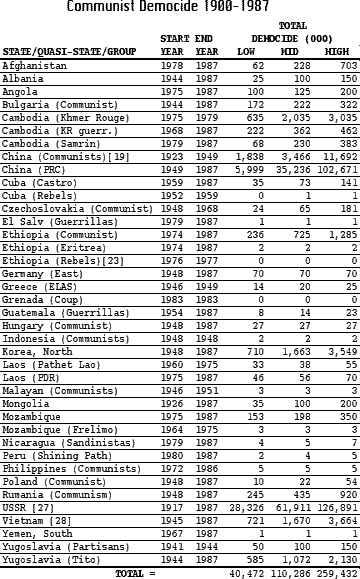

Nationalism is a feeling of unity among a group of people born out of the French Revolution and Age of Enlightenment idea of worship of the Patrie, or one's national origins and a sense of pride in their country.
Nationalists today support national sovereignty and self-governance over globalism, preserving their respective national cultures and demographics over multiculturalism, and a border wall. Economic nationalism is a variant of nationalism that prioritizes a nation-state's economic independence. Nationalism has a strong association with limited government, individual liberty, and national cohesion,[1][2] and it frequently serves as a force for national unity and against identity politics and racism.[3] Nationalism and patriotism are near synonyms, though Marxists, communists, and globalists all have tried to redefine the terms as opposites.[4] Nationalism and imperialism, however, are not synonymous and differ in important respects.[5]
Lack of nationalism, or a desire for new nations, was a cause for the split of countries such as Yugoslavia and Austria-Hungary. It can be considered positive, as a form of patriotism,[1][6][7][8] but it can also go to extremes, leading to hatred of non-members of the nation (which is often ethnically defined) and violence. Examples of this negative nationalism are the Nazi Party in Germany (although it should be noted that the propaganda minister for the Nazis, Joseph Goebbels, when describing the Nazis as being of the German Left, said "we despise bourgeois nationalism." (Refering to nationalism without left-wing economics)), the ethnic conflict in the former Yugoslavia, and the current isolationist policies of North Korea. The latter version, in particular, Nazi Germany, also led to nationalism being demonized to the extent that even having any pride for a country is considered evil, and the former was also considered bad due to the idea that nationalism causes wars. This interpretation was generally pushed by globalists and post-modernists, and adherents of the Idea of Progress. Liberals and "Progressives" strongly oppose nationalism,[9][10] and they falsely associate it with fascism and claim it was the cause of World War I.[11] According to economist Dr. Samuel Gregg, the rise of nationalism in the 21st century has nothing to do with "racism" or "xenophobia," but rather citizens reasserting the concepts of the nation-state and national sovereignty in the face of collectivism and supranational unions.[12]
Jean Jacques Rousseau and Johann Gottfried Herder were two of the main nationalist theorists (although the former was closer to jingoist).
Neoconservatives, who hold Marxist views on "shaping the world," strongly oppose nationalism.[13]
See also
- Nationalism vs. globalism
- Patriotism
- National conservatism
- Subsidiarity
- Globalism
- Donald Trump and nationalism
- Integral nationalism
Further reading
- Hazony, Yoram (2018). The Virtue of Nationalism. New York: Basic Books. ISBN 9781541645370.
- Lowry, Rich (2019). The Case for Nationalism: How It Made Us Powerful, United, and Free. New York: Broadside Books. ISBN 9780062839640.
References
- ↑ 1.0 1.1 Hazony, Yoram (August 24, 2018). The Liberty of Nations. The Wall Street Journal. Retrieved August 25, 2018.
- ↑ Multiple references:
- Munro, Neil (October 16, 2018). New York Times Op-Ed: Nationalism Is Vital for a Good Society. Breitbart News. Retrieved October 16, 2018.
- Much ado about nationalism. Washington Examiner. October 24, 2018. Retrieved October 24, 2018.
- Singleton, Shermichael (February 26, 2019). The case for nationalism. The Hill. Retrieved February 26, 2019.
- Bauer, Fred (August 28, 2019). What the Nationalism vs. Liberalism Debate Misses. National Review. Retrieved September 1, 2019.
- ↑ Kraychik, Robert (February 25, 2019). ‘American First’ Activist: ‘You Are No More Mexican Than I Am African’. Breitbart News. Retrieved February 25, 2019.
- ↑ Gregor, A. James (November 18, 2018). Gregor: The False Dichotomy of Nationalism Versus Patriotism. Breitbart News. Retrieved November 18, 2018.
- ↑ Pipes, Daniel (August 2, 2019). 'Yes to nationalism, no to imperialism'. The Washington Times. Retrieved August 3, 2019.
- ↑ Pinkerton, James P. (September 16, 2018). Pinkerton: ‘The Nationalist Revival’ — a Progressive Defends the Deplorables. Breitbart News. Retrieved September 17, 2018.
See also:- Heiser, James (March 29, 2019). A Review of Judis’s “The Nationalist Revival”. The New American. Retrieved March 30, 2019.
- ↑ Fonte, John (September 13, 2019). In Defense of Nations. National Review. Retrieved January 13, 2019.
- ↑ DeMuth, Christopher (July 19, 2019). America’s Nationalist Awakening. The Wall Street Journal. Retrieved July 21, 2019.
- ↑ Hayward, John (June 17, 2016). Progressives’ Hatred of Nationalism Pushes US Towards the End of Sovereignty. Breitbart News. Retrieved August 25, 2018.
- ↑ Cortes, Steve (October 29, 2018). After Pittsburgh, Unfair Attacks on American Nationalism. RealClearPolitics. Retrieved October 30, 2018.
- ↑ Multiple references:
- Byas, Steve (November 11, 2018). Macron is Wrong: Nationalism Was Not the Cause of World War I. The New American. Retrieved November 12, 2018.
- Ryun, Ned (November 15, 2018). Trump vs. Macron: What the French president doesn't understand about nationalism. Fox News. Retrieved November 15, 2018.
- ↑ Williams, Thomas D. (October 22, 2018). Report: Nationalism Does Not Mean Xenophobia, but an Antidote to Globalism. Breitbart News. Retrieved October 22, 2018.
- ↑ Maitra, Sumantra (November 11, 2019). Freakout Over Nationalism Book Illustrates The End Of Traditional Left-Right Politics. The Federalist. Retrieved December 2, 2019.
| ||||||||||||||||||||
- British Rugby League Teams
- Physics
- Water
- Gardening Glossary
- Soil
- Permaculture
- Trees
- Forestry
- Atheism
- Cinema
- Directors
- Atheists
- Animals
- Mythical Beasts
- Computers
- War
- Articles with unsourced statements
- Wars
- United States History
- Vietnam War
- Cold War
- Veterans
- Government incompetence
- Sports
- Sexual Morality
- Sin
- Psychology
- Crimes
- History Indexes
- Journalists
- American Authors
- Pro First Amendment
- American Jews
- Anti-Zionism
- Homosexuals
- Non-Interventionism
- Agriculture
- Food
- Health
- Nutrition
- Hunting
- Birds
- Waterfowl
- Livestock
- Meat
- Communism
- Totalitarianism
- Communists
- Mass Murderers
- Dictators
- New Deal
- Soviet Union
- Russian History
- Marxism
- Soviet Leaders
- Police State
- Anti Second Amendment
- Terrorists
- Former Christians
- Left-wing Nationalism
- Perpetrators of Cancel Culture
- Gun Control proponents
- Anti-Christianity
- War Criminals
- Pro-Life
- Politicide Perpetrators
- Greek Islands
- Seeds to be nurtured
- American People
- Spouses of Famous People
- Religious Terms
- Architecture
- Ancient Egypt
- Geography
- Bible
- Slang Terms
- Geology
- Socialism
- Writing Systems
- Astronomy
- Ships
- Navigation
- Judaism
- Encyclopedias
- TV Networks
- Cable TV Networks
- Media
- Liberal Media
- SJWs
- Medieval History
- International Political Figures
- Emperors
- Caliphs
- Disambiguation Pages
- Years
- Islam
- Dictionary
- Danes
- Ethnicities
- Government
- Liberalism
- Progressivism
- Economics
- Social Problems
- Ancient History
- Ancient Countries
- New York
- Texas
- Maine
- First Ladies
- Best Selling Authors
- Women
- Knives
- Rifles
- Heads of State
- French History
- Hinduism
- Society
- Novelists
- Liberal Authors
- Political Terms
- Nationalism